
Picture two Shopify stores selling almost the same product at almost the same price. One store has a familiar logo, a busy social feed, and thousands of followers. The other has fewer followers but hundreds of glowing customer reviews and a steady stream of repeat buyers.
Which one grows faster over the next year?
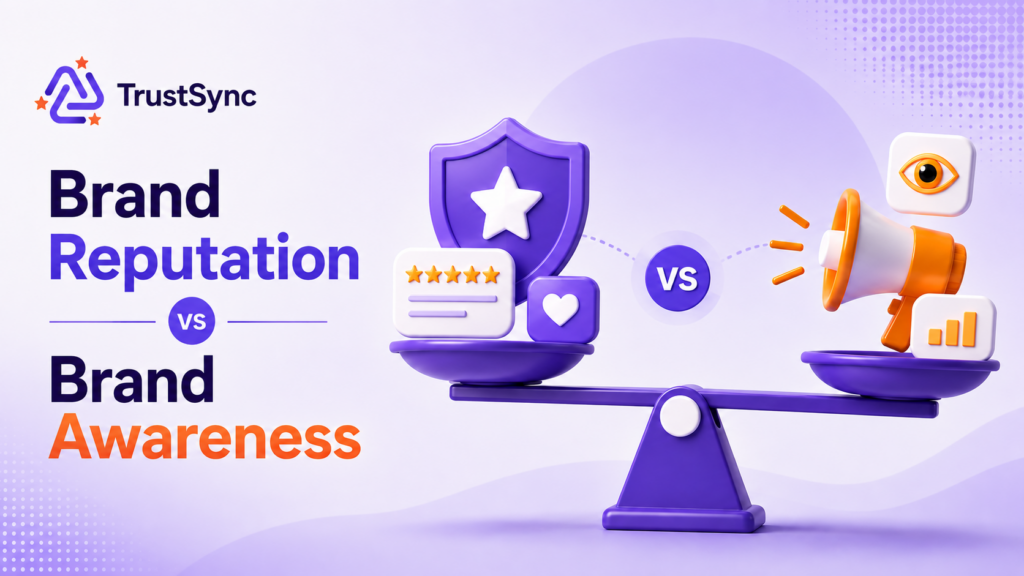
That question sits at the heart of the brand reputation vs brand awareness debate. Awareness is about how many people know you exist. Reputation is about what those people believe once they find you. Both matter, but they do very different jobs and mixing them up can quietly drain your marketing budget.
If you are a Shopify merchant, an eCommerce founder or a marketing manager trying to decide where to put your limited time and money, this guide is for you. We will break down what each term really means, look at what the data says, and show you how to build both without burning out. Along the way, you will see why customer reviews sit right at the center of the whole conversation.
What Is the Difference Between Brand Reputation and Brand Awareness?
The two terms get used as if they mean the same thing. They do not. Getting the difference clear is the first step to spending your energy wisely.
1. Brand Awareness, Defined
Brand awareness is how easily people recognize and recall your brand. It answers a simple question: when a shopper thinks about your product category, does your name come to mind?
Awareness is built through visibility. Ads, social media, influencer partnerships, content, packaging, and word of mouth all push your name in front of more people. The more often someone sees you, the more familiar you feel. In fact, marketing research suggests a brand often needs six to seven impressions before it starts to feel memorable, according to WiserReview branding data.
2. Brand Reputation, Defined
Brand reputation is what people believe about you once they know you exist. It answers a deeper question: can this brand be trusted to deliver?
Reputation is shaped by real experiences. Product quality, shipping speed, customer service, and above all the reviews that customers leave publicly. A single search can now surface your star rating, your Trustpilot score, and screenshots of both happy and frustrated buyers. That collected opinion is your reputation, and it follows you everywhere.
Here is a simple way to hold both ideas in your head at once.
| Criteria | Brand Awareness | Brand Reputation |
| Core question | Do people know you exist? | Do people trust you? |
| Built by | Ads, social, content, reach | Reviews, service, product quality |
| Measured with | Impressions, reach, recall, traffic | Star ratings, review volume, sentiment, trust |
| Main job | Attract attention | Convert and retain |
| Speed | Can grow fast with budget | Builds slowly, earned over time |
| What breaks it | Going quiet or invisible | A poor experience made public |
Brand Reputation vs Brand Awareness: Which Matters More for Growth?
Here is the honest answer: you need both, but they are not equal partners, and they do not arrive in the same order.
Awareness is the top of your funnel. Without it, nobody shows up. Reputation is the engine that turns those visitors into paying customers and then into repeat buyers. Awareness fills the room. Reputation decides how many people stay.
The reason reputation can become especially valuable for long-term growth is compounding. Awareness resets the moment you stop paying for it. Turn off your ads and your reach shrinks. Reputation works the opposite way. Every positive review you collect keeps working for you, quietly reassuring the next shopper, month after month, at no extra cost.
Awareness rents attention. Reputation owns trust. One stops the moment you stop paying; the other keeps compounding.
So the smarter framing is not “which one wins.” It is “which one should you fix first.” If people already find you but are not buying, you have a reputation and trust problem, not an awareness problem. Throwing more ad spend at a store that lacks reviews just means paying to send more people to a page they do not trust yet.
Why Brand Awareness Matters (And Where It Stops)
Let us give awareness its due, because the importance of brand awareness is real.
Familiarity is a shortcut in the mind of a shopper. When people face a shelf of similar options, they tend to reach for the name they recognize. Research summarized by Amra and Elma found that around 50% of consumers are more likely to buy from brands they recognize.
That is a powerful head start. Awareness does a few important things:
- It puts you in the consideration set before shoppers even compare options.
- It lowers the perceived risk of trying something new.
- It makes every other channel work harder, because people click and open more when they recognize the sender.
- It feeds search demand, since more people who know you will search for you by name.
But awareness has a ceiling. Recognition is not the same as trust. A shopper can know exactly who you are and still hesitate at checkout because they are not sure the product lives up to the promise. Awareness gets the click. It cannot close the sale on its own.
This is the exact moment where many growing Shopify stores stall. Traffic looks healthy, ad reach is climbing, yet conversion stays flat. The missing piece is almost always reputation.
Why Brand Reputation Matters More Over Time
Now for the importance of brand reputation, which is where growth quietly gets decided.
Modern shoppers do their homework before they spend. They read reviews, scan star ratings, and look for proof that other people had a good experience. The numbers here are hard to ignore. Multiple studies, including the annual BrightLocal Local Consumer Review Survey, consistently find that well over 97% of consumers read online reviews before deciding to buy.
Trust is now a precondition for the sale, not a bonus. Data cited in the Edelman Trust Barometer shows that around 80% of consumers say they need to trust a brand before they will buy from it. Reputation is how that trust gets built, and reviews are the language it speaks in.
The link between brand reputation and customer trust runs deep for a simple reason. People trust other people far more than they trust marketing. A polished ad tells shoppers what you want them to believe. A review tells them what a real buyer actually experienced. That is why reputation, once earned, is so durable and so hard for competitors to copy.
The connection between brand reputation and customer reviews is not a soft, feel-good idea. It shows up directly in revenue, which we will look at next.
How Customer Reviews Shape Brand Reputation
If reputation is the destination, customer reviews are the road that gets you there. Understanding how reviews affect brand reputation, and how they translate into sales, is the most useful thing a Shopify merchant can learn this year.
1. Reviews Move Conversion, Not Just Sentiment
The clearest evidence comes from the Northwestern University Spiegel Research Center. Their landmark study found that simply displaying reviews on a product page can lift conversion rates dramatically. The purchase likelihood for a product with five reviews was 270% higher than for the same product with no reviews at all.
The effect grows for higher-consideration purchases. In that same research, conversion rose about 190% for a lower-priced item and around 380% for a higher-priced one once reviews appeared. When shoppers are spending more, they lean on the experiences of others even harder.
This is the heart of the importance of online reviews for brand reputation. Reviews do not just make your store feel nice. They change the math of your business.
2. Why a Perfect Score Can Backfire
Here is a finding that surprises many store owners. Shoppers are suspicious of perfection. The Spiegel research found that purchase likelihood tends to peak when ratings sit in the range of about 4.0 to 4.7 stars, then dips as ratings approach a flawless 5.0.
The reason is authenticity. A wall of nothing but five-star reviews reads as filtered or fake. A realistic mix, mostly positive with a few honest critiques, feels human and believable. Independent review data reflects this too, with a large share of shoppers deliberately seeking out negative reviews to judge whether a brand is being straight with them.
3. How Customer Reviews Build Trust
So how do customer reviews build trust in practice? They work on three levels at once:
- Volume signals safety. Seeing that hundreds of people bought before you makes the decision feel low risk.
- Recency signals reliability. Fresh reviews tell shoppers the good experience is still happening today, not two years ago.
- Responses signal care. When a brand replies to feedback, especially the critical kind, it shows shoppers that someone is paying attention.
That last point is a wide-open opportunity. Studies referenced by Upfirst suggest only about 5% of businesses actually respond to their reviews, even though the large majority of consumers expect a reply. Simply showing up in your review inbox can set you apart from nearly every competitor.
Ready to turn happy customers into a steady stream of honest reviews? Start collecting more reviews with TrustSync and let your reputation do the selling for you.
The Growth Flywheel: Awareness, Reviews, Reputation, Revenue
Once you see how the pieces connect, the brand reputation vs brand awareness question stops being a fight and becomes a loop. Each part feeds the next.
Here is the flywheel in plain terms:
- Awareness brings new visitors to your store.
- Some of those visitors buy, which gives you customers to ask for feedback.
- Automated review requests turn those buyers into public reviews.
- Those reviews build reputation, so more visitors convert into sales.
- More sales and higher ratings improve your visibility in search and on platforms like Google, which loops back into more awareness.
The important insight is that reviews are the hinge in the middle. Without them, awareness leaks away and reputation never forms. With a reliable review engine, every dollar you spend on awareness works harder, because more of the traffic you attract actually converts.
This is also why online reviews and brand reputation are so tightly linked to your Shopify search performance and your presence on Google. Strong, steady reviews send a trust signal to both shoppers and platforms at the same time.
How to Build Both Awareness And Reputation (Step by Step)
You do not have to choose between the two. Here is a practical sequence any Shopify merchant can follow.
Step 1: Fix Your Reputation Foundation First
Before you pour money into awareness, make sure people who arrive actually trust you. Audit your product pages. Do they show real reviews and star ratings? If not, that is your first project.
Step 2: Automate Your Review Requests
The single biggest reason stores lack reviews is that asking manually never scales. A busy merchant cannot email every buyer by hand.
This is where a review automation tool like TrustSync can simplify the process, sending timed, branded review request emails automatically after each order is delivered.
Step 3: Collect Reviews Across the Platforms That Matter
Reputation is not stored in one place. Shoppers check Google, Trustpilot, Facebook, Etsy and more. Aim to build reviews on the platforms your buyers actually use, so your reputation looks consistent no matter where someone looks.
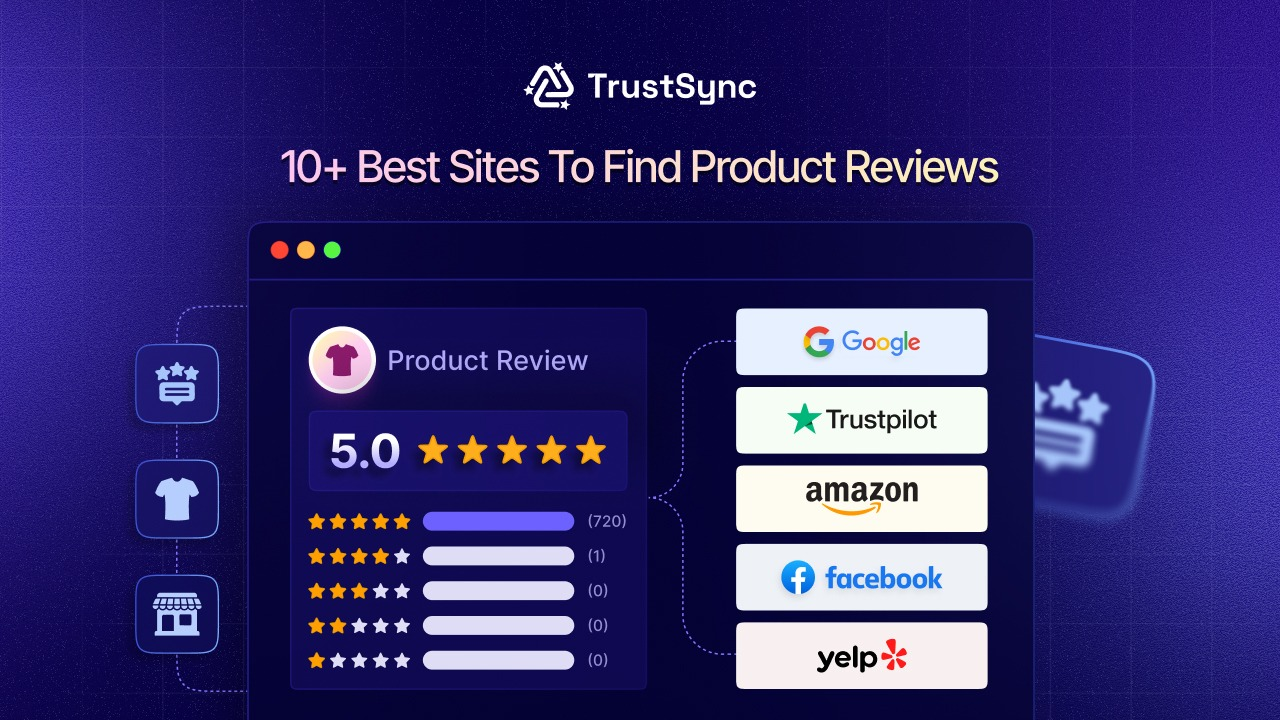
TrustSync helps Shopify merchants collect reviews from Google, Trustpilot and other sources from a single dashboard.
Step 4: Scale Awareness With Confidence
Once your product pages are backed by real social proof, awareness spending pays off far better. Ads, influencer collaborations, and content now send traffic to a store that converts, so your cost per sale drops instead of climbing.
Step 5: Catch Negative Feedback Before It Goes Public
Not every experience will be perfect, and that is fine. What matters is catching an unhappy customer early with negative feedback so you can make it right in private before frustration turns into a public one-star rating.
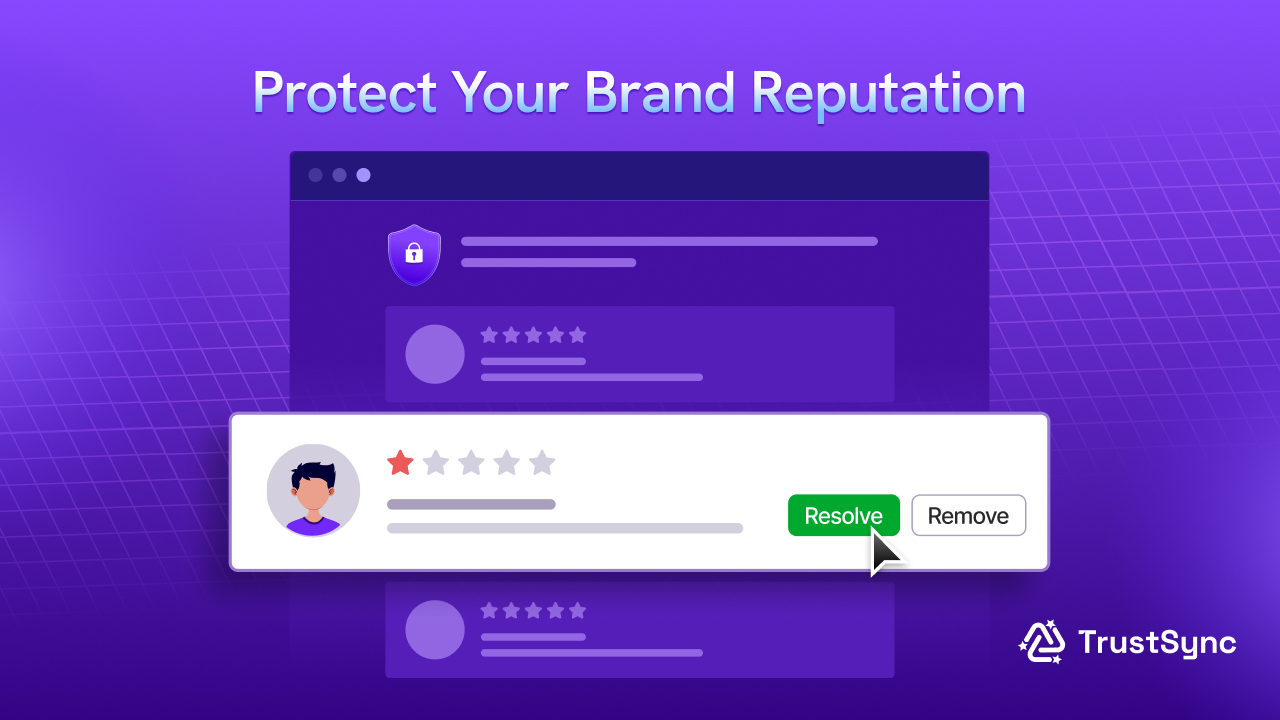
Feedback filtering routes concerns to your team first, giving you a chance to fix the issue and often win the customer back.
Step 6: Measure, Learn, Repeat
Track both sides. Watch your reach and traffic for awareness, and watch your review volume, star rating, and email performance for reputation. TrustSync analytics can show you which requests turn into reviews so you can improve over time.
Common Mistakes to Avoid
Even smart merchants trip over the same few mistakes. Watch out for these.
- Chasing followers while ignoring reviews. A big audience that does not trust you converts poorly. Reputation first, then scale.
- Asking for reviews at the wrong time. Requesting feedback before the product even arrives leads to low response and lower ratings.
- Only wanting five-star reviews. A flawless score reads as fake. Honest variety builds more trust.
- Ignoring negative feedback. Silence in your review inbox reads as indifference. A calm, helpful reply can turn a critic into a fan.
- Collecting reviews on only one platform. Shoppers look in several places, so a strong presence on just one leaves gaps.
- Treating review collection as a one-time push. Reputation needs a steady flow of fresh reviews, which is why automation beats occasional manual effort.
Best Practices for Brand Reputation Management
Good brand reputation management is a habit, not a campaign. Build these into your routine.
- Automate the ask. Set up review request emails to send automatically after delivery, so no happy customer is ever missed.
- Time it well. Send the request once the customer has had a few days to enjoy the product, not the moment it ships.
- Keep it on-brand. Send review requests from a custom domain with your own logo and voice so the email feels trustworthy, not spammy.
- Respond to everything. Thank people for praise and address complaints quickly. Your public replies are read by future buyers.
- Display reviews proudly. Put star ratings and written feedback right on your product pages where they influence the buying decision.
- Watch your sentiment over time. A slow drift downward is an early warning that something in the product or service needs attention.
Handled this way, reputation stops being something you react to and becomes an asset you grow on purpose.
How TrustSync Helps Shopify Merchants Do Both
By now the pattern is clear. Awareness gets people to your store, and reputation gets them to buy. The hard part for most merchants is building reputation at scale, because it depends on collecting reviews consistently without adding hours of manual work.
That is exactly the gap TrustSync was built to close for Shopify stores. It brings the review side of your growth loop onto autopilot, so your reputation keeps building while you focus on the rest of the business. In practice, TrustSync helps you:
- Automate review request emails so every order becomes a chance to earn a review.
- Collect reviews from Google, Trustpilot, Yelp, Facebook, Etsy, and more, all managed in one place.
- Filter and manage negative feedback so you can resolve issues privately before they hurt your public rating.
- Send branded requests from your own custom domain to boost trust and open rates.
- Track review and email analytics so you can see what is working and do more of it.
None of this replaces your awareness efforts. It makes them pay off. When the traffic you work hard to attract lands on product pages full of genuine social proof, more of that traffic converts, and the growth flywheel finally starts to spin.
If you want to see the pricing that fits your store, take a look at the TrustSync plans and start turning customers into a reputation that sells for you.
Drive Your Shopify Growth The Right Way
The brand reputation vs brand awareness question is not really a contest. Awareness opens the door and reputation decides whether the sale happens and whether the customer comes back. For lasting growth, reputation is the piece that compounds, and reviews are the fuel that builds it.
So start where the leverage is greatest. Make sure your store earns trust the moment a shopper arrives, then scale your awareness with confidence knowing the traffic will convert. The stores that win are not always the loudest. They are the ones people believe.
Automate review requests and grow your reputation with TrustSync and let every happy customer become proof that helps you sell the next one.
Is this blog helpful? Subscribe to our blog & YouTube channel to stay tuned with the latest tutorials, product reviews and Shopify solutions.
Frequently Asked Questions
What is the difference between brand reputation and brand awareness?
Brand awareness is how well people recognize and recall your brand. Brand reputation is what people believe about your brand once they know it exists. Awareness attracts attention, while reputation earns the trust that turns attention into sales.
Which is more important for growth, brand reputation or brand awareness?
Both matter, but reputation compounds over time while awareness resets when you stop paying for it. Awareness fills your funnel, and reputation converts and retains. If people already find your store but are not buying, reputation is usually the piece to fix first.
How do customer reviews affect brand reputation?
Reviews are the main source of your public reputation. They provide social proof, signal reliability, and directly lift conversion. Research from the Northwestern Spiegel Research Center found that products with five reviews can be far more likely to sell than products with none.
How many reviews does a Shopify store need?
There is no fixed number, but the biggest jump in trust and conversion comes from the first several reviews on each product. After that, keeping reviews fresh matters more than chasing a huge total, since recent feedback reassures new shoppers.
Do negative reviews hurt brand reputation?
A few honest negative reviews can actually help by making your ratings look authentic. Shoppers distrust a perfect score. What hurts reputation is ignoring complaints. A calm, helpful public response often builds more trust than the original review cost you.
How can I collect more reviews without doing it manually?
Use a review automation tool. TrustSync sends timed, branded review request emails automatically after each order and gathers reviews across platforms like Google and Trustpilot, so your reputation grows without constant manual effort.