
A strong Shopify review strategy is now one of the most reliable growth levers you can build, and most stores are leaving it on the table. 45% of customers will not purchase a product without reviews and 93% say reviews directly influence their buying decisions. In May 2024, Shopify retired its native Product Reviews app, leaving thousands of merchants without a default system for collecting feedback at all.
Customer feedback shapes trust, conversions, search visibility and repeat purchases at the same time, so a small improvement in how you collect and display it compounds across your whole funnel.
In this guide, you will learn how to build a Shopify review strategy from the ground up. You will see how to time and automate review requests, reach the customers who never post publicly, handle negative feedback with confidence, display reviews for maximum conversions and measure the whole system so you know it is working.
Shopify Review Strategy at a Glance
- No incentivized reviews: Never offer discounts, rewards, free features, gift cards or any other incentives in exchange for app reviews.
- Stricter enforcement: Apps violating the policy may face review removal, lower App Store rankings, app delisting or even Partner account termination.
- Enhanced review verification: Shopify will automatically detect and hide fake or untrusted reviews. Only reviews that meet its trust standards will be displayed publicly.
- Use neutral review requests: Ask users for honest feedback without encouraging positive ratings or influencing their responses.
- Use the Reviews API: Shopify recommends collecting authentic reviews through its Reviews API whenever possible.
- Prioritize transparency: Focus on genuine customer feedback and ethical review practices to maintain compliance and build long-term trust in the Shopify App Store.
What Is a Shopify Review Strategy And Why Does It Matter?
A Shopify review strategy is your deliberate, repeatable system for collecting, managing, displaying and measuring customer reviews across every place your brand appears. It replaces the ‘hope customers remember to review us’ approach with a structured flow that turns each order into a trust signal.
It matters because shoppers cannot touch or test your products before buying, so they lean on the experiences of people who already have. Reviews give them that reassurance in a way product descriptions never can.
The Business Case for Reviews
The financial impact of reviews is well documented. Research from Northwestern University shows that displaying reviews can raise purchase likelihood by 270 percent once a product reaches five reviews, with the strongest lift on higher-priced items.
The influence extends across the buying journey. Studies find that roughly 95 percent of consumers read reviews before purchasing and consider them an essential part of how they decide. For a deeper look at the numbers, our roundup of online review statistics breaks down how reputation shapes conversions in 2026.
The Collection Gap Most Stores Ignore
Here is the quiet problem in most stores. Reviews do not accumulate on their own at any real scale, so the typical Shopify store gathers feedback from only 1 to 3% of its buyers.
A systematic approach increases review volume. Combining automated post-purchase emails, follow-up reminders and light incentives consistently lifts response rates, generating significantly more reviews than passive collection alone.
What Changed After Shopify Retired Its Native Review App
In May 2024, Shopify sunset its native Product Reviews app and many older strategy guides still ignore this shift. Merchants who relied on the default tool now need a dedicated system to keep collecting and showing feedback.
This change is an opportunity to build something stronger than the basic default ever offered. A modern setup adds automated request emails, private feedback routing, multi-platform collection and review schema, all of which the retired app never provided. Treat the transition as a chance to design the review engine your store actually needs.
How Do You Collect More Shopify Reviews?
You collect more reviews by removing friction and asking at the moment a customer feels most positive about their purchase. The strongest programs make reviewing effortless and take the time to request with care.
Most satisfied customers will not share a review unless you invite them, so a gentle, well-timed nudge does most of the work. The four practices below form the core of your Shopify review strategy.
Time the Ask Around Delivery
Timing decides whether a review request feels relevant or premature. Ask before the product arrives and the message lands too early. Wait too long and the excitement fades.
For most physical products, the ideal window sits between 5 and 14 days after confirmed delivery. Skincare, supplements and fitness products often need the longer end of that range so customers can see real results before they write.
Automate Review Request Emails
Automation is what makes review collection easy and scalable. Set up an email that triggers automatically after delivery, names the exact product, shows its image and links directly to the review form so the shopper reaches it in a single click.
A short two-email sequence performs best. Send the first request within the delivery window, then follow up about five days later for customers who have not responded. For proven wording you can adapt, our guide to review request email templates walks through subject lines and copies that earn responses. You can see more collection tactics in these data-backed ways to increase customer reviews faster.
Reach the Reviewers Who Never Post Publicly
Here is the insight most strategy guides miss entirely. A significant majority of customers who are willing to share feedback prefer not to post it on a public platform, choosing instead to submit it through private, structured channels.
If your entire strategy points only at public review sites, you collect from the visible minority and ignore everyone else. A direct submission path inside your post-purchase email reaches that quieter majority, and the feedback tends to be more detailed and more candid. It also arrives with clear usage rights, which matters when you want to feature it on product pages.
Use Ethical Incentives
A small incentive raises response rates without hurting your margins. A modest discount on a future order or loyalty points works well as a thank-you for taking the time.
Keep the incentive honest. Offer it for any review regardless of the rating, never only for positive feedback. This keeps you aligned with platform guidelines and preserves the authenticity that makes reviews persuasive in the first place.
Building a Multi-Platform Shopify Review Strategy
Your reputation lives in more than one place. A multi-platform Shopify review strategy grows feedback on your product pages and across the external sites where shoppers research you before they ever reach your store.

Spreading reviews across channels widens your trust footprint and strengthens search visibility at the same time. Here is how the layers fit together.
On-Site Product Reviews
On-site reviews sit closest to the purchase decision, so they deserve priority. They appear on the exact product page where a shopper is weighing the choice, and they double as fresh, keyword-rich content that search engines value.
Inspire buyers to share their stories using text, photos, and videos that show your products in action. By pairing this real-world social proof with ‘Verified Buyer’ badges, you instantly build trust and significantly increase the likelihood of new sales.
Off-Site Reputation on Google, Trustpilot And Facebook
Many shoppers check external platforms before they trust a new store. Reviews on Google, Trustpilot and Facebook reassure those researchers and expand the places your brand earns credibility.
Google reviews carry a bonus because they feed the signals that shape local and organic visibility. Our breakdown of how Google reviews support Shopify SEO explains why a steady flow of off-site feedback strengthens both trust and rankings. A review request that offers customers a choice of platform helps you grow presence everywhere at once.
Review Schema And Rich Snippets for Search Visibility
Collecting reviews is only half the job. You also need search engines to read them, and that requires structured data.
Adding JSON-LD review schema lets your star ratings appear as rich snippets directly in search results. Those gold stars raise click-through rates and pull qualified shoppers toward your product pages before competitors even get a look.
How Should You Handle Negative Reviews?
You handle negative reviews by treating them as information and as a chance to demonstrate care, not as a threat. A calm, solution-focused response often earns more trust than a flawless record ever would.
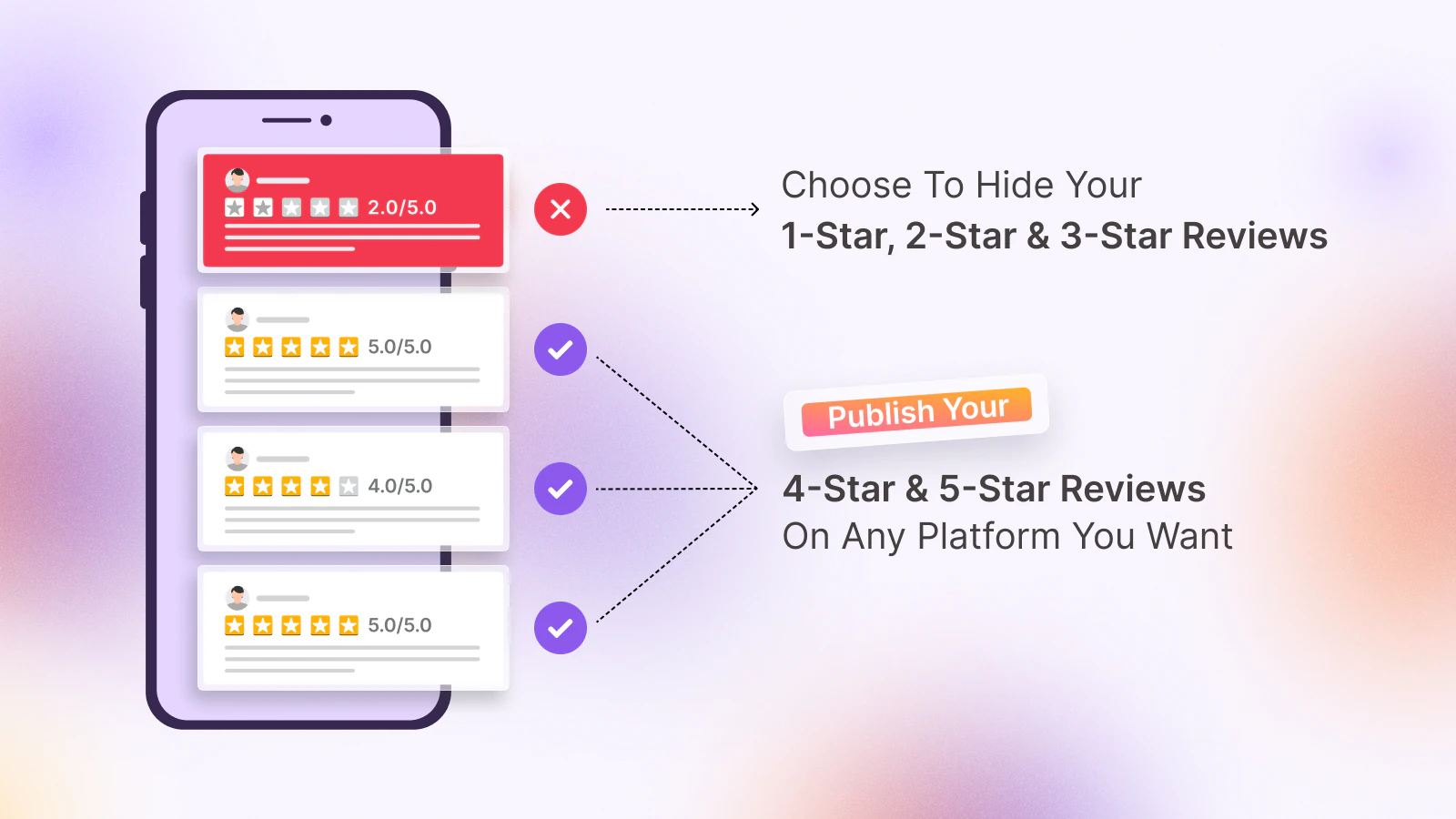
The goal is to catch unhappy feedback early, resolve it directly and answer any public criticism in a way that reassures future shoppers. Three habits make this dependable.
Route Unhappy Feedback Privately First
The most protective habit is giving unhappy customers a private path before they reach a public platform. When your post-purchase flow lets a frustrated buyer share a concern with you directly, you get the chance to fix the problem and often recover the relationship.
This is not about hiding criticism. It is about resolving genuine issues at the moment they surface, so a fixable experience does not become a permanent public review that scares away future buyers.
Respond Publicly With a Solution
When a negative review does appear publicly, answer quickly and constructively. Aim to respond within 24 hours, acknowledge the concern in your first sentence and offer a concrete next step such as a replacement or a refund.
Future shoppers read these responses closely. A thoughtful reply shows everyone who visits later that your brand takes ownership and stands behind its products.
Why a Few Imperfect Reviews Build More Trust
A perfect five-star record can quietly work against you. Research shows purchase likelihood peaks when average ratings sit in the 4.2 to 4.7 range, and it dips as ratings approach a flawless 5.0 that shoppers read as too good to be true.
A handful of measured, honest reviews signals authenticity. They reassure shoppers that the feedback is real, which makes your strong reviews far more believable and more persuasive.
Displaying Reviews to Maximize Conversions
Collection creates the asset. Display is what turns that asset into sales. Where and how you show reviews shapes how much conversion lift you actually capture.
The stores that win place social proof exactly where hesitation happens and keep that proof feeling current. Three display choices matter most.
Placement That Guides the Decision
Position drives impact. Show the star rating immediately below the product title and price so shoppers see credibility at the moment they read the offer, then place the full review widget below the description where they look for detail.
Carry that proof into high-intent moments too. Star ratings near the add-to-cart button and reassurance close to the checkout counter the hesitation shoppers feel right before they commit.
Lead With Photo And Video Reviews
Visual reviews outperform text alone by a wide margin, often converting up to three times better. Shoppers want to see a real product in real hands before they trust it with their money.
Invite customers to upload photos and short clips, then feature that content prominently. It builds authenticity, aligns expectations with reality and tends to reduce returns because buyers know what to expect.
Keep Your Reviews Fresh
Recency matters as much as volume. Outdated reviews reassure new shoppers far less than recent ones, since a steady stream signals that your store is active and consistently delivering.
A continuous collection flow keeps fresh feedback arriving month after month. That freshness reinforces trust and feeds search engines the new content they reward.
How Do You Measure a Shopify Review Strategy?
You measure a Shopify review strategy by tracking a few clear metrics that tell you whether the system is growing trust and moving sales. Measurement turns a set of tactics into a program you can improve deliberately.
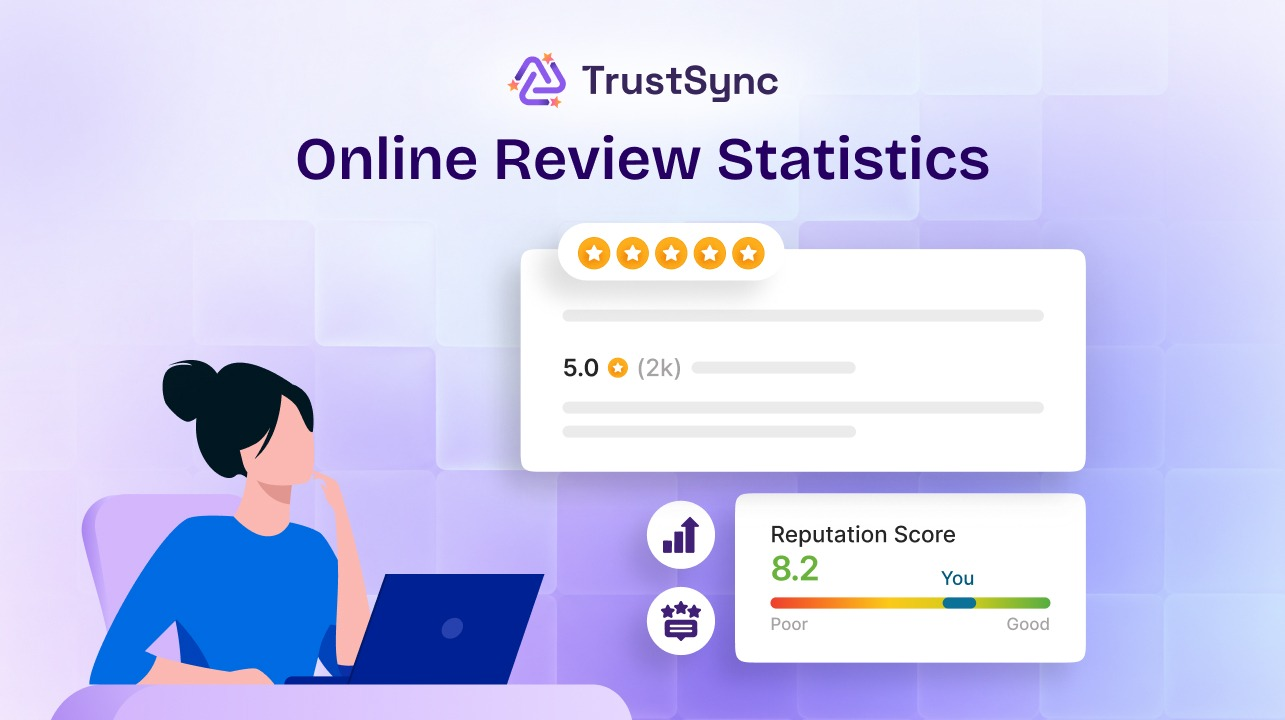
Focus on three signals. Together they show you what is working and where to adjust.
Submission Rate Benchmark
Your review submission rate is the share of buyers who leave a review, and it is the clearest health check for the whole program. Organic collection typically yields a low volume of customer feedback, whereas a well-managed automated sequence consistently generates a much higher response rate.
Track this number monthly. Movement toward the higher end confirms your timing, wording and incentives are landing, and a stall tells you where to test next.
Email Performance Metrics
Since automated emails drive most of your reviews, their performance drives your results. Watch open rates, click rates and the conversion from click to submitted review.
Small tests compound here. Adjusting subject lines, send timing and the number of clicks to reach the form can meaningfully raise how many requests turn into published reviews.
Review-to-Conversion Signals
The metrics that matter most connect reviews back to sales. Compare conversion on product pages with strong review counts against pages with few or none and watch how new reviews shift the numbers over time.
These signals prove the business value of your effort. They also help you prioritize which products need review collection most, so you invest where the lift will be largest.
Turn Your Reviews Into a Trust-First Growth Engine
A great Shopify review strategy comes down to three things: collect reviews systematically through a repeatable system, spread that social proof across every platform your shoppers trust and display it where hesitation turns into a decision. Handle feedback with care and even your imperfect reviews become a credibility asset.
Start by fixing your collection flow, then layer in multi-platform growth, smart display and steady measurement. Each pillar strengthens the others, and the compounding trust becomes one of your most durable growth advantages.
This is exactly where TrustSync helps. By letting you automate review requests after every order, collect feedback across trusted platforms and resolve unhappy experiences privately before they become public reviews, TrustSync builds the visible social proof that lowers hesitation at the moment shoppers decide.
Is this blog helpful? Subscribe to our YouTube channel to stay tuned with the latest tutorials, product reviews and Shopify solutions. Visit our website for the newest updates.