
If you run a Shopify store, you have probably spent time optimizing your product titles, writing better descriptions and working on page speed. But there is one trust signal that many merchants overlook entirely: Google reviews. The question comes up constantly in SEO communities: Do Google reviews help Shopify SEO or are they just nice-to-have social proof?
This guide gives you a complete, honest picture of how Google reviews affect your Shopify store’s SEO performance. We cover the direct ranking signals, the indirect benefits that most merchants miss and the practical strategies you can start using today. Whether you have zero reviews or a few hundred, there is a clear path forward.
TL;DR
Do Google reviews help Shopify SEO? Yes. Google reviews directly influence local search rankings through the ‘Prominence’ signal in Google’s local algorithm.
| Question | Short Answer |
| Do Google reviews help SEO? | Yes, especially for local and map rankings |
| Are reviews a direct Google ranking factor? | Yes for local pack and Google Maps results |
| Do reviews affect organic product page rankings? | Indirectly, through trust, CTR and E-E-A-T |
| What review signals does Google measure? | Volume, rating, recency and response activity |
| Can Shopify merchants display Google reviews on-site? | Yes, using apps or embedded widgets |
| Do reviews help with AI search visibility? | Yes, increasingly so in 2026 |
| What rating does Google favor? | 4.3 stars or higher with consistent volume |
Why Google Reviews Matter for Shopify Merchants in 2026
Google reviews are not a passive metric that customers check after they find your store. They are an active input that shapes whether your store gets found in the first place. For Shopify merchants, understanding this distinction is the difference between treating reviews as a nice bonus and using them as a deliberate growth lever.
The Three Google Local Ranking Factors
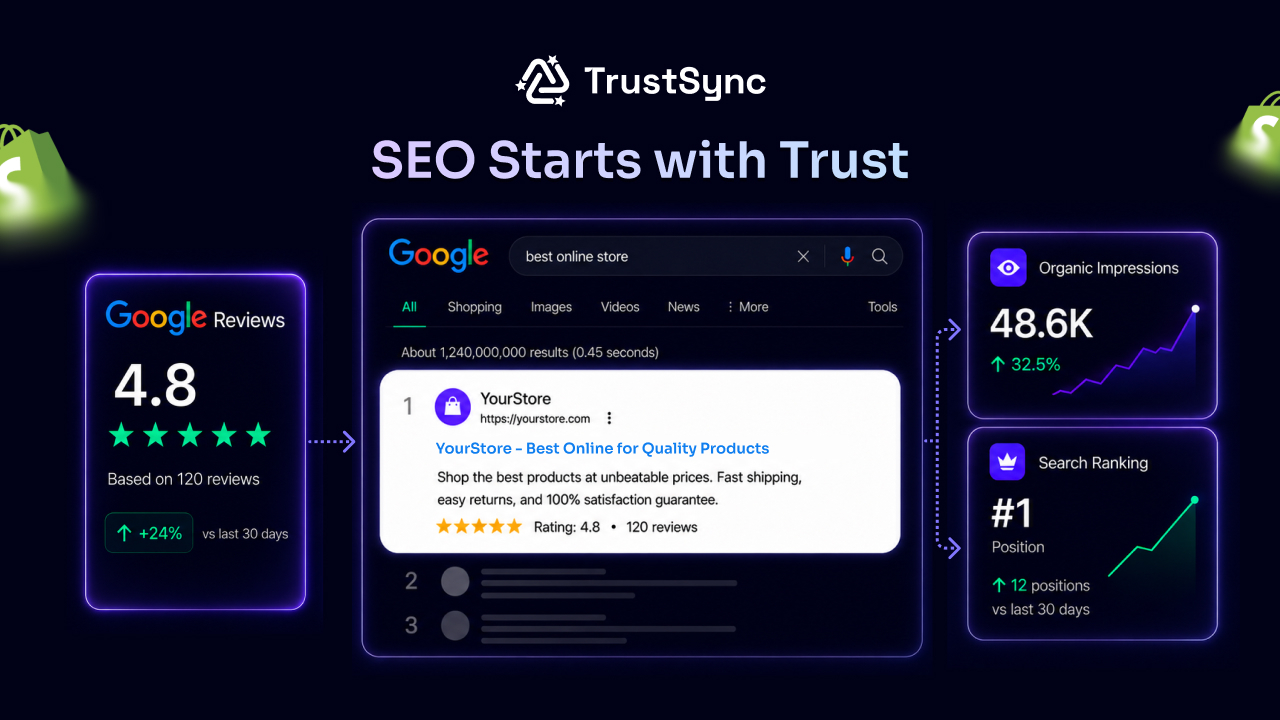
Google’s local search algorithm ranks businesses based on three core signals: Relevance, Distance and Prominence. Reviews feed directly into the Prominence factor, which measures how well-known and established a business appears both online and offline.
- Relevance is about how well your Google Business Profile and store content match what a customer is searching for. Using specific product and category keywords in your profile, posts and review responses all contribute here.
- Distance is straightforward, how close your business location is to the person searching. For Shopify stores without a storefront, this can be configured through your service area settings.
- Prominence is where reviews have their biggest direct impact. A business with a strong review profile, consistent volume, high rating and recent feedback signals to Google that it is a credible, active and trusted business. This directly lifts your visibility in the local pack (the three-business map block at the top of local search results) and in Google Maps.
What Google Actually Measures in Your Review Profile
The way Google processes review data has become more nuanced over the years. It is not simply counting stars and picking the highest number. Google looks at your review volume relative to competitors, the recency of your reviews, how often you respond to them and what language customers use in their feedback.

Not all review activity carries equal weight. Google’s algorithm evaluates multiple dimensions of your review profile simultaneously.
- Review volume matters because more reviews generally signal a more active and established business. A Shopify store with 200 reviews will typically outperform one with 15 reviews in the local pack, all other factors being equal.
- Star rating is a prominent display signal and a ranking input. Businesses that consistently perform well in local search tend to maintain a rating of 4.3 stars or higher. Dropping significantly below this threshold, especially if competitors in your niche are above it, creates a measurable disadvantage.
- Review recency signals that your business is currently active and engaging with customers. A steady stream of recent reviews is more valuable than a large spike of reviews followed by silence. Google’s algorithm weights freshness, so consistent outreach matters more than one-time campaigns.
- Response rate is increasingly recognized as a trust and engagement signal. When you respond to reviews regularly, both positive and negative, you demonstrate that your business is attentive and invested in customer experience. This reinforces prominence and builds visible trust for potential customers scanning your profile.
How Google Reviews Affect Shopify SEO Beyond Local Rankings
Local rankings are the most direct and well-documented way that Google reviews impact SEO. But Shopify merchants who only think about reviews in terms of the local pack are missing a larger picture. Reviews create a set of compounding indirect SEO benefits that affect how your store performs across all types of search, not just local queries.
Click-Through Rate & User Behavior Signals
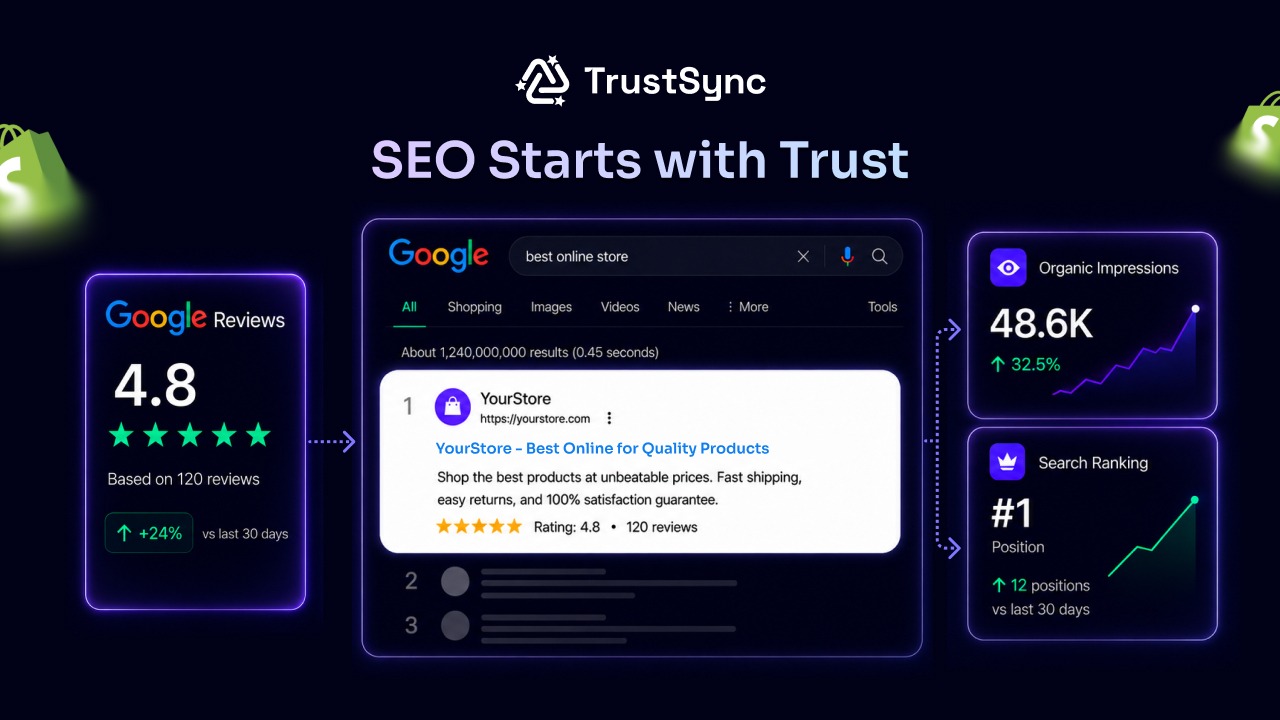
One of the most underappreciated SEO benefits of a strong review profile is what it does to your click-through rate in search results. When your Google Business Profile or product pages show star ratings in search snippets, you stand out visually in a page full of text-only results.
Past industry analysis has found that moving from a lower rating to a consistently high one can increase click-through rate by as much as 25% for local business listings.
More clicks signal to Google that your listing is the most satisfying match for a given query, which feeds back into your rankings over time. This creates a self-reinforcing loop: better ratings drive more clicks, more clicks improve behavioral signals and improved behavioral signals support higher rankings.
For Shopify stores that have implemented review schema markup on their product pages, this effect extends to organic search results too.
E-E-A-T & the Role of Reviews in Building Trust
Google’s E-E-A-T framework: Experience, Expertise, Authoritativeness and Trustworthiness has become more important with every major algorithm update since 2022.
In 2026, with AI systems evaluating whether to cite your store in their answers, E-E-A-T signals are more consequential than ever.
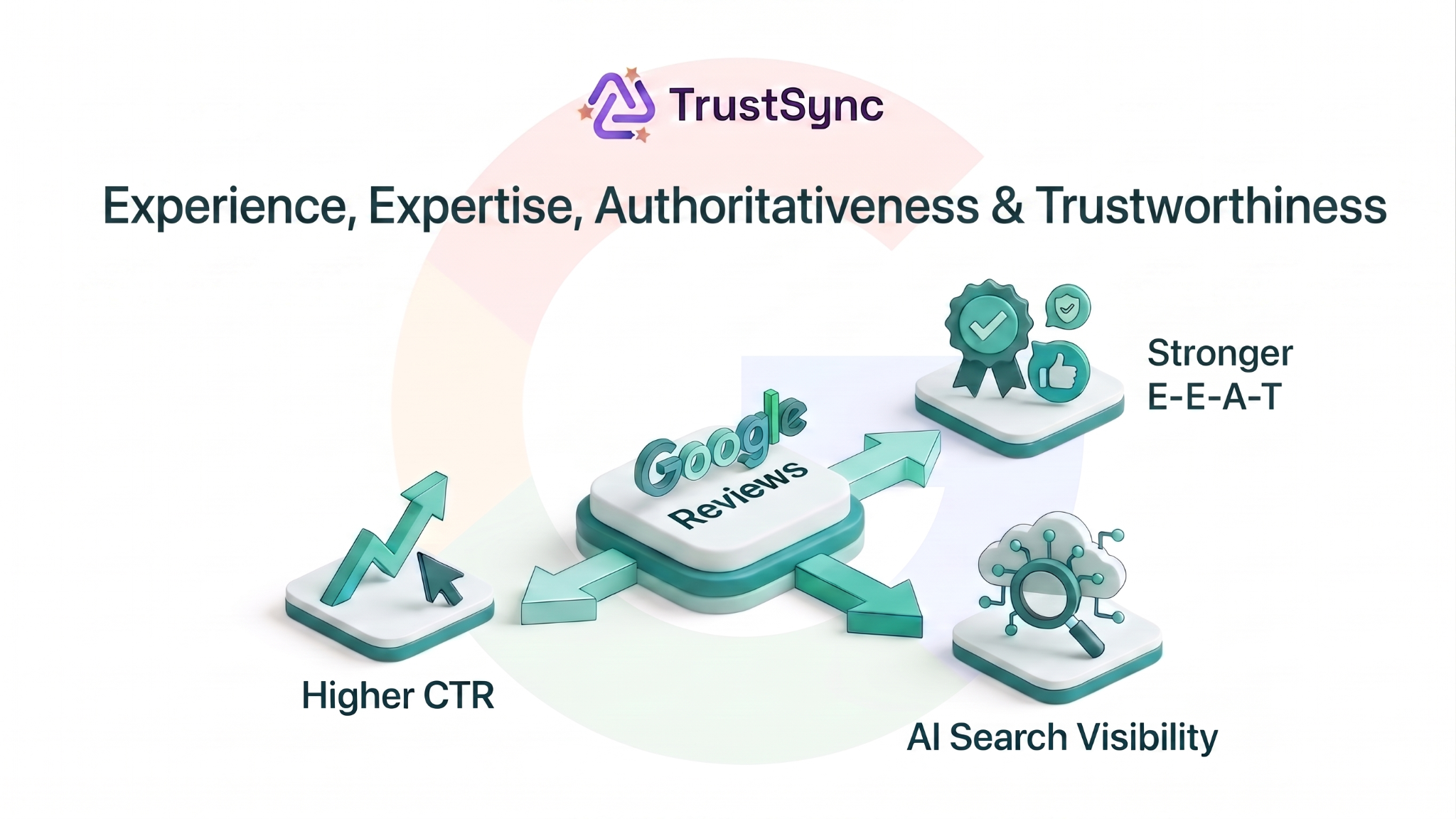
Reviews contribute to all four E-E-A-T dimensions in specific ways. They prove that real people have had direct experience with your products and store, this is the Experience component.
Expertise is reflected when reviews highlight specific product knowledge, use cases and problem-solving outcomes.
A consistent pattern of detailed, positive reviews builds Authoritativeness by demonstrating that your store is a recognized and trusted option in your category.
Publicly responding to feedback, including negative reviews, signals trustworthiness by showing that you take customer experience seriously.
For Shopify merchants, this means reviews are not just social proof for potential customers. They are signals that Google uses to evaluate whether your store deserves to be elevated in results. A store with genuine, detailed customer feedback will consistently outperform a technically well-optimized store with a thin or absent review profile.
Keyword-rich Content from Real Customers
Keyword-rich content is one of the least-discussed SEO benefits of customer reviews and it is genuinely powerful. When customers write reviews, they naturally use the exact language they would type into a search engine.
This user-generated content adds a layer of natural keyword density to your store pages that no amount of copywriting can fully replicate. It tends to match long-tail search queries closely because customers write the way they search.
For Shopify stores displaying on-site reviews alongside product schema markup, this content becomes indexable, meaning Google can read it, understand it and use it to match your pages to a wider range of relevant searches.
💡 The practical implication: your review content is doing ongoing SEO work on your behalf without any additional effort on your part. The more relevant and detailed your reviews, the broader the net of search queries your pages can rank for.
Google Business Profile Reviews & Your Shopify Store
For Shopify merchants who operate a physical retail location, a pop-up shop, a warehouse or any address-based presence, a Google Business Profile (GBP) is an essential SEO asset that works alongside your store, not in competition with it. Setting up and optimizing your GBP correctly connects your review activity directly to your Shopify store’s visibility in local and map searches.
Even for online-only Shopify stores, a GBP configured as a service-area business creates a local presence that can rank in relevant local searches. This is particularly useful for stores that target specific geographic markets or that rely heavily on direct-to-consumer sales in their home region.
Setting Up Your Google Business Profile for Shopify
Getting your GBP right from the start ensures that your review activity counts toward the right ranking signals and displays your store accurately in search results.
Verify Your Business
Go to business.google.com. Complete the verification process for your store
Choose the Right Category
Select the most accurate category that matches your primary product type. Examples: Retail Store, Clothing Store, Home Goods Store. Be precise, since this affects which searches your profile can appear in
Fill Out All Fields
Business name, Address (or service area if online only), Phone number, Website URL pointing to your Shopify store, Store hours, Complete business description written in natural language with primary product keywords and upload high‑quality photos of products, storefront, and team.
Ensure NAP Consistency
Inconsistencies can confuse Google’s entity resolution system and weaken local SEO signals. Double‑check that your Name, Address and Phone number (NAP) match exactly across:
- Google Business Profile
- Shopify Contact page
- Site footer
How Reviews Sync Between Your GBP & Shopify
Google Business Profile reviews and on-site Shopify reviews are separate systems but they can be connected in ways that amplify both.
Your GBP reviews feed directly into your local pack and Google Maps rankings. They also appear in the Knowledge Panel that shows when someone searches for your business by name. These are visible and influential but they live on Google’s properties, not on your Shopify store.
On-site Shopify reviews are displayed on your product pages and can be marked up with a review schema to generate rich snippets in organic search results. These appear directly on your Shopify pages and contribute to on-page E-E-A-T signals.
The smartest strategy uses both in parallel. Encourage customers to leave reviews on your GBP for local search visibility and collect on-site reviews through a dedicated Shopify review app for organic search and conversion benefits.
Responding to Reviews: Why It Signals More Than Courtesy
Responding to reviews is one of the most overlooked components of a complete review strategy. It is not just about customer service; it actively contributes to your local SEO signals and demonstrates engagement that Google’s algorithm recognizes.
When you respond to a review, you have the opportunity to include relevant keywords naturally in your reply.
For example, a response like ‘Thank you for your feedback on our [product name], we are glad it worked well for your [use case]’ reinforces the keyword associations between your reviews and relevant search queries. Do not force keywords into every response, but use natural opportunities where they fit.
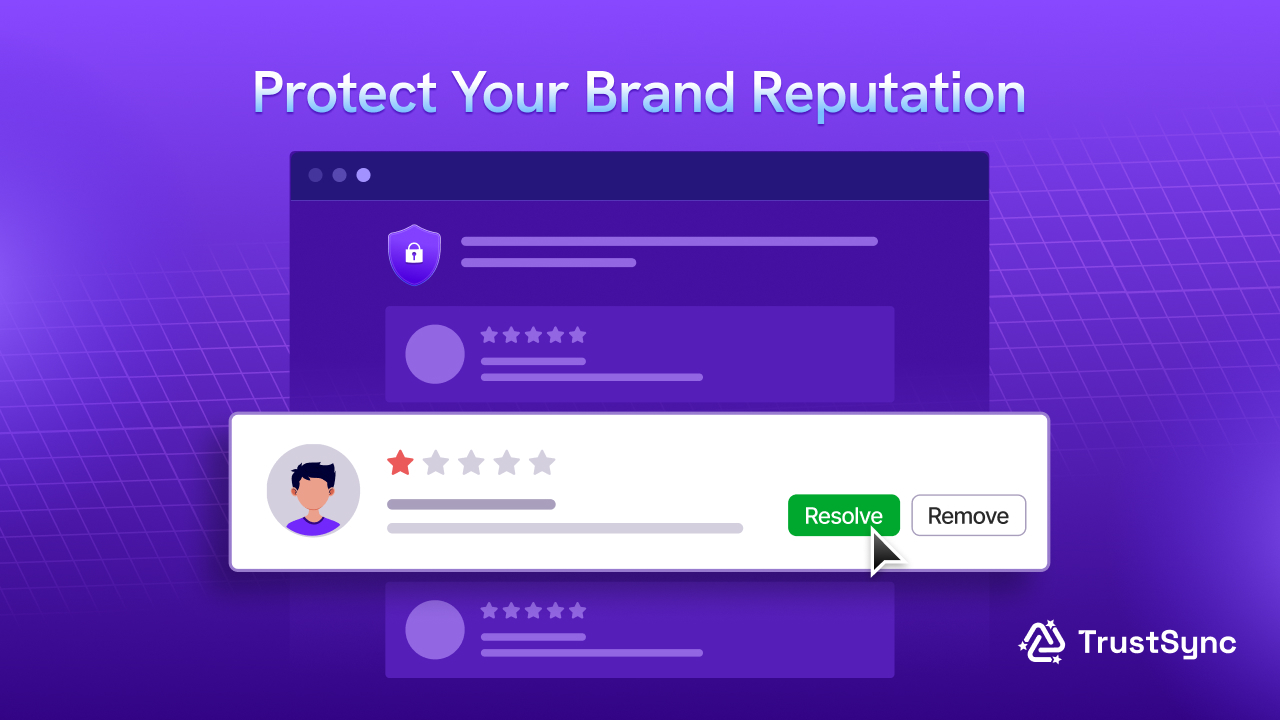
Responding to negative reviews is especially important for trust signals. A thoughtful, professional response to a critical review demonstrates that your business is accountable and customer-focused. Potential customers reading your reviews are not just looking at star averages; they are reading how you handle problems.
A business that responds well to negative feedback often converts more trust than one with a perfect rating and zero responses.
On-Site Reviews & Shopify SEO: Making Review Content Work Harder
Getting reviews is only half the battle. What you do with those reviews on your Shopify store determines how much SEO value they actually generate. Many merchants collect reviews diligently but display them in ways that search engines cannot read, which means all that keyword-rich content is invisible to Google’s crawlers.
Why Review Schema Markup is Non-Negotiable for Shopify
Review schema markup is structured data code that tells Google exactly what your review content is, who wrote it, when, what they rated and what product or business they were reviewing. Without schema markup, Google may be able to read your reviews as text but it cannot confidently parse them as review data or display them as rich snippets.
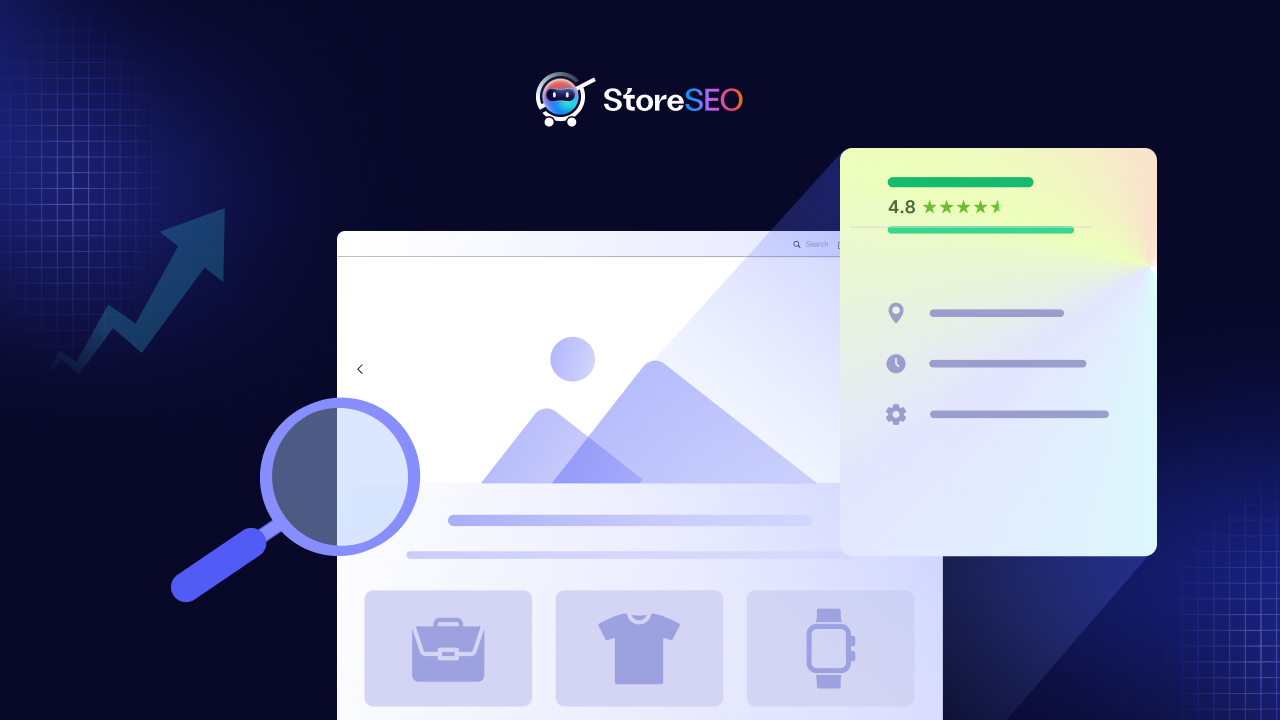
With a properly implemented review schema, your product pages can display star ratings directly in Google’s organic search results. These visual star ratings make your listings stand out in the SERP before anyone clicks through to your store. Research consistently shows that rich snippets with star ratings produce higher click-through rates than plain text listings for the same position.
Displaying Reviews on the Right Pages
Where you place review content on your Shopify store matters for both SEO and conversion. The goal is to put review signals where they do the most work, both for customers making purchase decisions and for search engine crawlers evaluating page quality.
Product Pages
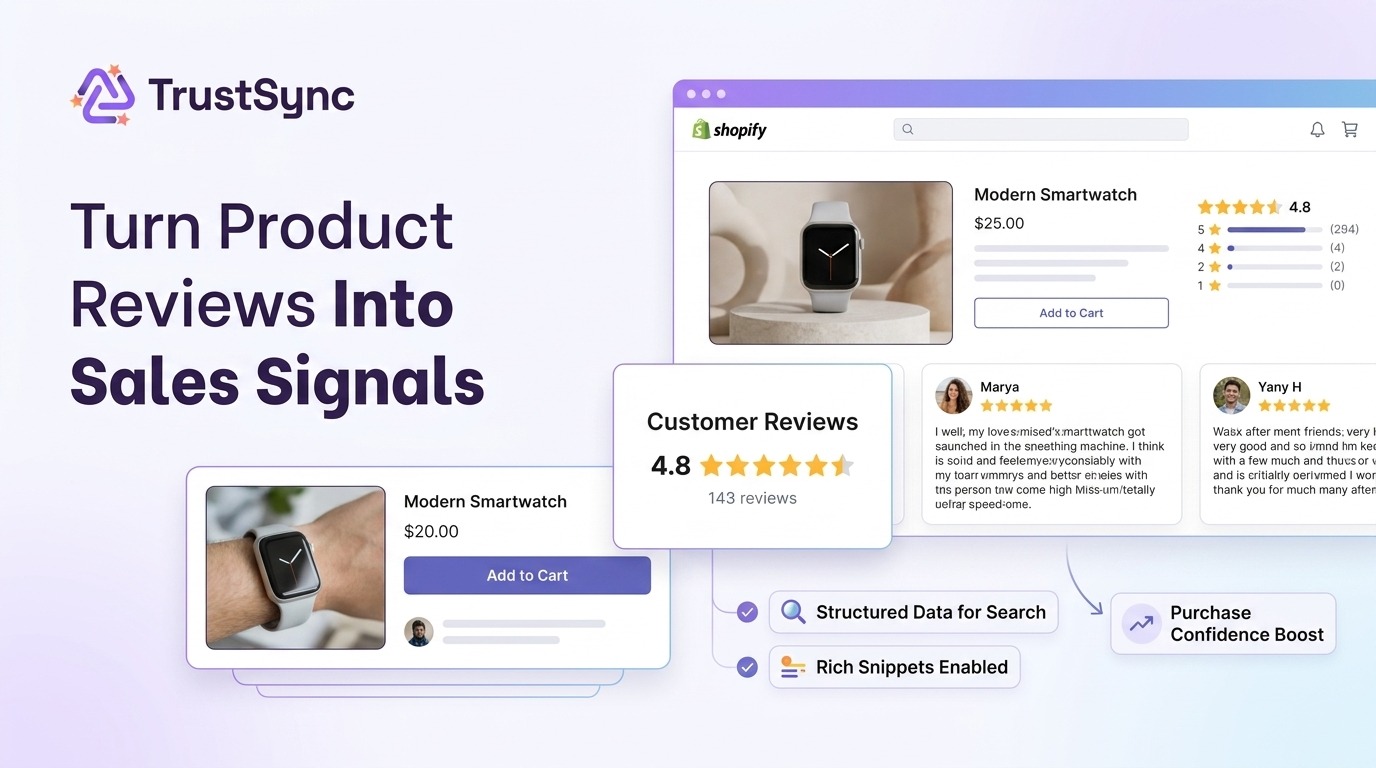
Product pages are the primary location for on-site reviews. Reviews here are directly associated with the product via schema markup, making them the most SEO-valuable placement. Keep reviews server-rendered (not lazy-loaded via JavaScript after the page loads) so that Google’s crawler can read them on the first pass. If your review widget lazy-loads, Google may not see your review content at all, which eliminates the SEO benefit.
Collection Pages
Collection pages benefit from aggregate rating badges showing the average score and review count for products in that category. These visual signals build trust at the browsing stage, before a customer commits to a product detail page. Some merchants also feature selected review excerpts on collection pages to surface relevant customer language that matches category-level search queries.

Homepage
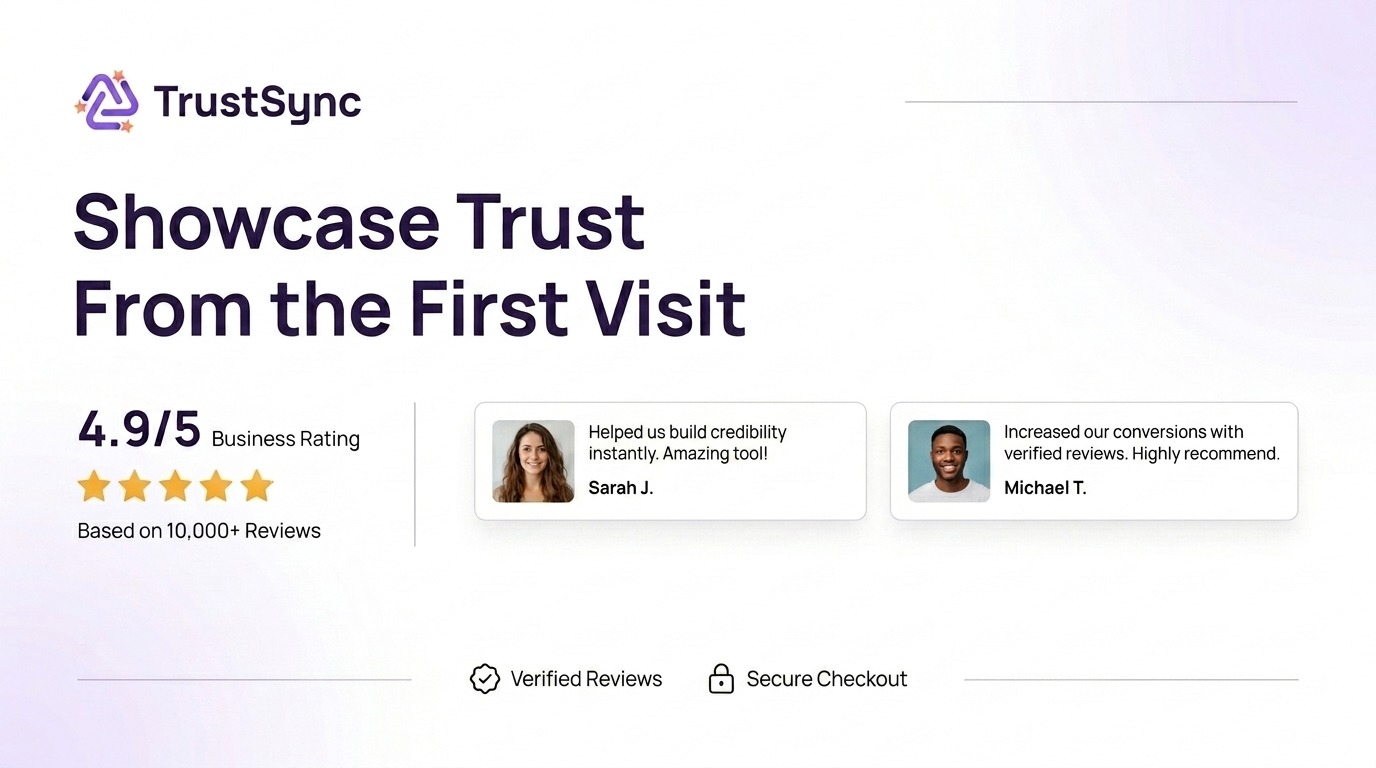
The homepage is a good location for a general brand credibility section using your best reviews or your GBP star rating summary. This does not generate the same schema SEO benefit as product-level reviews but it reinforces trust signals for new visitors arriving from non-branded search queries.
Landing Pages
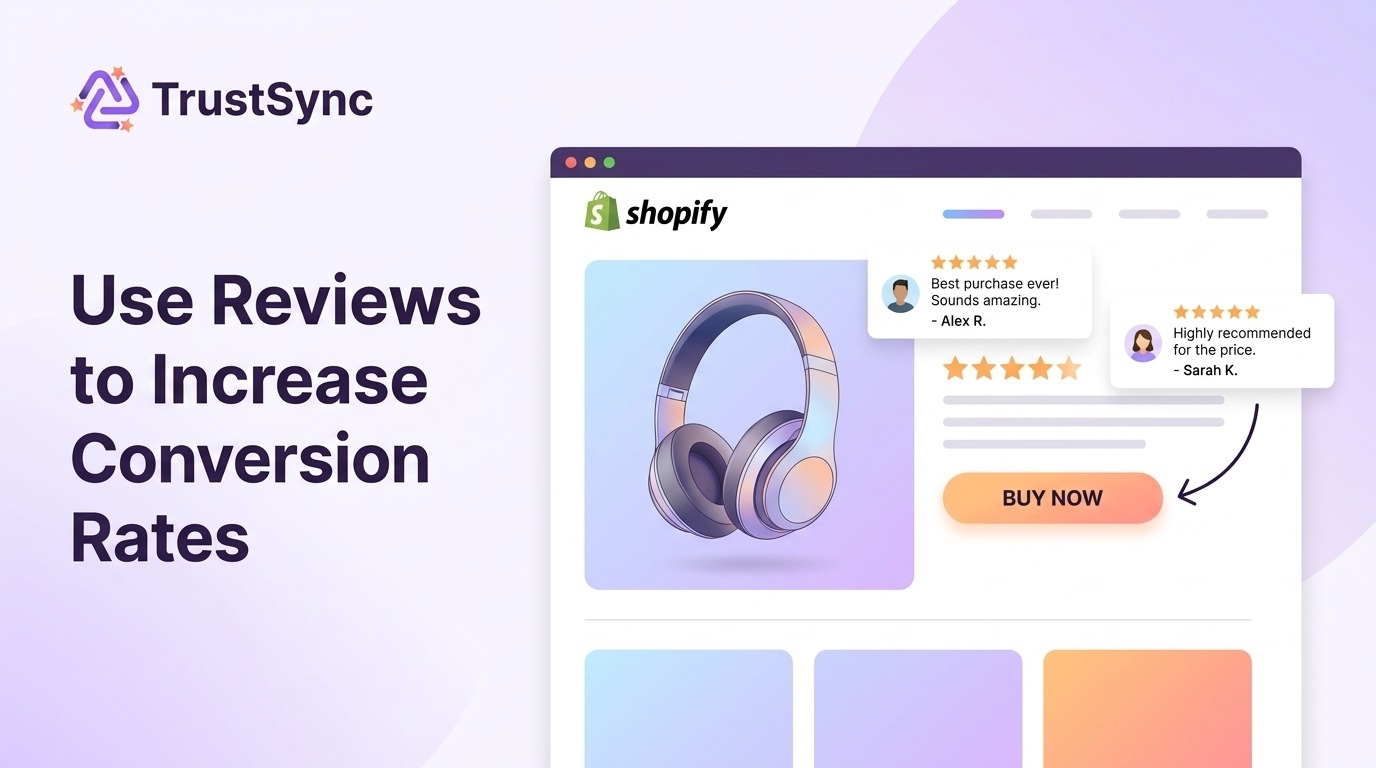
Landing pages for paid campaigns should include reviews relevant to the specific offer or product category. This is more of a conversion strategy than an SEO play but higher conversion rates create positive user behavior signals that indirectly support your organic rankings.
Avoiding Common Review Schema Mistakes on Shopify
Getting review schema right requires avoiding a few common errors that can neutralize the SEO benefit or create problems with Google’s rich results eligibility.
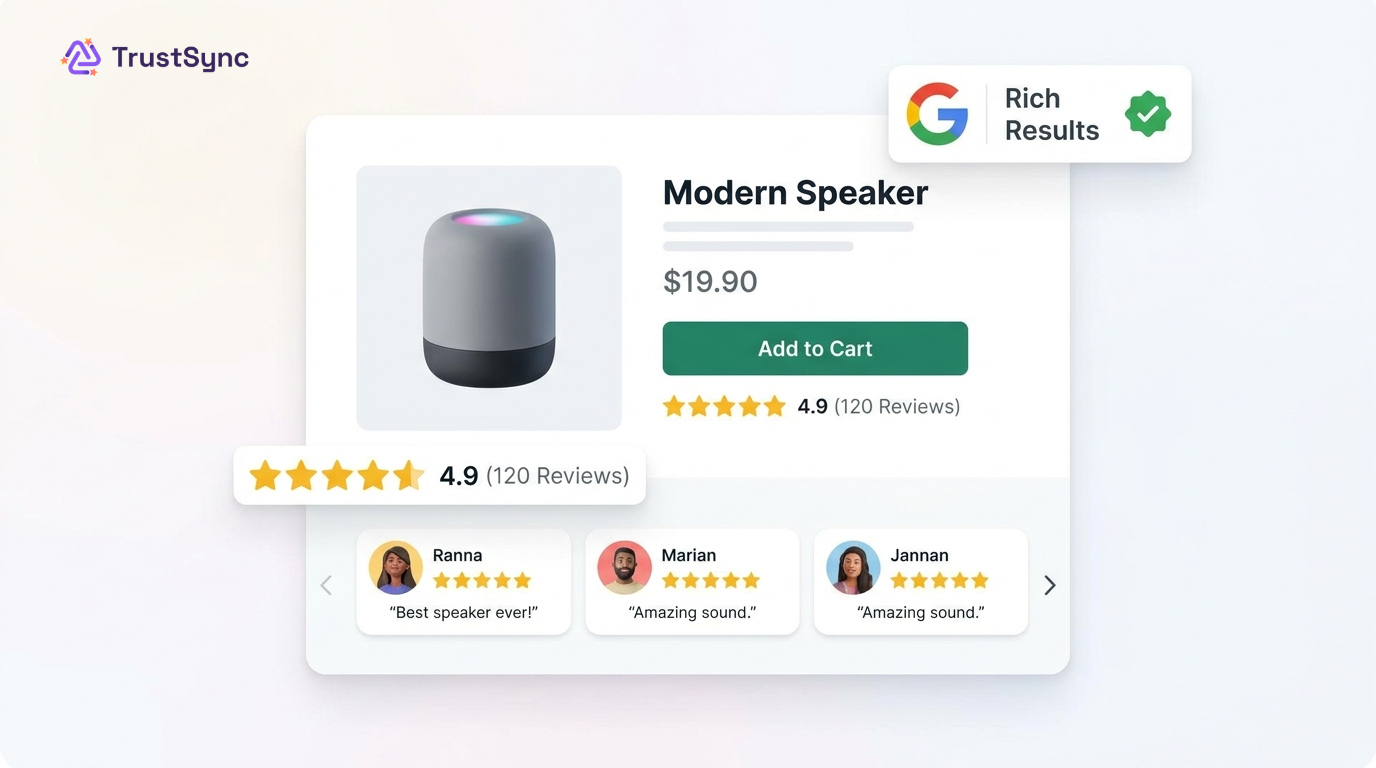
⚠️ Duplicate schema is the most frequent Shopify-specific issue. It occurs when your theme already includes a review schema and your review app adds its own schema on top, creating two conflicting data sets on the same page.
Google will often reject the rich result entirely when it detects duplicate or conflicting schemas. Use Google’s Rich Results Test to check for duplicates and disable schema injection in whichever source is redundant.
⚠️ JavaScript-only rendering is another common problem. If your reviews are displayed entirely through client-side JavaScript with no server-side rendering, Google’s crawler may not execute the script during indexing, leaving your product pages with no visible review content and no schema data for rich results.
⚠️ Rating rounding inconsistencies occur when the star rating displayed visually on your page differs from the ratingValue in your schema. For example, displaying ‘4.6 stars’ while the schema contains ‘4.55’ can flag as inconsistent and may affect rich result eligibility. Keep your display and schema values consistent.
Google Reviews & AI Search: What Shopify Merchants Need to Know in 2026
Search behavior in 2026 is changing due to the rise of AI-generated answers. Platforms like Google AI Overviews, Perplexity and ChatGPT-style search systems now deliver direct responses instead of only listing websites. This shift changes how products and Shopify stores are discovered online. Reviews have become an important input in how these systems evaluate trust and relevance.

Why Google Reviews Now Influence AI Visibility
Google reviews are no longer limited to influencing user decisions or traditional SEO signals. AI systems now analyze review data to understand which brands are trustworthy and relevant to a query. This means your review profile directly impacts whether your Shopify store appears in AI-generated recommendations. Stores without strong reviews are far less likely to be cited in the AI overview.
How AI Search Systems Evaluate Review Signals
AI search engines do not rank pages the same way traditional Google search does. Instead, they evaluate trustworthiness using multiple structured and unstructured signals. Reviews play a central role because they reflect real customer experience. AI systems combine reviews with schema data and brand signals to decide which stores are reliable enough to recommend.
Core signals that AI systems analyze
AI systems typically evaluate Shopify stores using the following inputs:
- Customer review volume and consistency
- Average rating patterns over time
- Structured data, such as review schema
- Brand mentions across the web
- Contextual relevance to the search query
How AI Decides Which Shopify Stores to Recommend
AI systems follow a filtering process before showing any recommendations. This process ensures that only stores with strong trust signals appear in generated answers. Reviews play a major role in this filtering stage because they provide proof of real user experience.
AI recommendation flow
The process typically works like this:
- A user enters a natural language query
- AI identifies relevant Shopify stores or products
- It evaluates trust signals such as reviews and schema
- It filters out stores with weak or missing signals
- It selects brands that meet relevance and trust thresholds
How Shopify Merchants Can Optimize Reviews for AI Search
Optimizing reviews for AI systems requires both technical and content-focused improvements. The goal is to ensure that AI systems can read, interpret, and trust your review data. This includes structured data setup, visibility improvements, and content consistency.
Implement Complete Organization Schema
Structured data helps AI systems understand your brand identity clearly. Without it, review signals lose context and may not be fully used in AI ranking decisions.
What should be included in the schema?
- Business name
- Website URL
- Logo
- Social media profiles
- Contact information
How to Add Review Schema?
You can add a review schema to your Shopify store through manual coding or by using Shopify apps. Let’s take a closer look at both methods.
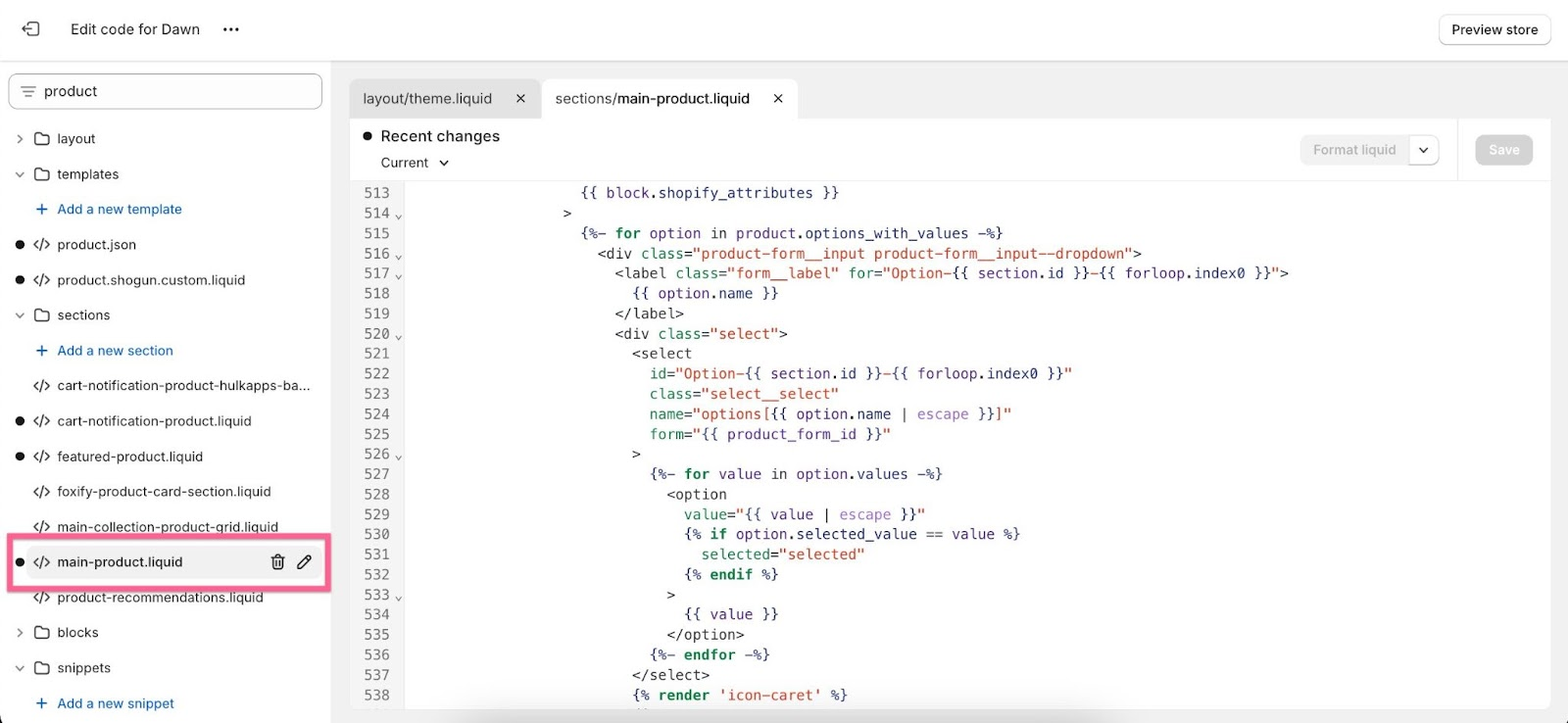
Method 1: Manual Coding
- Go to Online Store → Themes → Edit Code.
- Open your product template file, such as main-product.liquid or product.liquid.
- Add or update the JSON-LD review schema markup.
- Include essential review properties like rating, review count, author and review content.
- Validate the markup using Google’s Rich Results Test.
Method 2: Using a Shopify App
- Install a Shopify SEO or review app that supports review schema.
- Enable review schema from the app settings.
- Let the app automatically add and maintain structured data.
- Test your pages with Google’s Rich Results Test to confirm everything is working correctly.
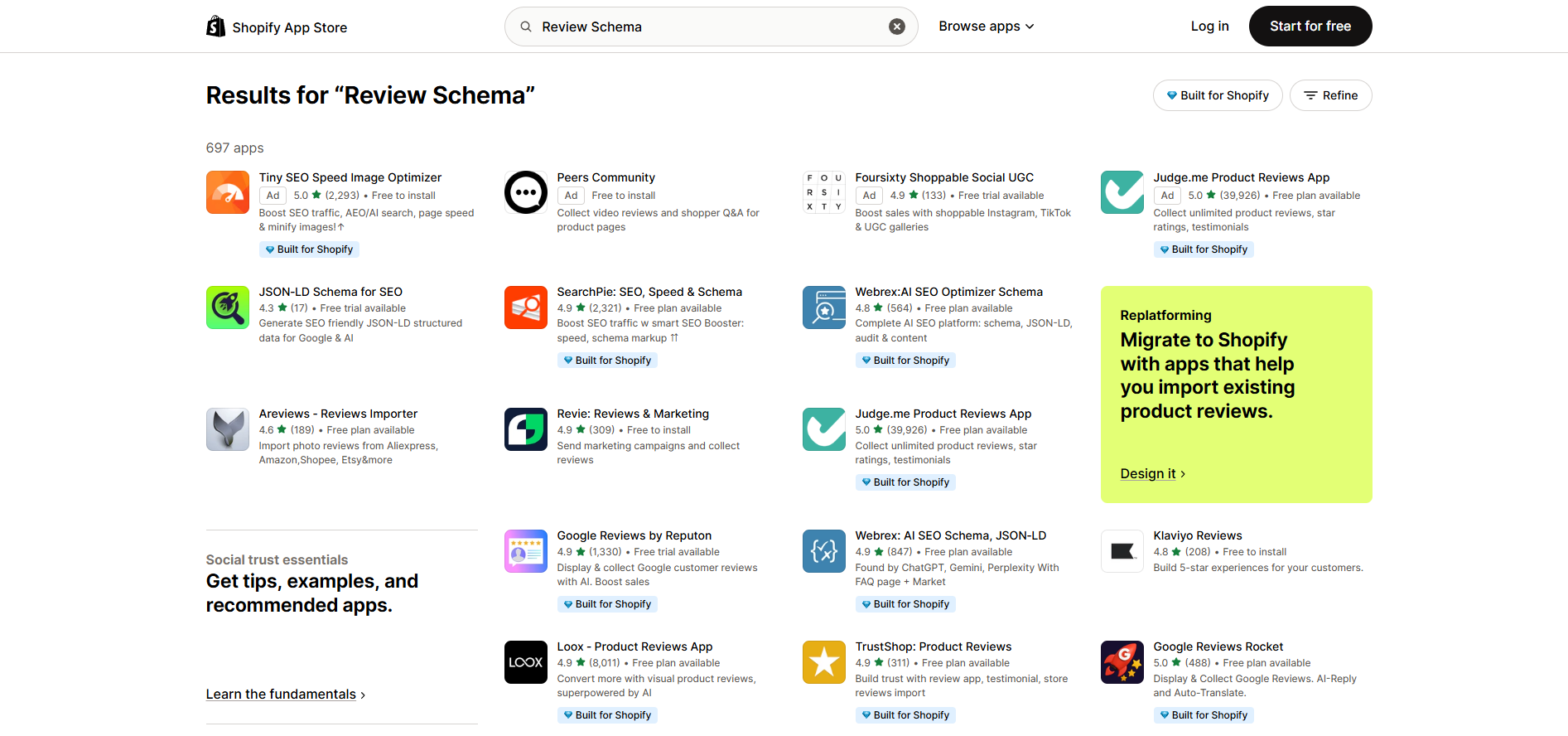
For most merchants, using an app is the faster and easier option because it requires no coding and keeps the schema updated automatically.
Ensure Reviews Are Crawlable And Visible
AI systems rely on content that can be accessed through crawling. If reviews are hidden behind scripts or lazy loading, they may not be detected. This reduces their impact on both SEO and AI visibility.
Best practice
- Use server-rendered review sections
- Avoid JavaScript-only review loading
- Ensure reviews are present in the HTML source
Use Reviews as Semantic Content Signals
Reviews contain valuable language patterns that AI systems analyze. These patterns help define product categories, brand positioning, and customer satisfaction levels. This makes reviews more than just ratings.
Example of extracted signals
- ‘fast shipping’ indicates operational strength
- ‘best skincare product’ indicates category relevance
- ‘high quality and durable’ indicates product positioning
Respond to Reviews Strategically
Review responses are also analyzed by AI systems. They help reinforce brand identity and product context when written correctly. A consistent tone and relevant keyword usage in responses can improve topical authority.
Effective response approach
- Mention product categories naturally
- Reinforce brand values in replies
- Keep responses consistent across reviews
Example
👤 Customer: ‘Great experience with your store.’
❌ Weak response: ‘Thank you for your feedback.’
☑️ Strong response: ‘We are glad you enjoyed our Shopify product collection. We focus on delivering reliable and high-quality items for everyday use.’
Common Mistakes That Reduce AI Visibility
Many Shopify merchants collect reviews but fail to optimize them for AI systems. These mistakes reduce visibility in both traditional SEO and AI-generated search results.
Common issues include
🔴 Ignoring Google Business Profile reviews
🔴 Not responding to customer feedback
🔴 Using lazy-loaded review systems
🔴 Missing structured data implementation
🔴 Inconsistent brand messaging across platforms
Google Reviews clearly influence Shopify SEO performance but the real difference comes from how effectively merchants can create and control those review signals over time.
Next, we will see how Shopify apps can turn this into a practical, automated workflow for merchants.
How to automate Google Reviews for Shopify SEO
Google Reviews influence Shopify SEO through structured trust signals such as review volume, recency and consistency. The challenge for most merchants is not understanding their importance but maintaining them at scale.
TrustSync helps solve this by automating review collection and improving how these signals are generated over time. This creates a continuous flow of SEO-relevant customer feedback that strengthens visibility across search systems.
TrustSync SEO Impact Summary
| SEO Areas | Impacts | Key Feature Actions |
| Core SEO Signals | Builds trust and review-driven ranking strength | • Sends automated review requests post-purchase • Increases overall review volume • Maintains consistent review flow • Collects reviews across Google |
| Local SEO | Improves Google Maps and local pack visibility | • Directs users to Google Business Profile reviews • Increases Google review submissions • Maintains steady review velocity • Supports local reputation growth |
| Negative Review Control | Protects ratings and improves brand perception | • Detects unhappy customers early • Routes feedback privately for resolution • Reduces public negative reviews • Maintains stable rating profile |
Start Building Your Review Strategy Today
Google reviews can boost Shopify SEO, but the real value comes from consistent action. Start by optimizing your Google Business Profile and matching NAP details with your store. Use a review app with schema markup and validate it with Google’s Rich Results Test.
Automate post‑delivery emails to make reviews easy, then respond to all feedback within 48 hours. Reuse review language in product descriptions, FAQs and collection pages. These steps require no technical expertise or big budget; consistency turns reviews into SEO signals, credibility builders and conversion drivers all at once.
Is this guide helpful? Try TrustSync to automate review collection, increase positive customer feedback and improve your store’s online reputation.
Visit our website to stay updated with the latest tutorials, product updates and Shopify solutions.