
According to Capital One Shopping Research, 93% of consumers read reviews before making a purchase, yet most Shopify stores collect them passively, inconsistently, and far too slowly to keep up with the competition. A handful of five-star reviews is not a strategy. It is luck.
The problem is not that your customers do not want to leave reviews. It is that most stores never give them a real reason or a clear path to do so. Reviews trickle in when someone is delighted or outraged, and the vast majority of satisfied customers, the ones who would have said something great, disappear in silence.
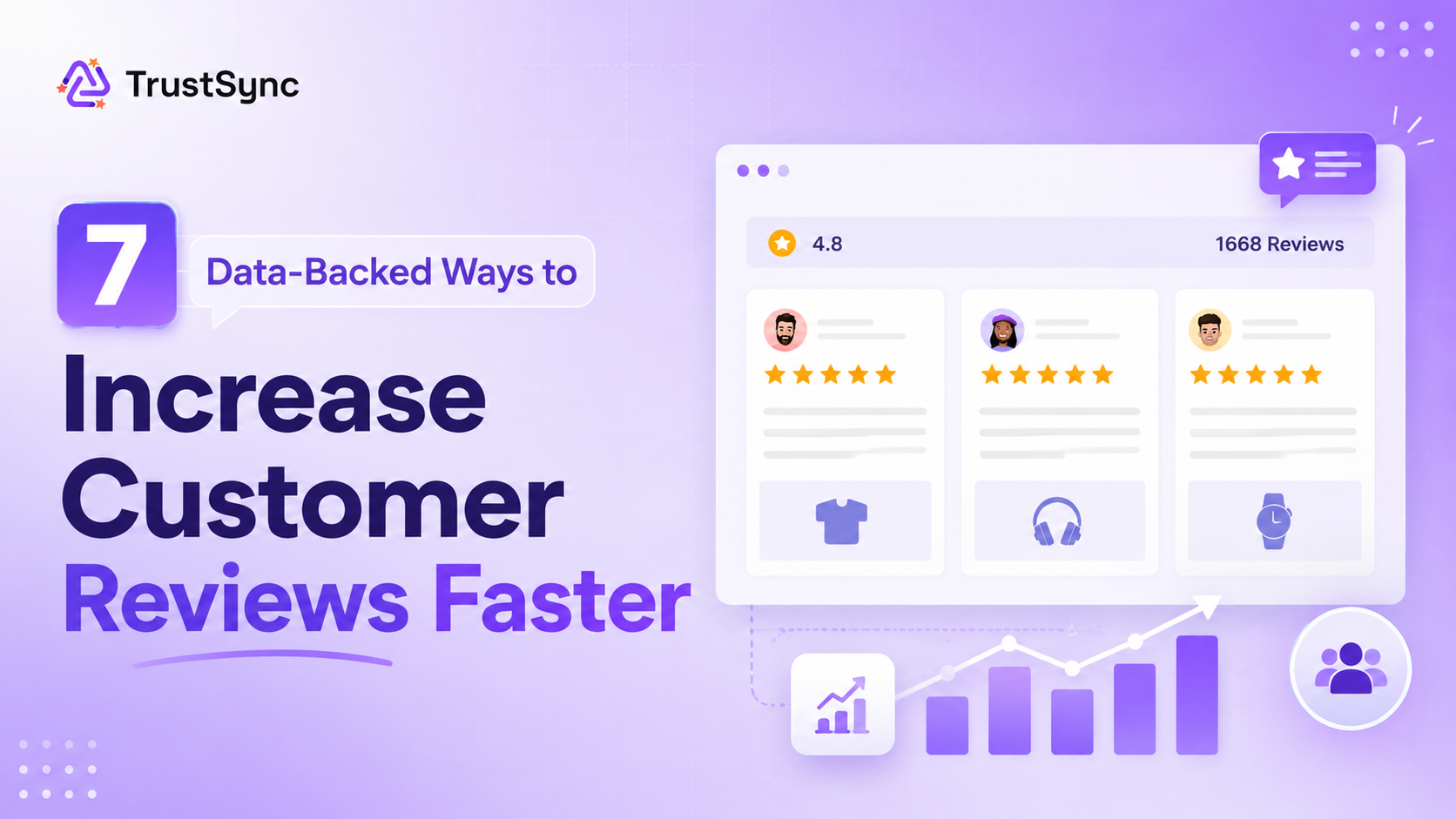
That is the gap this guide is designed to close. Below are 7 proven, data-backed strategies to systematically increase customer reviews without chasing customers manually, refreshing your inbox, or begging on social media. Each tactic is actionable, scalable and built for Shopify stores that are serious about turning social proof into a growth engine.
A Quick Summary / TL;DR
Before diving into the full guide, here is a quick breakdown of the most effective, data-backed ways to increase customer reviews faster.
These strategies help Shopify stores collect reviews more consistently, improve conversion rates, strengthen SEO, and build long-term trust without relying on luck or manual follow-ups.
| Key Takeaway | What You Need to Know |
| Reviews directly influence sales | Products with five or more reviews are 270% more likely to be purchased than products with none. More reviews build trust and increase conversion rates. |
| Timing matters more than copy | Sending review requests 3–7 days after delivery generates the highest response rates. Asking too early reduces review quality and completion rates. |
| Automated review requests work best | The fastest way to increase customer reviews is through automated post-purchase emails triggered after confirmed delivery. |
| One follow-up email is enough | A single reminder email can improve response rates by up to 60%, but multiple follow-ups often feel spammy and hurt customer trust. |
| Reducing friction increases completions | Direct review links, mobile-friendly forms, and no login requirements significantly increase review submission rates. |
| Personalization boosts engagement | Review requests that include the customer’s name, product purchased, and purchase context consistently outperform generic emails. |
| Past customers are an untapped opportunity | Previous buyers who never left feedback are often the easiest source of new reviews when approached with thoughtful re-engagement emails. |
| Negative feedback should be handled privately first | Smart feedback filtering helps resolve unhappy customer experiences before they turn into damaging public reviews. |
| Responding to reviews encourages more reviews | Customers are more likely to leave reviews when they see businesses actively responding and valuing customer feedback. |
| Consistency beats occasional campaigns | The stores that grow reviews fastest rely on an ongoing automated system, not one-time review pushes or manual outreach. |
Why Increasing Customer Reviews Is a Business Growth Strategy (Not Just a Vanity Metric)
Before diving into tactics, it is worth understanding why reviews deserve to sit in your growth strategy and not just your marketing checklist.
How Reviews Directly Influence Conversion Rates
Reviews do not just make your store look trustworthy. They change buying behavior in measurable ways.
Another study from Capital One Shopping Research shows that products with five or more reviews are 270% more likely to be purchased than products with none. According to Trustmary’s review statistics, a 0.1-star improvement in your average rating correlates with a 25% increase in conversions. That is not a marginal lift. It is the difference between a store that scales and one that stalls.
Review volume also matters independently of rating. A product with 200 reviews at 4.3 stars will generally outperform a product with 8 reviews at 4.9 stars, because consumers weigh recency and volume as signals of legitimacy. The goal is not just to get a high rating. It is to build a steady, growing stream of recent reviews.
The SEO Impact of a Consistent Review Volume
Reviews are free, user-generated content that search engines reward. Every new review adds unique text to your product pages, signaling freshness and relevance to Google’s crawlers. Stores that generate reviews consistently, not in one burst, benefit from compounding SEO gains over time.
Star ratings also appear directly in Google Shopping results and rich snippets, improving click-through rates before a visitor even lands on your page. Review velocity (how regularly new reviews come in) is a ranking signal that passive collection strategies can never optimize. Systematic outreach can.
Now that you know the importance of customer reviews as part of your business growth strategy, let’s dive into the ways you can increase customer reviews faster.
Way 1: Send Automated Post-Purchase Review Request Emails
This is the single highest-leverage action most Shopify stores are not doing correctly. According to Capital One Shopping data from 2026, 78% of consumers were prompted to leave a review last year, and 65% of those who were asked actually followed through. The ask is the unlock.
Why Timing Beats Copy Every Time
You can have the most beautifully written review request email in the world, but if it arrives at the wrong moment, it will be ignored. PowerReviews analyzed over 12 million review requests and found that the sweet spot for sending is 3 to 7 days after confirmed delivery. Customers have had time to use the product, but the experience is still fresh.
A Kudobuzz study found that waiting 7 to 8 days after delivery, rather than sending immediately after purchase, can lift response rates from 8 to 10% all the way to 18 to 22%. That is more than double the performance from a timing adjustment alone.
The trigger for your email should be delivery confirmation, not order confirmation. If you send the request before the product arrives, you are asking customers to review something they have not touched yet.
What a High-Converting Review Request Email Looks Like
Keep it short, specific, and low-friction. The anatomy of a high-converting review request email includes:
- Subject line: Reference the product by name. “How is your [Product Name] treating you?” outperforms generic subject lines significantly.
- Body: One sentence of context, one sentence of the ask, and a single prominent CTA button. Do not bury the link in a paragraph of text.
- The link: Take customers directly to the review form, not your homepage, not your product page. Every extra click is a drop in completion rate.
- Social proof hook: A brief line like “You are one of 240 customers who recently bought this. Your feedback helps the next person decide” can increase willingness to respond.
Way 2: What Is the Best Way to Follow Up Without Annoying Customers?
Most stores either follow up too aggressively (multiple emails over a week) or not at all. Both are mistakes. The data points to a clear middle path.
The One-Reminder Rule
Research from Reputation shows that two-touch sequences, an initial request followed by a single reminder, improve response rates by up to 60% compared to a single email. But the keyword is single. Sending a third email does not improve rates; it damages brand perception and increases unsubscribes.
The optimal gap between your first request and your first follow-up is 5 to 7 days. If a customer has not responded after your reminder, move on. Pushing further signals desperation and erodes trust.
How to Write a Follow-Up That Feels Helpful, Not Pushy
Framing is everything in a follow-up email. The goal is to make the customer feel like you are checking in, not chasing them.
Avoid: “You have not left a review yet.” This is accusatory and puts the customer on the defensive.
Try instead: “We hope you are loving your [Product Name]. If you have a moment, your honest experience would mean a lot to future shoppers.”
Notice the shift: it is about them, not about your review count. You can also use the follow-up as a light customer service touchpoint: “Is there anything about your order we can help with?” This has the dual benefit of catching dissatisfied customers before they go public.
Way 3: Make Leaving a Review as Simple as Possible
The number one reason satisfied customers do not leave reviews is friction. They meant to do it. They opened the email. They clicked the link. And then they hit a login wall, a multi-step form, or a confusing redirect and closed the tab.
Reduce Friction at Every Step
Every additional step between “I want to leave a review” and “I left a review” costs you completions. Audit your review flow with this checklist:
- Does your review link go directly to the form, pre-populated with the customer’s name and product?
- Can customers submit a review without creating an account or logging in?
- Is the form mobile-optimized? More than 60% of email opens happen on mobile devices.
- Does the CTA button stand out visually, or is it competing with other links in the email?
One-click review links, where clicking the email CTA takes the customer directly into a pre-filled form, can dramatically lift completion rates. If your current setup requires more than two actions from the customer, you are leaving reviews on the table.
Multi-Platform Review Links: Meet Customers Where They Already Are
Not every customer uses Google. Some trust Facebook. Others check industry-specific platforms. Giving customers a choice of where to leave their review removes the friction of “I do not have a Google account,” which is one of the most common silent abandonment reasons.
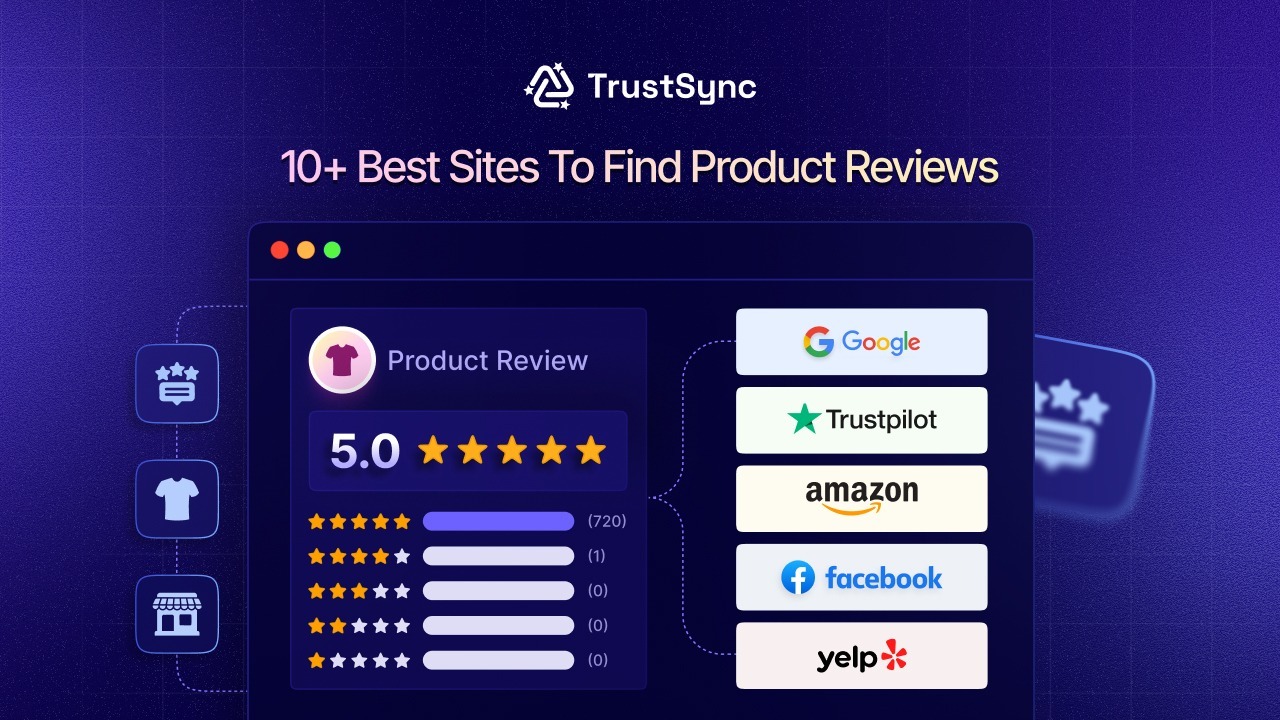
Including links to Google, Facebook, and your own on-site review platform in a single email (with a clear recommendation on which to use first) lets customers self-select into the path of least resistance.
Way 4: Personalize Your Review Requests for Higher Response Rates
Generic emails feel like marketing. Personalized emails feel like a conversation. Customers respond to the latter at significantly higher rates.
Name, Product, Timing: The Three Pillars of Personalization
At a minimum, every review request email should include:
- The customer’s first name in the subject line or greeting
- The specific product name they purchased (not “your recent order”)
- Delivery-triggered timing, sent after the product arrives, not at a fixed interval after purchase
These three elements alone separate your outreach from the dozens of generic marketing emails customers receive daily. Referencing the exact product also makes the review request feel relevant to the moment. The customer just used it and has an opinion.
Segment by Customer Type for Smarter Outreach
Not all customers are the same, and your review requests should not treat them that way.
- First-time buyers respond well to empathy-driven copy that acknowledges they are new. Acknowledge the trust they placed in you.
- Repeat customers are your most loyal advocates. A different tone, treating them like insiders, tends to produce more detailed, enthusiastic reviews.
- High-value order customers may respond to a more premium, hand-crafted feel in the email, even if it is still automated.
Segmentation does not require a complex setup. Even splitting your outreach into “first purchase” and “returning customer” sequences can meaningfully improve both response rates and review quality.
Way 5: Activate Your Past Customers (Your Untapped Review Pool)
Your best source of new reviews might not be new customers at all. Every customer who has purchased from your store and never left a review is an untapped opportunity.
How to Re-Engage Customers Who Never Left a Review
Past-order campaigns are one of the highest-ROI tactics available to Shopify stores, especially those that have been operating for more than a year without a systematic review strategy. You already have the relationship. You do not need to re-earn trust. You just need to ask.
The key is to re-engage without it feeling like an out-of-nowhere cold email. Reference the specific product, acknowledge that time has passed, and frame the ask around helping future shoppers rather than boosting your metrics.
What to Say in a Past-Order Outreach Email
A simple, effective structure for re-engagement:
“Hi [Name], a few months ago you ordered [Product Name] from us. We hope you have been enjoying it. We are always working to improve and help shoppers make confident decisions. If you have a minute, an honest review would mean a lot. Here is a direct link: [Review Link].”
Keep the tone low-pressure and genuine. Do not offer discounts or incentives (against most platforms’ policies and FTC guidelines). The ask itself, framed around community contribution rather than your business needs, is enough for a meaningful percentage of past customers to respond.
Way 6: Manage Negative Feedback Before It Goes Public
Not all feedback should go public. This is not about hiding problems. It is about giving unhappy customers a private channel to share their experience so you can make it right before a one-star review becomes the first thing a new visitor reads.
Why Negative Review Filtering Protects And Grows Your Rating
Every time a dissatisfied customer submits a public review that could have been resolved privately, two things happen: your overall rating drops, and a customer service opportunity is lost. Negative feedback filtering intercepts this by asking customers to rate their experience before they are directed to a public review platform.
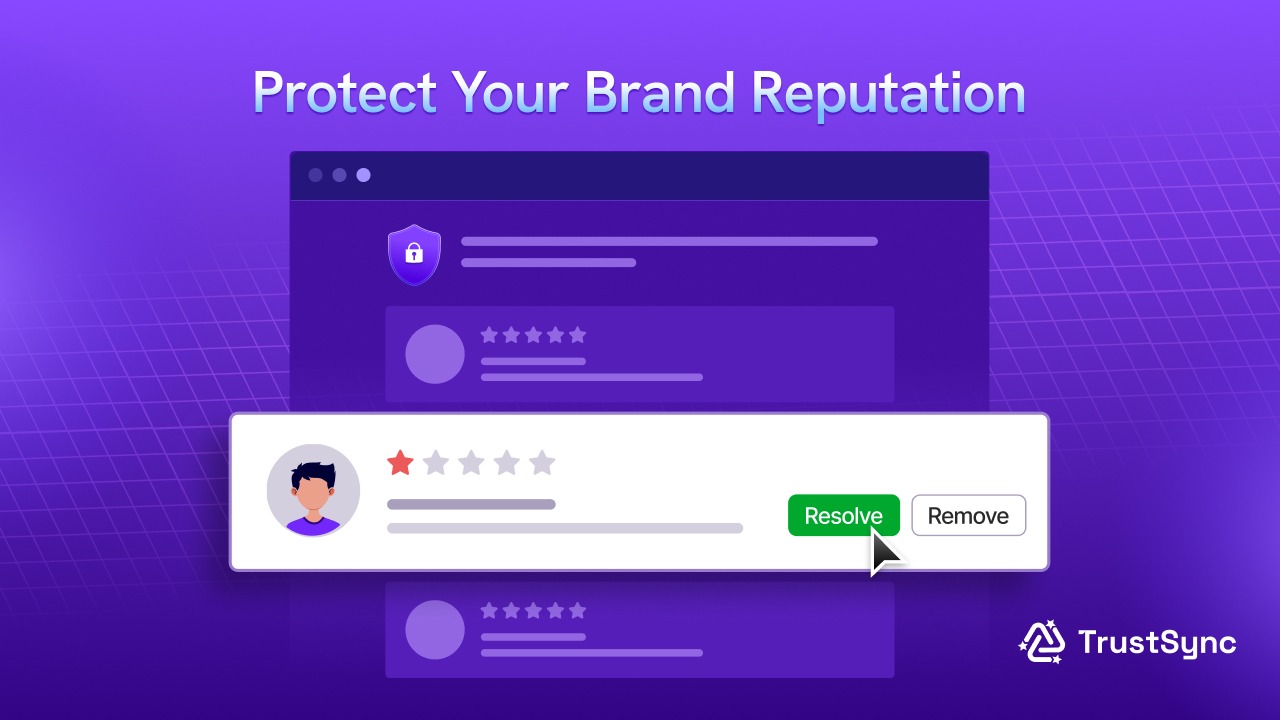
Customers who indicate a negative experience are routed to a private feedback form where you can collect details and respond directly. Customers who had a positive experience are directed to leave a public review. This process is fully compliant with major platform terms of service when implemented correctly. You are not suppressing reviews; you are triaging them.
How Private Feedback Builds Better Products
Private feedback from dissatisfied customers is some of the most valuable data your store can collect. It tells you about product issues, shipping problems, and customer service gaps before they become widespread. Stores that systematically collect and act on private feedback improve product quality and fulfillment processes in ways that permanently lower their negative review rate, not by suppressing complaints, but by eliminating their root causes.
Way 7: Respond to Every Review to Encourage More
This is the most underused growth lever in review management. Responding to reviews is not just good customer service. It directly encourages more reviews.
Does Responding to Reviews Actually Generate More Reviews?
Yes, and the data is clear. According to BrightLocal’s Local Consumer Review Survey (2026), 80% of consumers are more likely to use a business that responds to every review. The same research confirms that 89% of consumers expect business owners to respond to reviews. Seeing a response signals that the business actually reads and values feedback, which makes the act of leaving a review feel meaningful rather than futile.
Stores that do not respond are perceived as inattentive, even if their products are excellent.
How to Respond to Negative Reviews Without Damaging Brand Trust
Negative reviews handled well are often more persuasive than perfect ratings. A thoughtful, non-defensive response to a one-star review demonstrates maturity and customer-centricity to the hundreds of silent readers who will see it.
A high-trust response framework for negative reviews:
- Acknowledge: Thank them for the feedback and validate their experience without being defensive.
- Own it or clarify: If you made a mistake, say so clearly. If there is a factual misunderstanding, clarify it calmly.
- Offer a resolution: Invite them to contact you privately to make it right.
- Keep it brief: Long defensive responses signal insecurity. Short, warm, action-oriented responses signal confidence.
Never argue, never make excuses, and never copy-paste the same response across multiple reviews. Readers notice.
How Does TrustSync Help Shopify Stores Increase Customer Reviews Faster?
Everything outlined in this guide can be done manually, but it will not scale. The stores that consistently out-collect competitors on reviews are the ones that have automated the system using tools like TrustSync.
Automated Review Requests Built for Shopify
TrustSync integrates directly with Shopify to trigger review request emails based on fulfillment events, with no manual exports and no guesswork on timing. Emails go out at the optimal window (3 to 7 days post-delivery), with the customer’s name and product pre-populated.
Follow-up sequences fire automatically, and past-order campaigns can be launched to your entire customer history in minutes.
Multi-Platform Collection, Negative Feedback Filtering, and Analytics in One Place
TrustSync handles the full review lifecycle from a single dashboard:
- Multi-platform collection routes customers to Google, Facebook, or on-site review forms based on your preferences.
- Negative feedback filtering intercepts dissatisfied customers and routes them to private feedback forms before they post publicly.
- Email analytics lets you track open rates, click-through rates, and review conversions by campaign, so you know exactly what is working and what to improve.
Everything is configurable, Shopify-native, and designed to run without ongoing manual effort.
Try TrustSync to Increase Customer Reviews Faster
Increasing customer reviews is not about luck, and it is not about sending one email and hoping for the best. It is a system, and systems can be built, optimized, and scaled.
The seven strategies in this guide work together. Automated timing gets the first request right. A single follow-up doubles your response rate. Reducing friction turns intentions into completions. Personalization makes customers feel seen.
Past-order campaigns unlock reviews you have already earned. Negative feedback filtering protects your rating while improving your product. And responding to every review creates a flywheel effect that makes future customers more likely to contribute.
Pick one tactic, implement it this week, and measure the result. Then add another.
Ready to put the whole system on autopilot? Get started with TrustSync and start collecting reviews across every platform, automatically.