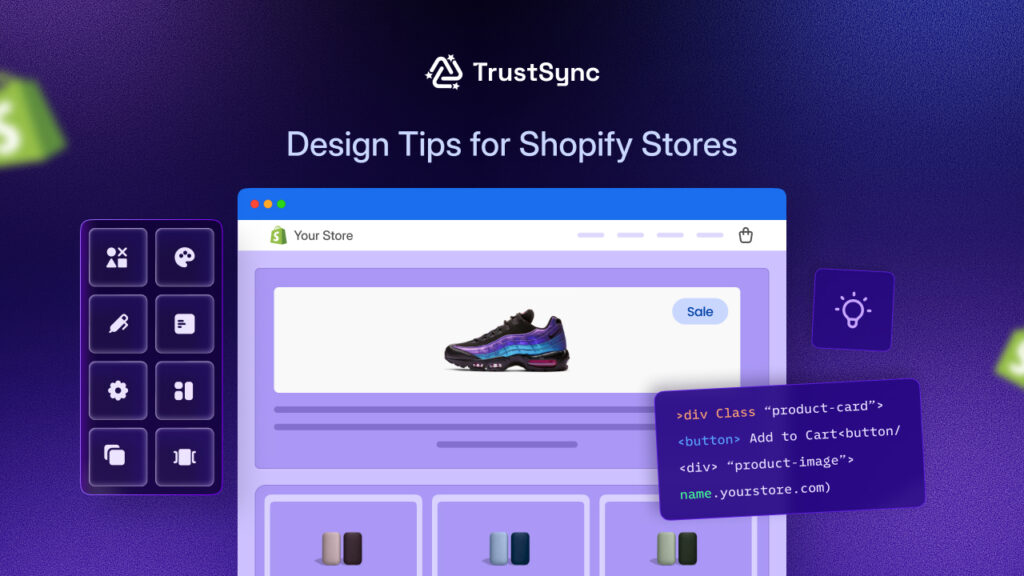

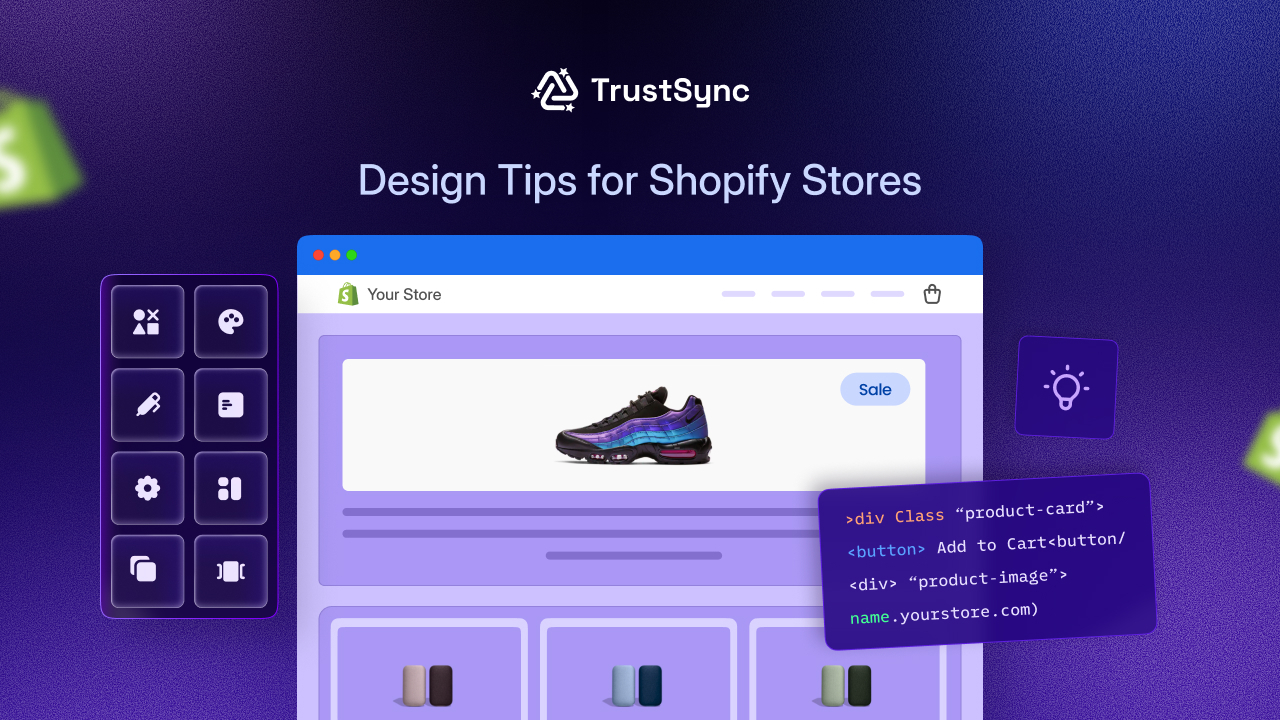
What is the first thing you notice when you land on a new eCommerce website? Is it the deals they have going on? The products they offer? Or the way the complete thing is designed? Well, the answer depends heavily on the individual visitor. But did you know that data suggests about 48% of internet users judge a website’s credibility based on its design, while about 57% are put off by a site that is poorly designed?
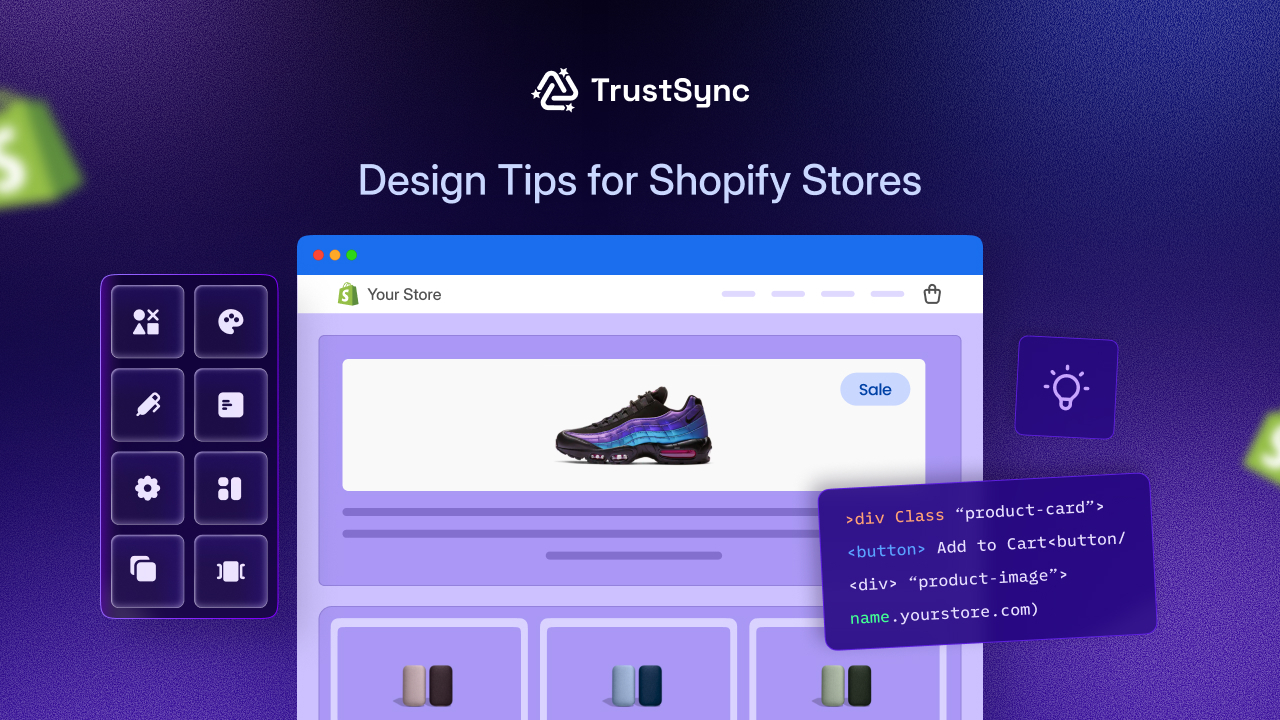
So, eCommerce website design must matter a lot, not only in shaping customer perceptions of trust and credibility, but also for facilitating conversion and sustained retention. In this blog, we explore factors that make for great Shopify website design and provide advice you can keep in mind for when you design a Shopify website.
Credibility in 50 Milliseconds: Why eCommerce Website Design Matters
Strategic eCommerce website design works as a business multiplier beyond just aesthetics. Good Shopify website design shapes first impressions, user trust, navigation ease and long-term revenue.
You see, Shopify website designers have about 50 milliseconds to make a good first impression and influence customer behaviour towards action. Poor design risks higher bounce rates; this is especially true for newer brands that do not have a longstanding history and repute, as say a known brand like Chanel might.
A Short Detour into Building Brand Reputation

Today, there are roughly over 30M eCommerce websites. This explosion of eCommerce means there are more opportunities now, but there is also more competition than ever before. So, it is crucial to hook your customers on the first go and once they are in, we ensure consistent brand loyalty. And how do we do that?

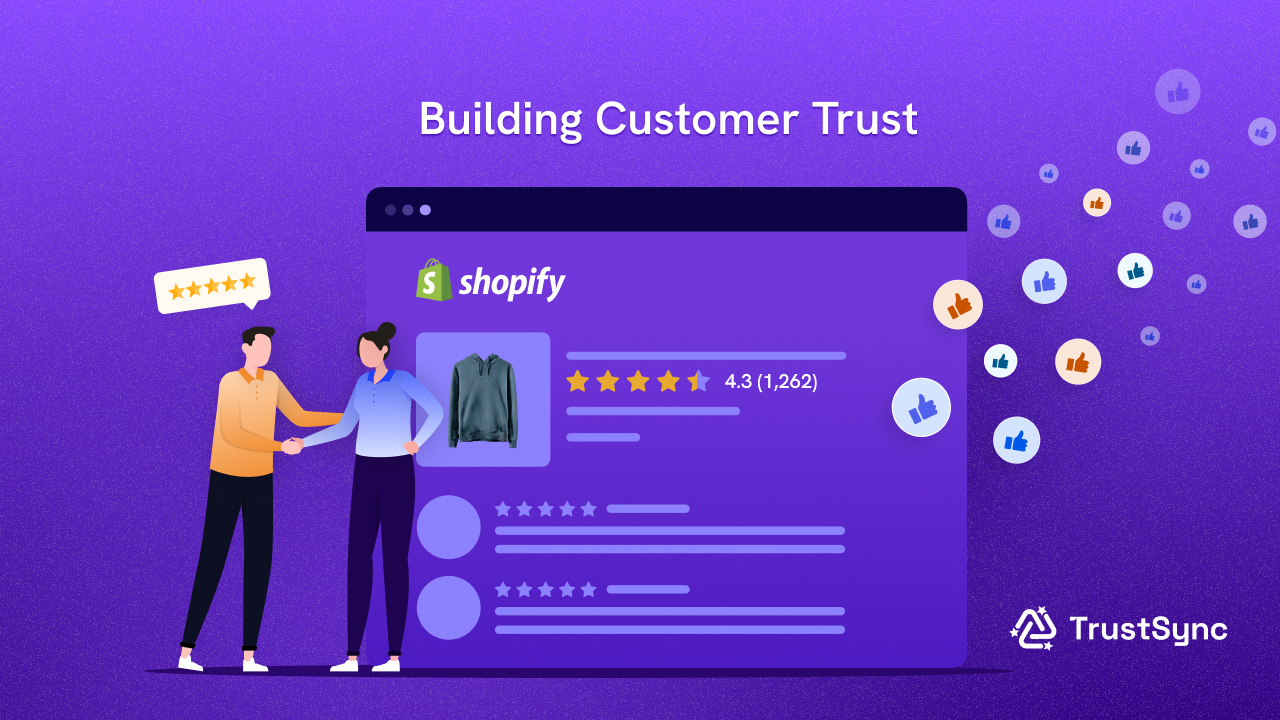
By delivering a comfortable and memorable shopping experience and checking back with your customers post-purchase to resolve any issues they may have faced. For Shopify eCommerce stores, apps like TrustSync facilitate review collection and easy customer-seller communication. To learn more, read our blog titled The Ultimate Guide to Building Customer Trust on Shopify with TrustSync.
Now, back to why eCommerce website design matters.
Design Ascertains Credibility with Good First Impressions
Visitors form opinions quickly, in just milliseconds. Many prioritize layout and navigation and among them, many judge brand credibility by design alone. Professional visuals signal legitimacy and reduce skepticism in online shopping, where trust is a valuable asset.
Good Shopify Website Design Positively Impacts Conversion And Revenue
Intuitive design means less navigational friction. Clear navigation allows users to keep browsing fluidly, improving conversions. Nearly 60% of all website traffic first comes from mobile, really drawing attention to the importance of mobile-responsive layouts. These eCommerce website design factors form part of the best Shopify layouts that ultimately impact conversions and drive revenue.
The Best eCommerce Pages Boost Engagement And Trust
Clean hierarchies, trust signals such as badges and policies, and fast page loads foster confidence. How often have you clicked off a website because it was taking a couple of seconds too long to load? eCommerce website design with consistent branding reinforces recognition, while faster sites and sleek design build engagement, turning one-time browsers into loyal buyers.
The Best Shopify Layouts Facilitate Overall Business Growth Outcomes
Good eCommerce website design operates as cause and effect. Reducing friction means users move faster from entry to checkout. Improved clarity leads to increased engagement, trust, conversions and lifetime value. All of these are sought-after business outcomes, triggered by intentional eCommerce website design choices.
4 Things to Keep in Mind When You Design eCommerce Websites
When you design a Shopify website, keep in mind that your eCommerce storefront is not created with isolated visual choices. Rather, you are curating trust, clarity, usability and performance into a system of revenue.
Every element, from how safe a checkout feels to how easily a product is found on mobile, directly shapes buying behavior. The following 4 areas below cover the non-negotiables that separate good eCommerce design from stores that may be missing out.
1. Your eCommerce Website Design Needs to Build Trust With Customers
Customers judge your credibility before they decide to buy anything and trust reduces hesitation at key moments like checkout, returns and payments. When you design eCommerce websites, need to integrate signals all throughout the customer journey that build trust and drive sales.
| What to Do | Why & How to Do It |
|---|---|
| Be sure to add your contact information | Make it easy for visitors to reach you. Include email, phone and mailing address in the footer and on a dedicated contact page. Visible contact details reassure customers and, knowing they can reach out if issues arise, offer a buffer against cart abandonment. |
| Include clear, accessible return policies | Communicate your return policies clearly and accessibly. Fair return policies, highlighting refunds or exchanges, boost confidence by inspiring faith in your brand and buffering against anxieties related to customers’ loss. |
| Ensure secure payment gateways | Offer secure payment options such as Shopify Payments, Shop Pay, Apple Pay, Google Pay and the like, so your customers have confidence in the transaction. Payment gateway becomes part of the overall system design beyond just the aesthetics of the best Shopify layouts. |
| [Crucial] Collect customer reviews & show testimonials | Collect customer reviews post-sales and show the feedback, displayed on product pages. Reviews not only validate your brand, but they also work as social proof. Positive reviews reassure new customers, while the not-so-positive ones contribute to perceptions of realness. In that sense, both are important. |
| Consider these advanced trust enhancers | There are countless more ways to incorporate trust signals into your eCommerce website design. Here are a few ideas. Incorporate user-generated content (UGC) videos and real-time feedsEnable live chat for instant support; this facilitates 24/7 customer support. Add authentic certifications (such as organic, eco-friendly) to strengthen credibility further. |
2. Create a Visually Compelling Experience When You Design a Shopify Website
We are, at least to some degree, quite vain. We like exuberance and elegance, and we like to look at pretty things. So, when Shopify website designers are brainstorming for a project, they think beyond simple functionality. They think colour, type, mood, tone and the overall brand language, while making it look exactly that: pretty.

Look at Shopify’s Winter 2026 webpage, for example. It does not sell anything directly, nor does it promote Shopify explicitly. What it does is quiet, subtle and impactful, and as the viewer, you want to keep scrolling. Thinking long term, that is what good design does: it leaves a memorable impression, so when a need does arise, the solution comes to mind instantly.
| What to Do | Why & How to Do It |
|---|---|
| Photograph your products well | Properly composed, well-lit and high definition product photos are part of what sets your catalogue apart from any pain-Jane eStore. Use multiple angles, lifestyle shots and clean backgrounds, focusing on the utility of your products. |
| Use color consistently aligned with your brand | Color has a language of its own and designers know that. Deep colors evoke mystery (think a brewery, or vintage wine store); pastels make you feel like it is spring (think a kids’ craft store) and neons are fun, funky and playful (think an avant-garde streetwear store). Depending on what you are communicating (and selling) with your Shopify store, use color accordingly to guide attention, evoke emotion and maintain accessibility. |
| Use fonts consistently as well | Much like color, fonts too tell a story. Let us look back at Shopify’s Renaissance for a second. In general, Sans Serif fonts look modern and bold, while Serif fonts seem to hold history and eloquence. Shopify’s Winter 2026 webpage combines both to evoke the feeling of a modern resurgence of the arts. When you design a Shopify website, make fonts a part of your business story, establishing brand presence and converting that into trust and loyalty. |
| Ensure logical visual hierarchy | Logical visual hierarchy reduces cognitive load and decision fatigue. When your shopper sees what matters most (product value → price → proof → action), they feel they can rely on your store.When the site feels intentional and professional, there is greater trust; conversions rise as attention flows naturally to CTAs instead of getting lost. Ultimately, the result is more sales because clarity shortens the path from interest to checkout. |
3. Good eCommerce Website Design Focuses on Responsive Design Across Devices
In today’s customer journeys, shoppers move fluidly across devices and expect the same friction-free experience everywhere. They might discover your brand from a TikTok ad, explore your Shopify store from their phone, but make the final purchase from a laptop. Responsive design ensures that customers are not lost due to friction at any point of this back-and-forth. If your store breaks on mobile, sales will break with it.
| What to Do | Why & How to Do It |
|---|---|
| Prioritize mobile-first design | People spend a staggering average of 5 hours 16 minutes per day on mobile. That is a big chunk of time spent browsing on the phone. If, as a business, you are not prioritizing mobile design, you are missing out. eCommerce website design for mobiles means building for the smallest screens first, then scaling up. Simplify store navigation, design with a singular hierarchy in mind and optimize performance. |
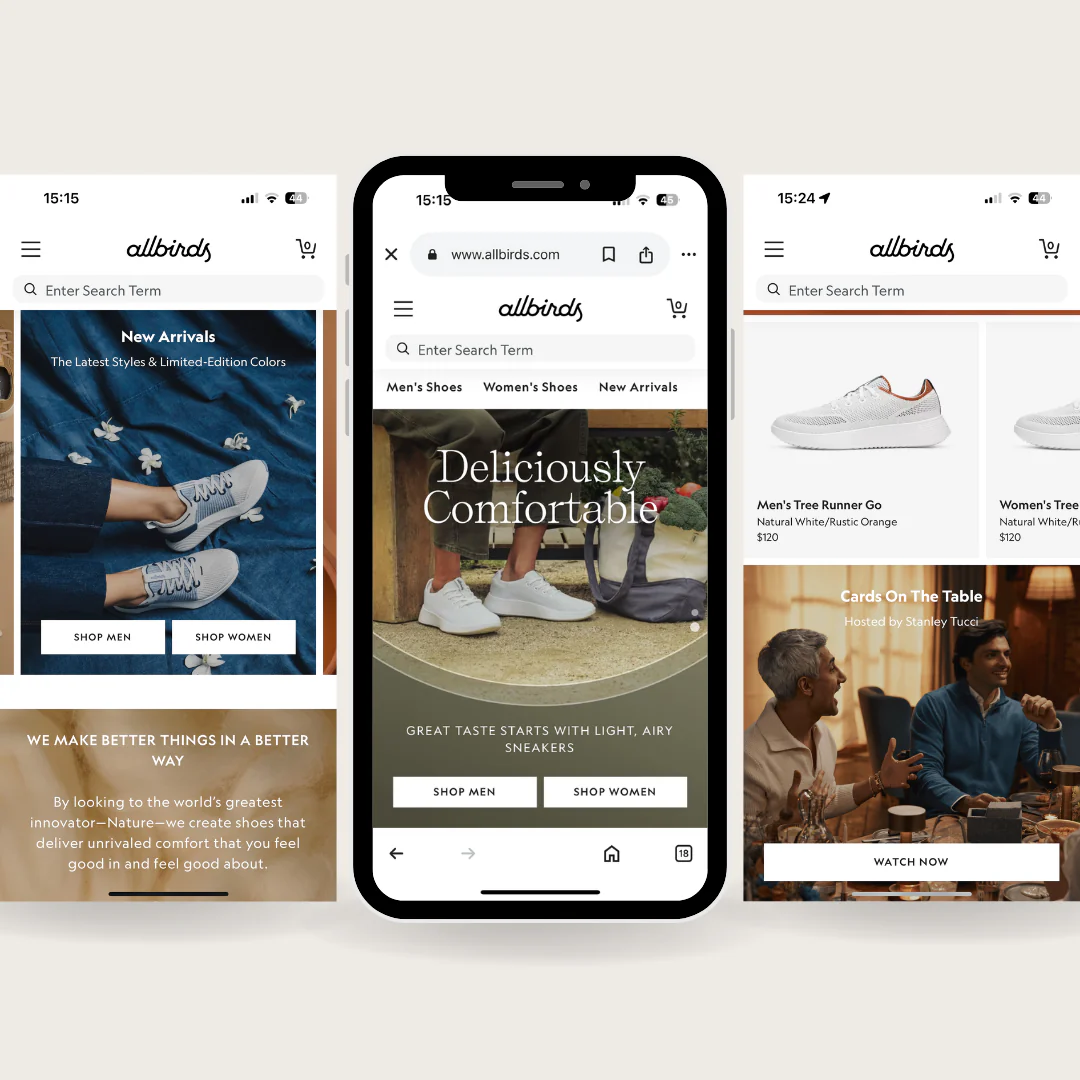
| Further emerging trends | Accessibility is a big part of modern eCommerce website design. Many stores these days experiment with voice commerce (think: asking your Google Home or Siri to recommend a sunscreen) and LLM discovery. AR product previews and checkouts from multichannels (say, from a TikTok store) are forecasted to be the new IT thing going forward. |
4. Best eCommerce Pages Have Clear Site Navigation That Helps Both Users And SEO
We already discussed logical visual hierarchy. Extending from it, clear site navigation includes a predictable menu structure that helps users find products fast while helping search engines understand your store’s hierarchy.
For users, clarity reduces friction and shortens the path to purchase. For SEO, clean navigation improves crawlability, internal linking and keyword relevance. The outcomes are stronger rankings and higher conversions.
| What to Do | Why & How to Do It |
|---|---|
| Structure your top-level navigation | Include essential categories like Shop, About Us, Bestsellers and Contact on your top menu bar for easy browsing and navigation. This organizes all your important pages and makes them accessible from one place. Users appreciate it and search engines favour the clean structure. |
| Structure your footer links | Footers are another good place for maximizing brand presence, authority and providing secondary information such as Return Policy, Terms and Contact to support user trust and accessibility. Further information, such as addresses, documentation, etc., can also be included here. |
| Include sitemaps for your store | A sitemap is a roadmap for search engines. It helps Google find, crawl and index your products, collections and pages faster, especially new or updated ones. That means better visibility, fewer missed pages and stronger SEO performance. On Shopify, you already have one at /sitemap.xml. Submit this URL to Google Search Console to make it official. When you design eCommerce websites, a clean layout has the most impact on sitemaps. |
Rundown: 10 Essential Shopify Website Design Tips for eCommerce Stores
From everything we have explored thus far, Shopify website design is a robust process taking into account a multitude of factors. It is more than just about having great products. How you present them decides whether visitors keep browsing or walk away.
With that in mind, here is a rundown of all that we know about the best eCommerce pages, organized into 10 essential tips to optimize your Shopify store and maximize conversions.
1. Keep it Simple
Minimize distractions on your site. Limit ads, pop-ups and overly complex color schemes. Clean design helps customers focus on your products and increases conversion rates.
2. Express Your Brand
Stand out from competitors by clearly reflecting your brand identity through visuals, typography, photography and messaging. A unique, cohesive design builds recognition and loyalty.
3. Have Empathy
Design eCommerce websites with the customer journey in mind. Understand how visitors navigate your site, what information they need and remove areas of delay, such as cluttered navigation, to make buying easy.
4. Upload High-Quality Images
Use multiple angles, 3D/AR views and lifestyle shots to showcase products. Quality visuals reduce hesitation and increase the likelihood of purchase.
5. Lead with Professionalism
A polished Shopify website design builds trust. Ensure layouts, typography and branding feel professional as shoddy design erodes confidence quickly.
6. Employ Social Proof
Display reviews, user-generated content and video testimonials. Seeing real people engage with your products reinforces credibility and encourages purchases.
7. Focus on Checkout
Simplify the checkout process: clear steps, multiple payment gateways and easy navigation. Friction here leads directly to abandoned carts.
Advanced Checkout Strategies:
- Offer guest checkout to reduce barriers to purchase
- Use progress bars to show completion status
- Employ exit-intent popups to recover visitors who are leaving.
- Apply urgency and scarcity cues such as timers or low-stock labels to drive conversions
8. Create Clear Visual Hierarchy
Design should tell users what matters instantly. Use size, contrast, spacing and alignment to guide attention from headline to value proposition to CTA. If everything screams, nothing converts. Hierarchy is how design drives decisions.
9. SEO-Integrated Design
Design your site for both users and search engines. SEO best practices, structured content and proper metadata drive organic traffic, converting visitors into customers. With Shopify SEO Apps like StoreSEO you can automate optimization by generating metadata, structured content and keyword suggestions, ensuring your design ranks well without extra manual effort.
And finally,
10. Use the Right Apps
Shopify offers a strong foundation to build upon, but apps work as the paint, plaster and lighting that takes eCommerce website design from generic to luxurious and expansive. Apps graduate your Shopify store from functional to conversion-optimized, trust-first and scalable.
Poorly designed apps can clutter interfaces and slow sites down, while apps Built for Shopify blend into the Shopify experience while being quietly resourceful. Here are some of our favourite Shopify apps that directly strengthen design strategies discussed throughout this guide.
EasyFlow: Advanced Product Options That Help with Navigation
EasyFlow improves product page usability by letting customers customize products without confusion. Instead of overwhelming shoppers with dropdown chaos or unclear variants, EasyFlow structures choices cleanly and intuitively.
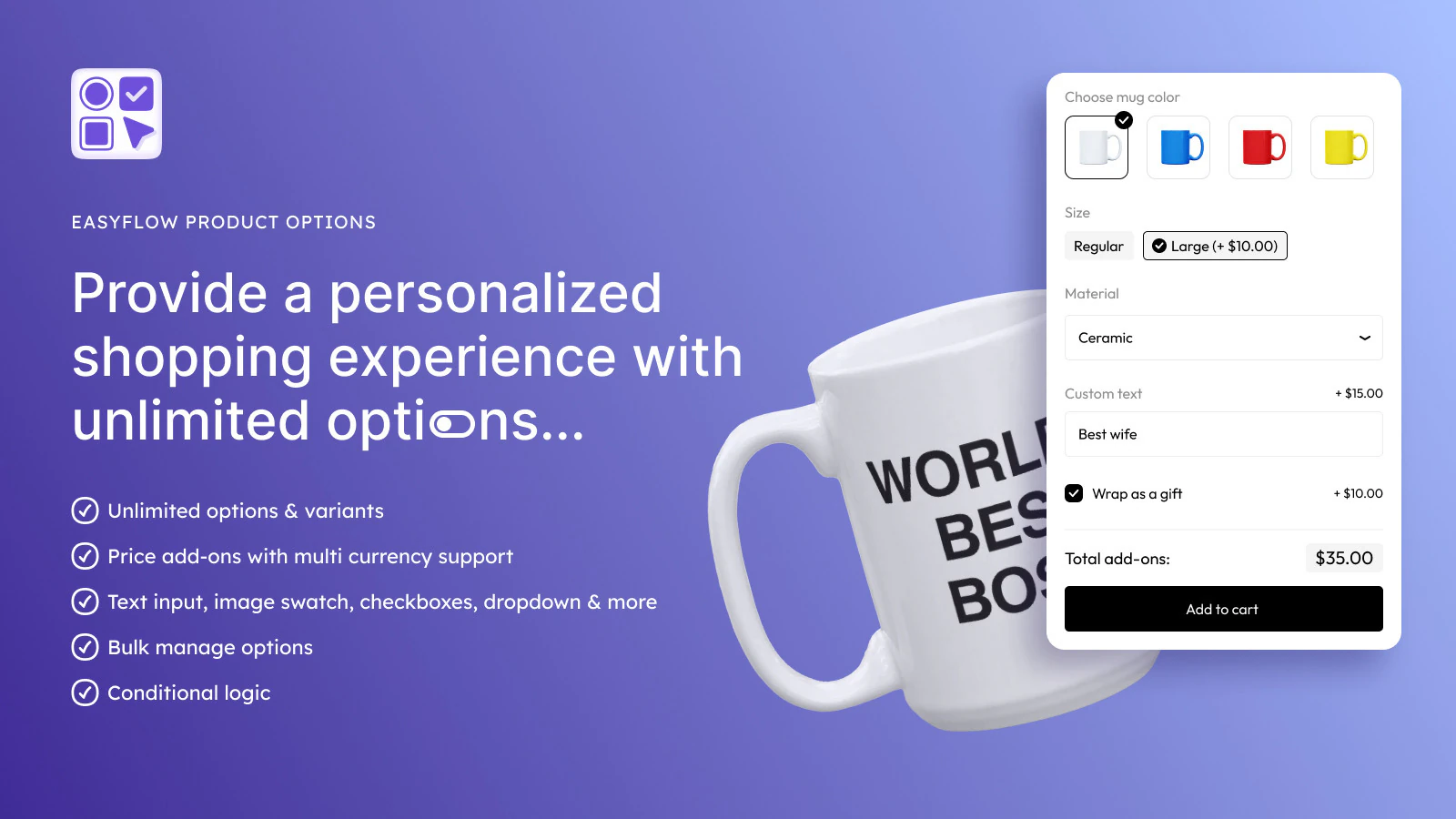
This supports visual hierarchy, reduces decision fatigue and increases confidence at the “Add to Cart” moment. Easy Flow is especially helpful for configurable or made-to-order products such as customizable gifts or engraving options.
TrustSync: Customer Review Collection Signalling Trust
TrustSync boosts trust. It automates post-purchase review collection and helps address negative reviews directly with the customer, helping you build credibility and encourage repeat purchases. Genuine reviews reduce skepticism and validate purchasing decisions, as well as bring new leads from review platforms such as Google, Yelp, etc.
StoreFAQ: Structured FAQs for Faster Decisions
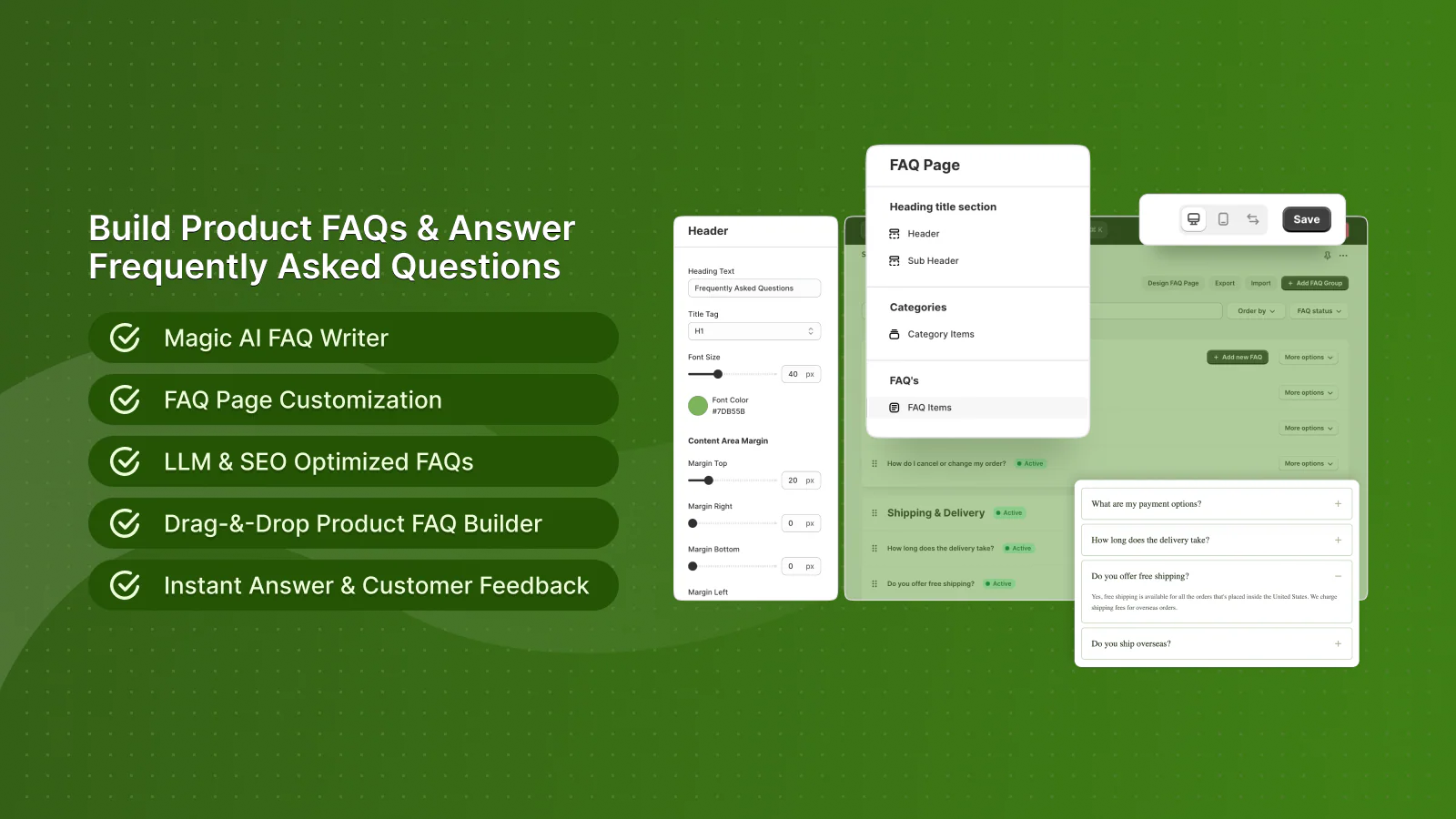
FAQs can be a design asset if done right. StoreFAQ allows you to create clean and structured FAQ sections that answer common questions, saving customers the time and effort of reaching out for minor issues or clarifications. It also helps prevent customer frustration caused by unanswered questions. Instead of forcing users to leave product pages or hunt for information, StoreFAQ keeps answers accessible, supporting smoother navigation and faster conversions.
BetterDocs for Shopify: Knowledge Base & Self-Service Support
For stores where FAQs fall short (think subscriptions, digital products, technical goods), BetterDocs for Shopify allows you to create a complete knowledge base for your Shopify store. From a design standpoint, this signals maturity and professionalism. From a trust standpoint, it reassures customers that support exists beyond checkout.
StoreSEO: AI-Powered SEO Agent for Visibility
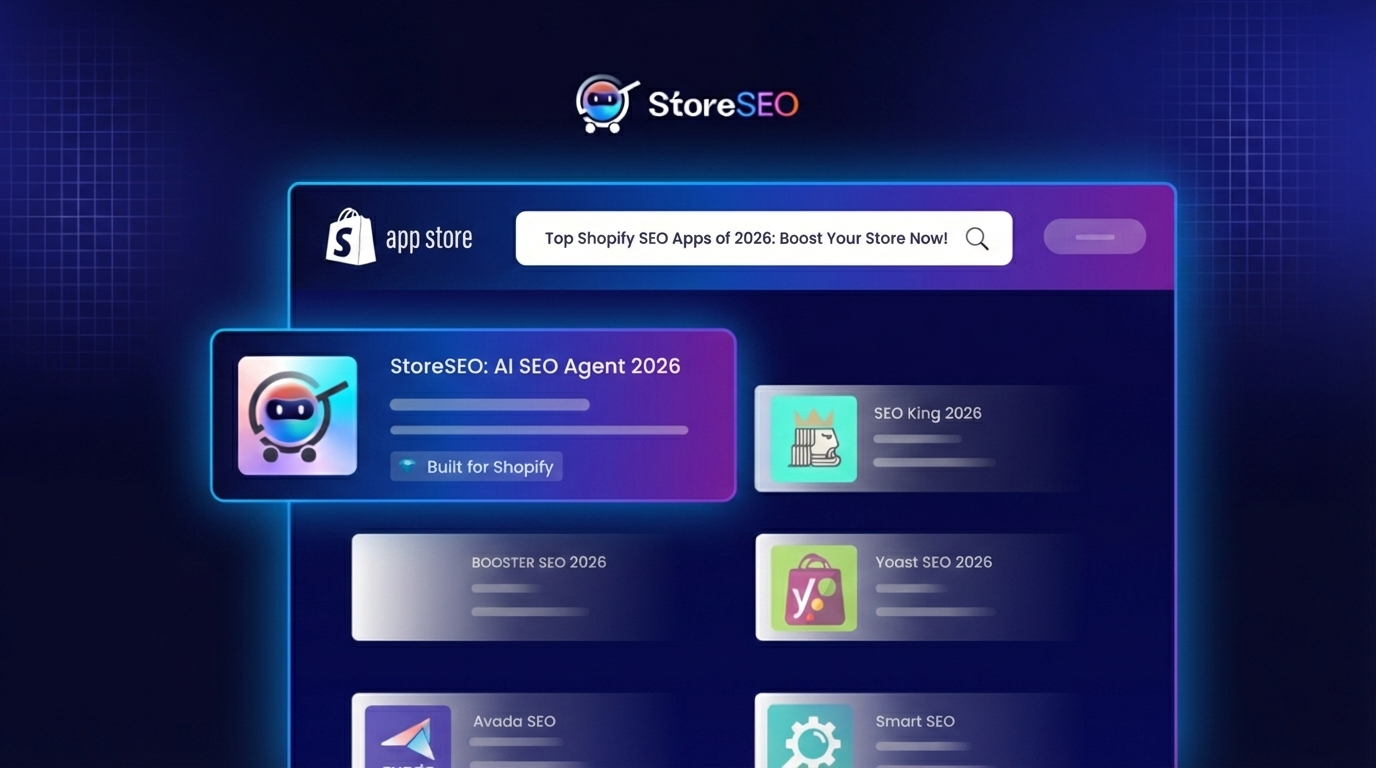
Great design that no one finds does not convert. StoreSEO ensures that your Shopify store is discoverable by search engines. It supports SEO-integrated design by optimizing metadata, structured content and page performance. Powered by AI, StoreSEO suggests areas of improvement and tells you where your SEO is working and where it is not. It facilitates more qualified visitors landing on pages you have designed for conversion.
Start Treating eCommerce Website Design as a Strategy for Trust And Not Just Decoration
Great eCommerce website design is more than just decoration and it is a strong determinant of trust and reputation. For Shopify website designs, every layout choice, visual cue and interaction either encourages the purchase or quietly pushes buyers away. A well-designed Shopify store builds credibility in milliseconds, guides attention with intent and is responsive across devices.
Knowing all that, you are well on your way to design a Shopify website on your own. But if you need the professional’s mastery, be sure to check out the Shopify Partner’s Directory to browse professional Shopify website designers, developers and agencies to help build or scale your store.