
You launched your Shopify store. Products are live, checkout works and orders are coming in. But something feels fragile. All your revenue depends on one channel. One algorithm change, one platform outage, one shift in ad costs and your entire business feels the tremor.
That fragility is what a well-built channel strategy is designed to eliminate. Not by being everywhere at once, but by being present in the right places, with the right message, backed by the one thing that makes every channel work better: a reputation customers can trust.
This guide walks you through how to build an eCommerce channel strategy that is diversified, consistent, and built to grow and why eCommerce brand reputation is the hidden engine behind every channel’s performance.
TL;DR: Channel Strategy at a Glance
Building a successful online store channel strategy comes down to one core idea: be present in the right places, with a strong brand reputation that converts customers wherever they find you. Here is everything covered in this guide, condensed into one quick-reference table:
| What to Do | Why It Matters | Quick Win |
| Audit your current channels | You cannot build a smarter channel strategy without knowing where your customers are already coming from | Open Shopify Analytics and identify your top 3 traffic sources by conversion rate, not just volume |
| Strengthen your Shopify store first | Every other channel sends traffic here — if it leaks conversions, multichannel expansion just amplifies the problem | Add visible reviews, tighten your mobile experience, and add trust signals at checkout |
| Expand channels strategically | Adding channels without a plan spreads effort thin and produces poor results across the board | Start with email, then add one social or marketplace channel at a time based on where your buyers actually are |
| Keep branding consistent everywhere | Customers move fluidly between platforms — a disjointed experience erodes trust faster than any negative review | Align your logo, tone, photography, and pricing across every channel before expanding |
| Treat review platforms as a channel | 95% of consumers read reviews before buying — reviews are the reputation layer that sits beneath every channel you operate | Set up automated review collection so every order generates a review request without manual effort |
| Filter negative reviews privately | One visible cluster of unresolved negative reviews suppresses conversion rates across every other channel simultaneously | Use TrustSync to route poor ratings to a private dashboard before they go public |
| Track revenue, not just traffic | High traffic from a non-converting channel is wasted budget | Measure CAC and LTV by channel, not just clicks and impressions |
| Measure your reputation monthly | Review freshness decays fast — 73% of consumers only trust reviews from the last month | Monitor star rating, review volume, and response rate across all active review platforms |
What Is a Channel Strategy And Why Does It Matter?
A channel strategy is the deliberate plan that determines where you sell, where you market, how you show up on each platform and how those platforms work together as a unified system. It is not just a list of places you sell. It is the architecture of how your business reaches customers and earns their trust at every touchpoint.
For Shopify store owners, a channel strategy typically spans several layers:
- Your Shopify storefront: The owned channel where you control everything
- Marketplaces: Amazon, Etsy, eBay
- Social commerce: Instagram, TikTok Shop, Facebook Shops, Pinterest
- Email and SMS marketing: Direct-to-subscriber channels you own entirely
- Search: Organic SEO and paid search advertising
- Review platforms: Google, Trustpilot, and niche review sites
📊 Leading brands that operate on three or more marketplaces see an average growth rate of 104%. (Mirakl, 2025)
The goal of your online store channel strategy is not to be everywhere. It is to be strategic, consistent, and technically equipped to deliver seamless experiences across the channels that matter most to your specific customer base.
The Core Channel Types Every Shopify Store Should Know
To grow a successful Shopify store, it is not just about having great products. You need to choose the right channels to reach your audience, too. From social media to email and paid ads, understanding the core channel types can help you attract, engage and convert customers more effectively.
1. Direct-to-Consumer (DTC) Shopify Store
Direct to consumer eCommerce through your own Shopify store is the foundation of any channel strategy. Here, you keep full control over how your product is sold, retain access to all customer data and take no commission cut from your profits.
📊 DTC eCommerce customers spent more than $226 billion directly with brands in 2025. Customers who buy direct convert faster, generate more data, and are easier to remarket to than those acquired through third-party channels. (Shopify, 2025)
Your Shopify store is where every other channel ultimately sends traffic. This means it needs to be conversion-optimized, fast-loading, mobile-first and above all, trust-building. If a customer arrives from any source and does not feel confident about your brand within seconds, every other channel effort is wasted.
2. Marketplaces
Marketplace selling strategy gives you access to massive existing audiences without building your own traffic from scratch. Shopify sales channels integrate with Amazon, Etsy, eBay, and others, letting you sync product listings and inventory from your Shopify dashboard.
The trade-off with marketplaces is that you operate on their rules, compete on their search results, and have limited access to customer data. Think of marketplace selling as a discovery channel, not a relationship channel. It introduces customers to your products; your own store converts them into loyal buyers.
3. Social Commerce
Social commerce strategy has shifted from a nice-to-have to a primary revenue channel for many Shopify stores. Instagram, TikTok Shop, Facebook Shops, and Pinterest now allow customers to complete purchases without ever leaving the app.
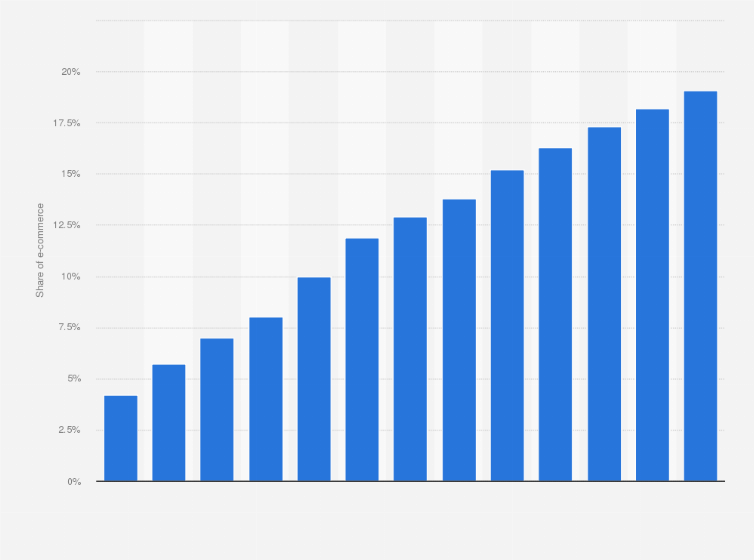
📊 An estimated 17% of all online sales will take place through a social network in 2025. (Statista)
Social commerce works because it meets customers in the middle of content consumption, at the moment of peak desire. But it is also the channel most sensitive to brand perception. A customer who discovers your product via a TikTok video will check your reviews before buying, and they will check them within seconds.
4. Email And SMS
Email and SMS are the only channels in your eCommerce channel strategy that no platform can take away from you. You own the subscriber list. There is no algorithm standing between you and your audience. For most Shopify stores, email generates the highest revenue-per-contact of any channel when used with good segmentation and timing.
5. Search (Organic And Paid)
Search is where purchase intent is highest. Customers searching ‘best [your product category]’ or ‘[your brand] reviews’ are already in buying mode. Organic SEO builds compounding authority over time. Paid search delivers immediate visibility. Both rely on the same foundation: a brand with enough trust and review presence that customers choose you over the alternatives.
Building Your Multichannel Selling Strategy: The Framework
A strong multichannel selling strategy does not mean showing up everywhere simultaneously. It means expanding deliberately, one channel at a time, with a clear understanding of where your customers are and what they need to see before they buy.
Step 1: Audit Where Your Customers Actually Are
Before adding any new channel, analyze where your current customers are coming from. Use Shopify Analytics, Google Analytics, and your social platform insights to identify:
- Which channels are sending the most traffic to your store
- Which channels are driving the highest conversion rates (not just visits)
- Which channels generate customers with the highest average order value
- Which platforms does your target demographic spend the most time on
✅ Resist the temptation to be on every platform. A 25-year-old buying fitness supplements behaves completely differently from a 45-year-old buying home decor. Your channel mix should reflect your actual buyers, not the channels you find most comfortable.
Step 2: Build a Strong Foundation on Your Primary Channel First
Your Shopify store needs to be conversion-ready before you scale traffic from other channels. A weak store that leaks conversions wastes every dollar you invest in multichannel expansion. Before expanding your Shopify sales channels, ensure:
- Product pages are detailed, high-quality, and answer every pre-purchase question
- Mobile experience is fast and frictionless (63%+ of eCommerce traffic is mobile)
- Social proof for the online store is visible in star ratings, review counts, and recent customer feedback on every product page
- Checkout is streamlined with trust signals at every friction point
Step 3: Expand Channels Strategically
Once your foundation is solid, expand your multichannel eCommerce 2025 presence in order of highest expected return for your niche. A general sequence that works for most Shopify stores:
- Shopify store: Optimize and convert before driving external traffic
- Email marketing: Build your list from day one; it is your most valuable owned asset
- Google Shopping and Search ads: Capture existing purchase intent
- Social commerce on 1 to 2 platforms: Where your specific audience is most active
- Marketplaces: For volume and discovery, not for relationship-building
- Review platforms: Google, Trustpilot, and any niche platforms relevant to your category
Step 4: Maintain Consistent Branding Across Every Channel
The core rule of any omnichannel eCommerce strategy is brand consistency. Your logo, color palette, tone of voice, product photography, and pricing must be unified across every channel. Customers move fluidly between platforms. A disjointed experience erodes trust faster than any negative review could.
📊 Consistent branding across channels increases revenue by up to 23%. (Envive)
The Channel That Most Shopify Stores Get Wrong: Review Platforms
Most Shopify store owners think about channels in terms of where they sell or advertise. They optimize their product listings on Amazon, run campaigns on Instagram, and send email sequences to their list. But they leave one of the most powerful channels almost entirely unmanaged: their reputation on review platforms.
An online review strategy for Shopify is not a separate task from your channel strategy. It is the foundation that makes every other channel work better. Here is why:
📊 95% of consumers read online reviews before making a purchase. (Erase Research)
📊 Displaying customer reviews can increase eCommerce conversions by up to 270%. (Spiegel Research Center)
📊 88% of consumers trust user reviews as much as personal recommendations from friends and family. (BrightLocal)
When a customer discovers your product on TikTok, they search your brand on Google before buying. When they find you on Amazon, they check your Trustpilot score before clicking checkout. When they land on your Shopify store from a paid ad, they scroll immediately to the reviews. Reviews are not one channel. They are the reputation layer that sits beneath every channel you operate.
The Problem: Most Stores Collect Reviews Passively
The default approach most Shopify stores take to reviews is passive. They fulfill orders, hope satisfied customers leave feedback and deal with negative reviews when they appear publicly. This approach creates three compounding problems:
- Review volume stays low: Satisfied customers rarely leave unsolicited reviews. Studies show only 5 to 10% of customers leave a review without being asked
- Review freshness decays: 83% of consumers consider reviews older than 3 months irrelevant. Without fresh reviews coming in consistently, your social proof ages out of usefulness
- Negative reviews dominate: Unhappy customers are far more motivated to leave reviews than happy ones. Without a system to invite satisfied customers proactively, your review mix skews negative
The Solution: Automate Your Review Collection
The stores that consistently outperform on eCommerce brand reputation are not the ones with the best products. They are the ones with the best systems for collecting reviews automatically, across every relevant platform, after every order.
Review automation Shopify removes the manual effort from review collection entirely. Instead of relying on customers to act spontaneously, you trigger personalized review request emails at the optimal moment post-purchase, direct customers to the exact platforms that matter most to your business, and let the system handle the follow-up.
How TrustSync Completes Your Channel Strategy
This is where TrustSync fits into your channel strategy. TrustSync, the powerful Shopify app is built specifically to automate review collection across multiple platforms simultaneously. It helps you turn post-purchase moments into consistent, scalable reputation-building that strengthens every channel you operate.
i. Collect Reviews Across Every Platform That Matters
Your customers use different platforms to research purchases. Some people check Google, while others look at Trustpilot, Yelp, Amazon, Facebook, or niche review sites specific to your industry. TrustSync lets you connect up to 20 review platform links at once, directing customers to the platforms that carry the most weight for your specific audience.

This directly serves your online store channel strategy: rather than building review presence on one platform in isolation, TrustSync builds your social proof for online stores across the exact platforms your customers consult at every stage of their buying journey.
ii. Automated Review Request Emails
After each order on your Shopify store, TrustSync automatically sends a review request email to the customer. You control the design, the timing, the subject line, the copy, the emoji rating system, and the branding.
Everything from your logo to your domain sending address can be customized so the email feels like a natural extension of your post-purchase communication, not a generic template from a third-party app.
This solves the core challenge of how to collect customer reviews Shopify challenge that most store owners face: the ask never gets made because it requires manual effort. TrustSync makes the task automatic, at the right moment, every time.
iii. Filter Negative Feedback Before It Goes Public
Negative review management is one of the most undervalued capabilities in eCommerce reputation management. Most platforms publish every review immediately, leaving you to respond publicly after the damage is done.
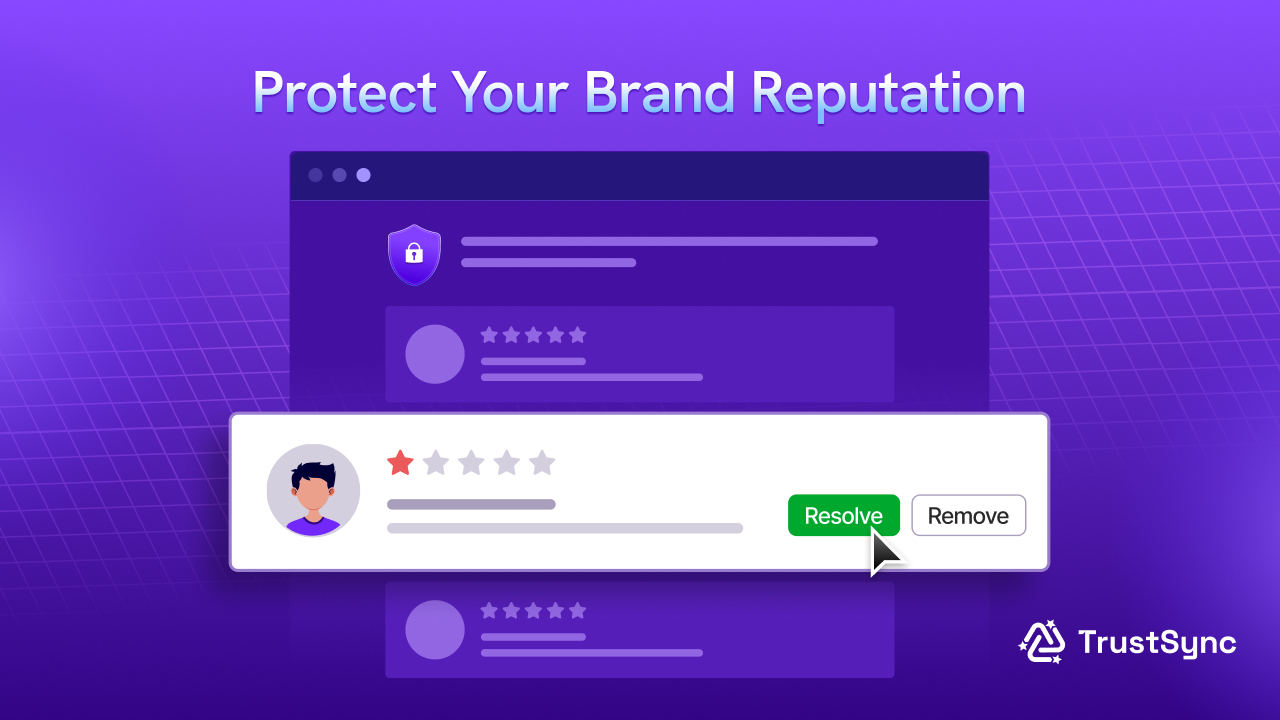
TrustSync takes a different approach. When a customer indicates a poor rating, instead of sending them to a public review platform, it routes them to a private dashboard. You see the feedback, you can reach out, resolve the issue, and turn a frustrated customer into a satisfied one before any negative content appears publicly.
iv. Send From Your Own Domain
Trust is built in small details. TrustSync lets you send all review request emails from your own business domain rather than from TrustSync branding. This removes the generic, third-party appearance that can reduce open rates, and keeps every customer communication consistent with the brand they ordered from.
v. Track Performance with Built-in Analytics
TrustSync includes an analytics dashboard that shows emails sent, emails in queue, open rates, and click-through rates. This gives you visibility into how your review collection is performing as a channel in its own right, and lets you optimize send timing, subject lines, and email design based on real data rather than guesswork.
Reputation as a Channel: Why Reviews Belong in Your Strategy
Most businesses treat reviews as something that happens to them. The strongest eCommerce brands treat reviews as a channel they actively manage, optimize, and leverage just like they would any other part of their eCommerce channel strategy.
Think about what a strong review presence actually delivers across your other channels:
1. Google Search
Star ratings from Google Business Profile appear directly in search results as rich snippets. More five-star reviews means higher visibility, better click-through rates, and stronger customer trust eCommerce before a customer even visits your site.
📊 Businesses with 4-star ratings or above generate 32% more revenue than those with lower star ratings. (WiserReview, 2026)
2. Social Commerce
Customers who discover your products via Instagram or TikTok immediately search for independent validation. A strong Trustpilot or Google review score is the reassurance that converts social discovery into a sale. Without it, you are asking customers to take a risk on an unknown brand.
3. Email Marketing
Embedding recent five-star review quotes in your email campaigns provides social proof at the moment of purchase consideration. A promotional email with three lines of genuine customer feedback consistently outperforms one without.
4. Paid Advertising
Google Shopping ads surface star ratings directly in the ad unit. Higher-rated products achieve better click-through rates at the same cost-per-click. Your review score is effectively a free conversion optimization lever within paid search.
5. Marketplaces
On Amazon, Etsy, and eBay, review scores determine search ranking within the platform. A product with 200 four-star reviews will outrank an identical product with 20 reviews almost every time. Marketplace selling strategy without a review acquisition system is a half-built plan.
Measuring the Performance of Your Channel Strategy
A channel strategy without measurement is just activity. You need to track performance at both the channel level and the overall business level to know where to invest, what to cut, and what is compounding over time.
Channel-Level Metrics to Track
- Traffic by channel: Which platforms are sending visitors to your Shopify store?
- Conversion rate by channel: Not all traffic converts equally. Organic search traffic typically converts at 2 to 4 times the rate of social media traffic
- Revenue per channel: The actual dollar contribution of each channel after ad spend and platform fees
- Customer acquisition cost (CAC) by channel: How much does it cost to acquire one paying customer from each source?
- Customer lifetime value (LTV) by channel: Customers from some channels buy once; customers from others become repeat buyers. Email and organic search tend to produce the highest LTV customers
Reputation Metrics to Track
- Review volume by platform: Are you generating new reviews consistently across all active review platforms?
- Average star rating: Maintain 4.0 stars or above; 57% of consumers will not buy from a business with less than 4 stars
- Review freshness: What percentage of your reviews are from the last 30 days? Fresh reviews drive more conversions than a large volume of old ones
- Review response rate: Are you responding to reviews? 88% of consumers trust businesses more when they respond to all reviews, both positive and negative
- eCommerce reputation management score: Track your aggregate rating across Google, Trustpilot, and any niche platforms relevant to your category
✅ Connect your TrustSync analytics to your Shopify revenue data monthly. If you see review collection improving alongside conversion rate improvements on product pages, that is direct evidence that reputation is working as a channel performance multiplier.
Common Channel Strategy Mistakes Shopify Stores Make
Expanding across multiple channels can unlock massive growth for Shopify stores, but only when done right. Many businesses struggle not because of a lack of effort, but due to common channel strategy mistakes that limit their reach and impact.
Mistake 1: Trying to Be Everywhere at Once
A scattered multichannel selling strategy that spreads effort thinly across every available platform delivers worse results than a focused strategy on 2 to 3 channels executed exceptionally well. Prioritize depth over breadth, especially in the early stages of your channel expansion.
Mistake 2: Inconsistent Brand Presentation Across Channels
If your Shopify store looks polished and your Amazon listing looks like it was set up in 10 minutes, you are undermining the trust you worked to build. Your eCommerce brand reputation is the aggregate of every impression across every channel. Inconsistency signals unreliability.
Mistake 3: Treating Review Platforms as Passive
Not having a proactive online review strategy for Shopify is the single most common gap in eCommerce channel strategy. Reviews are not something that happens on their own. They require a system. Without review automation Shopify in place, you are leaving your most powerful conversion tool to chance.
Mistake 4: Ignoring the Mobile Experience
More than 63% of eCommerce traffic comes from mobile devices. If your Shopify sales channels funnel customers to a mobile experience that is slow, hard to navigate, or difficult to checkout on, you are losing the majority of your potential revenue before a single purchase decision is made.
Mistake 5: Measuring Traffic Instead of Revenue
High traffic from a channel that does not convert is not a success. Every channel in your online store channel strategy should be measured against revenue and CAC, not just clicks and impressions. Channels that look impressive in traffic reports but produce poor conversion rates are draining the budget that could be directed at channels that actually convert.
Mistake 6: Not Managing Negative Reviews
Negative review management Shopify is not damage control. It is channel protection. A cluster of unresolved negative reviews on Google or Trustpilot quietly suppresses conversion rates across every other channel you are investing in, including paid ads, social commerce, and email. Address negative feedback privately and proactively before it becomes a public pattern.
Build Your Channel Strategy Around Trust
The online store channel strategy that wins in 2025 and beyond is not the one with the most channels. It is the one built on the strongest foundation of trust. Every channel you add, every platform you enter, every campaign you run, will perform better when customers already know your reputation before they arrive.
A channel strategy without a reputation strategy is a plan with a leak in it. You invest in traffic, you earn the click, and then the customer hesitates at the last moment because they cannot find enough evidence to trust you. That hesitation is recoverable. It just requires a system.
Start with your Shopify store. Optimize it for trust and conversion. Build your email list from day one. Expand into the social and marketplace channels where your customers are. And run TrustSync in the background, collecting reviews automatically across every platform that matters, filtering negative feedback before it goes public, and building the reputation layer that makes every other channel work harder.
When your eCommerce channel strategy and your eCommerce reputation management work together, growth stops feeling like a gamble and starts feeling like a system.
Start building your channel strategy today and stay ahead of the competition. Subscribe to our blog for more actionable insights and strategies to grow your online store sustainably.