
Nearly 7 out of 10 online shoppers add a product to their cart and then leave without buying. Most store owners assume the problem is logical: the price was too high or the shipping was too slow. In reality, the issue is often psychological.
Loss aversion is one of the most studied principles in behavioral economics. It explains why shoppers hesitate at the exact moment they should be clicking ‘buy.’ It also explains why the right trust signals, framing and social proof can turn that hesitation into a completed order.
In this guide, you will learn what loss aversion is, why the human brain treats losses as more painful than equal gains and how it quietly shapes every checkout decision your customers make. More importantly, you will learn how to apply it ethically on your Shopify store to increase conversions and build lasting customer confidence.
TL;DR
Loss aversion is the human tendency to feel the pain of a loss more strongly than the pleasure of an equal gain.
| Loss Aversion Lever | How It Works | eCommerce Impact |
| Price framing | “Save $20” feels stronger than “$20 off” | Higher offer response rates |
| Low-stock signals | “Only 3 left” implies losing the chance to own it | Faster purchase decisions |
| Free shipping thresholds | “You are $12 away from free shipping” implies a near-loss | Higher average order value |
| Expiring perks and points | Earned rewards feel owned, so customers act to keep them | Stronger repeat purchases |
| Reviews and social proof | Reduce the perceived risk of a bad purchase | Lower hesitation, higher conversions |
| Trust signals at checkout | Reassure shoppers their money is safe | Fewer abandoned carts |
What Is Loss Aversion?
Loss aversion is the psychological principle that people experience the pain of losing something far more intensely than the satisfaction of gaining something of equal value. In plain terms, losing $50 hurts more than finding $50 feels good. That simple asymmetry drives a surprising amount of online shopping behavior.
For Shopify merchants, this matters because every purchase decision involves a perceived loss. Spending money feels like giving something up. Your job is not to manipulate that feeling, but to balance it by reducing the bigger fear of making a bad decision.
The principle applies across the entire customer journey. It shapes how shoppers react to pricing, shipping costs, return policies, and even how confident they feel before entering their card details.
Loss Aversion vs Prospect Theory
Loss aversion is the central idea within a broader framework called prospect theory, introduced by psychologists Daniel Kahneman and Amos Tversky in 1979. Their work, explained clearly in this overview of prospect theory and reference points, showed that people do not judge outcomes against their total wealth. They judge them against a reference point, then react more strongly to anything that looks like a loss from that point.
That reference point is powerful in eCommerce. A shopper who sees an original price next to a sale price now treats the higher number as the reference, which makes paying full price later feel like a loss.
Why ‘Losses Loom Larger Than Gains’
According to research summarized by the team at BehavioralEconomics.com, the pain of losing is psychologically about twice as powerful as the pleasure of gaining. This roughly two-to-one ratio is why loss-framed messages tend to move people more than gain-framed ones.
For your store, the takeaway is practical. A customer is often more motivated to avoid losing a benefit than to chase an equivalent reward. Framing matters as much as the offer itself.
Why Humans Fear Loss More Than Gain
The fear of loss is not a flaw in your customers. It is a deeply wired survival instinct. For most of human history, losing resources was far more dangerous than failing to gain them, so the brain learned to treat losses as urgent threats. That instinct now follows shoppers into every checkout page.
Understanding the root of this behavior helps you design experiences that respect it rather than exploit it. When you lower the perceived risk of buying, you are working with human psychology, not against it.
The Psychology And Brain Science Behind Loss Aversion
Loss aversion is tied to how the brain processes emotion and risk. Potential losses trigger a stronger emotional and physiological response than potential gains, which is why a surprise shipping fee can feel more frustrating than a discount feels rewarding. The negative signal simply registers louder.
This is why a single point of friction at checkout can undo an otherwise smooth shopping experience. The shopper does not weigh the good and bad equally. The perceived loss dominates the decision.
Reference Points And the Endowment Effect
People assign extra value to things they already feel they own, a tendency known as the endowment effect. Once a shopper adds an item to their cart, mentally claims a discount, or earns loyalty points, those things start to feel like theirs. Walking away then feels like losing something, not merely declining an offer.
Smart Shopify stores use this gently. A cart that clearly shows what the shopper has selected, the savings they have unlocked, and the rewards they are close to earning makes leaving feel like a loss, which encourages completion.
How Loss Aversion Shows Up in eCommerce
In online retail, loss aversion is rarely about a single tactic. It appears across pricing, product availability, and the benefits a shopper stands to keep or forfeit. The strongest stores layer these signals honestly so that the customer feels informed, not pressured.
Below are the three most common forms of loss aversion you can apply to a Shopify store, along with examples of how they look in practice.
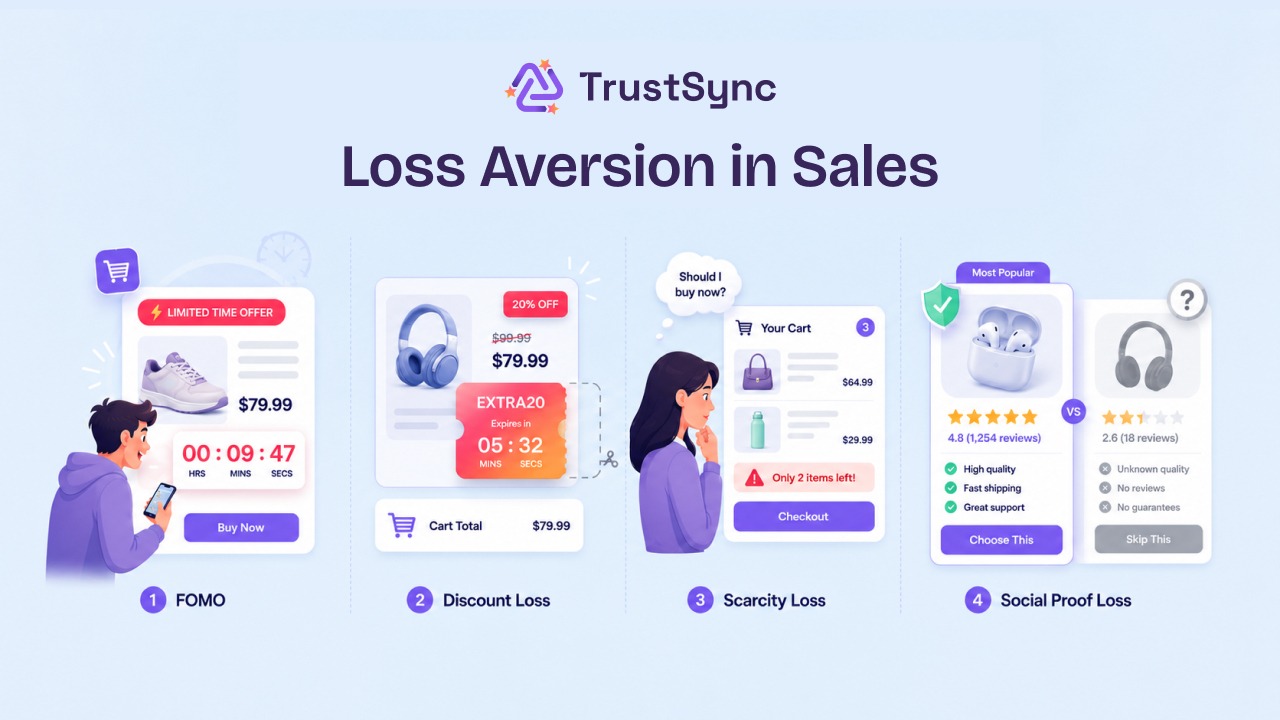
Price Loss Aversion
Price loss aversion is triggered when a customer believes they will lose a saving by waiting. Showing the original price next to the discounted price establishes a reference point, so paying more later feels like a loss. The classic example is the ‘Save $50’ framing used by major retailers, where the framing of loss aversion at checkout emphasizes what the shopper saves rather than what the product costs.
The framing is subtle but meaningful. ‘Save $20 today’ tends to outperform ‘$20 off’ because the former implies losing the savings if you delay.
Product Loss Aversion
Product loss aversion is triggered by limited availability. Messages like ‘Only 5 left in stock’ imply that the shopper could lose the ability to own the item entirely. When the scarcity is real, this is a fair and useful signal that helps customers prioritize a genuine decision.
The keyword is real. Authentic low-stock indicators build trust. Fake ones erode it the moment a customer notices the same ‘only 2 left’ message every week.
Benefit Loss Aversion
Benefit loss aversion centers on perks the customer is close to earning. A progress bar that reads ‘You are $12 away from free shipping’ frames the situation as a near-loss, since the shopper has almost earned a benefit and leaving means forfeiting it. As one Shopify scarcity and loss aversion guide explains, this near-miss framing reliably nudges shoppers to add one more item.
This approach feels helpful rather than pushy because it gives the customer a clear, achievable path to a real reward.
Shopify-Specific Examples
On Shopify, you can apply these principles directly. Free shipping bars in the cart, honest low-stock badges on product pages, and clear before-and-after pricing all translate loss aversion into everyday store design.
A Shopify apparel store that adds a “You are $15 away from free shipping” progress bar, for example, commonly sees a lift in average order value because shoppers add an extra item to avoid losing the shipping benefit. The tactic works precisely because it frames inaction as the thing that costs the customer.
How Does Loss Aversion Impact Checkout Decisions?
Checkout is where loss aversion does the most damage and offers the most opportunity. At this stage, the shopper is no longer browsing. They are deciding whether to part with money, and every signal of risk or friction amplifies the felt loss of spending.
The good news is that most checkout losses are avoidable. They come from design and communication gaps you can fix.
The Friction That Triggers a Felt Loss
When a checkout feels long, confusing, or surprising, the shopper experiences each obstacle as a small loss of time, control or trust. A required account signup, an unexpected fee, or an unclear total can tip the balance toward abandonment, even when the shopper genuinely wanted the product.
This is the heart of the issue. The customer is not rejecting your product. They are reacting to a perceived loss that suddenly feels larger than the gain of owning it.
Loss Aversion And Cart Abandonment
The scale of the problem is well documented. Research from the Baymard Institute puts the average cart abandonment rate at around 70 percent across dozens of studies. When you set aside shoppers who were only browsing, the top reasons shoppers abandon carts are unexpected extra costs such as shipping and taxes, followed by checkouts that feel too long or complicated.
Both of these triggers are loss aversion in action. A surprise fee violates the customer’s reference point for the total, and a long checkout feels like a mounting loss of time and effort. Baymard’s research also suggests that fixing major checkout issues could lift conversions meaningfully, which makes this one of the highest-return areas to improve.
Turning Hesitation Into Completed Orders
You reduce abandonment by removing perceived losses before they appear. Show shipping costs early, offer guest checkout, display a clear progress indicator, and place trust badges near the payment button so the customer feels their money is safe.
Pairing these fixes with visible reviews and ratings reassures the shopper that other people made the same purchase and were happy. That reassurance directly counters the fear of a bad decision that fuels checkout hesitation.
How Loss Aversion Affects Conversions
Conversions rise when the perceived gain of buying clearly outweighs the perceived loss of spending. Loss aversion shapes both sides of that equation, which is why the way you frame an offer can matter as much as the offer itself.
The most reliable lever is framing and the data support a clear pattern.
Loss Framing vs Gain Framing
Loss framing presents an offer in terms of what the customer will lose by not acting, while gain framing emphasizes what they will receive. Marketers consistently find that loss framing outperforms gain framing because it taps the stronger emotional response that losses produce.
A simple test makes this concrete. ‘Don’t miss your 20% saving, ends Sunday’ usually beats ‘Get 20% OFF’ because the first frames are waiting as a loss. The offer is identical. Only the framing changes.
Types of Loss Aversion in Sales
Different forms of loss aversion suit different goals. The table below summarizes the main types and where each one fits best.
| Type | Trigger | Best Used For |
| Price loss aversion | Risk of losing a saving | Promotions, sales, bundles |
| Product loss aversion | Risk of losing availability | Limited stock, seasonal items |
| Benefit loss aversion | Risk of losing a perk | Free shipping, gifts, thresholds |
| Time loss aversion | Risk of losing a deadline | Flash sales, launches |
| Loyalty loss aversion | Risk of losing earned rewards | Points, tiers, memberships |
Real Examples of Loss Aversion in Action
Loss aversion becomes far easier to apply when you see it working in real stores. The following examples are common, ethical patterns you can adapt to your Shopify store today.
Each one shares a single quality. The customer is reminded of something real they could lose, never something invented.
Free Shipping Progress Bars
A free shipping bar that updates as items are added is one of the cleanest applications of loss aversion. The shopper sees how close they are to earning free shipping, and the prospect of losing that benefit encourages them to add one more item. It works because the reward is genuine and the path to it is clear.
Countdown Timers And Limited-Time Pricing
A countdown clock on a real sale frames the discount as something the shopper will lose when time runs out. Major marketplaces use small countdown timers on daily deals for exactly this reason. The tactic stays ethical as long as the deadline is honest and the price actually changes when the timer ends.
Loyalty Points And Expiring Rewards
Loyalty programs create a powerful form of loss aversion. Once a customer earns points, those points feel owned, so the risk of losing them brings shoppers back to make another purchase. Programs that show a points balance and a clear way to redeem it turn the fear of losing rewards into repeat sales.
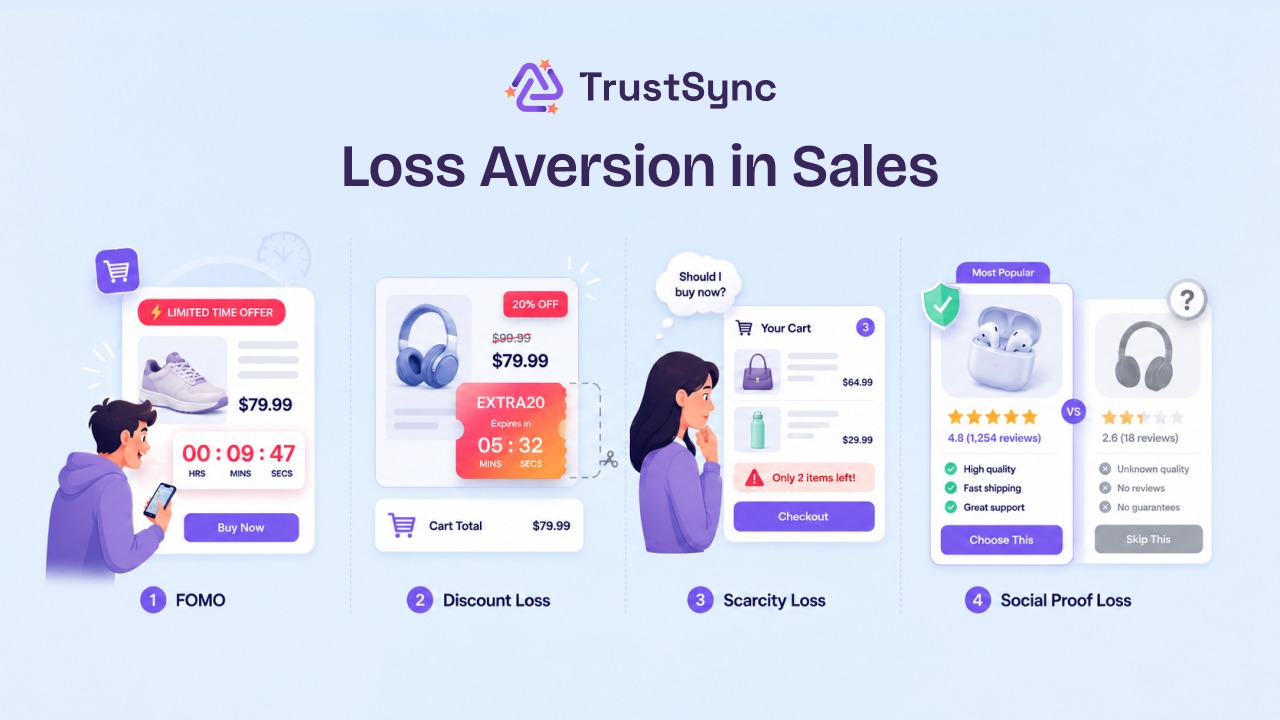
Loss Aversion vs FOMO vs Scarcity vs Social Proof
The following four concepts are often used interchangeably, but they are not the same. Loss aversion is the underlying psychology. The others are tactics or signals that draw on it. Understanding the distinctions helps you combine them thoughtfully instead of stacking pressure.
Loss Aversion vs FOMO
Loss aversion is the broad principle that people fear loss more than they value gain. FOMO, the fear of missing out, is the emotional layer that sits on top of it. FOMO converts a rational observation, such as ‘this item is selling fast,’ into an urgent feeling that you must act now or lose your chance.
In practice, FOMO is loss aversion applied to social and time pressure. Use it sparingly and honestly, because shoppers quickly sense when urgency is manufactured.
Loss Aversion vs Scarcity Marketing
Scarcity marketing is a specific tactic that applies loss aversion by limiting availability or time. Loss aversion is the reason scarcity works. When a product appears rare, the brain assumes it is valuable and that the chance to own it could disappear.
The relationship is simple. Scarcity is the lever, and loss aversion is the force that makes the lever effective. Genuine scarcity persuades. False scarcity damages trust.
Loss Aversion vs Social Proof
Loss aversion makes shoppers afraid of a bad outcome. Social proof reduces that fear by showing them that other people bought the same product and were satisfied. The two work together beautifully, since social proof directly lowers the perceived loss that loss aversion amplifies.
| Concept | What It Is | Role in Conversion |
| Loss aversion | The psychology of fearing loss | Explains hesitation and urgency |
| FOMO | Emotional fear of missing out | Adds time and social pressure |
| Scarcity marketing | Tactic of limiting availability | Signals value and urgency |
| Social proof | Evidence that others bought and trusted | Reduces perceived purchase risk |
The Right Way to Use Loss Aversion for Higher Conversions
Loss aversion can be a powerful conversion method when used responsibly. The goal is not to pressure shoppers into buying but to help them recognize genuine opportunities they might otherwise miss. When businesses rely on fake scarcity, misleading countdown timers or manufactured urgency, they damage customer trust and long-term brand credibility.
The right approach focuses on reducing uncertainty rather than increasing fear. By providing transparent information, authentic social proof and clear value, you help shoppers make confident purchasing decisions.
Ethical Best Practices
Keep every loss-aversion signal truthful. Only show low-stock messages when stock is genuinely low, only run countdowns on real deadlines, and never display a struck-through price that was never charged. Honesty protects both your conversions and your credibility.
Balance loss framing with positive messaging too. As CRO specialists at AB Tasty advise on using loss aversion without manipulating shoppers, restraint is essential because overusing scarcity tactics eventually makes customers feel cheated.
Common Mistakes Brands Make
Even well-meaning stores undermine trust with avoidable errors. The table below maps the most common mistakes to practical fixes.
| Common Mistake | Why It Hurts | How to Fix It |
| Fake scarcity or countdowns | Shoppers notice and lose trust | Use only real stock and deadlines |
| Hidden fees revealed at checkout | Violates the price reference point | Show all costs early and clearly |
| Overusing urgency everywhere | Pressure fatigue reduces impact | Reserve urgency for genuine offers |
| No proof to offset risk | Fear of a bad purchase wins | Display authentic reviews and ratings |
| Aggressive pop-ups and timers | Feels manipulative, increases bounce | Keep signals subtle and honest |
How Reviews & Social Proof Reduce Perceived Loss
The most ethical way to use loss aversion is to address the loss your customer fears most: making a bad purchase. Authentic reviews do exactly that. Academic research on word-of-mouth shows that credible reviews reduce perceived purchase risk by acting as a substitute for missing information, which calms the uncertainty that stalls a sale.
The conversion impact is significant. Industry data shows that displaying customer reviews lifts conversions, with verified-buyer reviews raising conversion by roughly 15% and product pages with five or more reviews seeing dramatically higher conversion than those with none.
Reviews turn an anxious ‘what if this is a waste of money’ into a confident ‘people like me bought this and were happy.’
Reducing perceived risk is where review collection becomes a competitive advantage. This is where a tool like TrustSync fits naturally into your strategy. By helping you automate review requests after every order and collect reviews across trusted platforms, TrustSync builds the visible social proof that lowers perceived risk at the exact moment shoppers hesitate. And when feedback is less than perfect, TrustSync helps you resolve unhappy customer feedback privately before it becomes a public review that scares away future buyers.
The Future of Behavioral Psychology in eCommerce
Behavioral psychology in eCommerce is shifting from blunt pressure tactics toward smarter, trust-first persuasion. Shoppers are more aware of manipulative tactics than ever, and the brands that win are the ones that use psychology to serve the customer rather than corner them.
Two trends are shaping what comes next:
AI-Driven Personalization of Loss Framing
Artificial intelligence now lets stores of every size tailor messaging to individual shoppers. Instead of a single generic “only 3 left” banner, AI can surface the specific benefit a particular customer is closest to losing, such as a personalized free shipping threshold or an expiring reward. Personalized loss framing feels relevant rather than pushy, which improves both conversion and customer experience.
Trust-First Persuasion as the New Standard
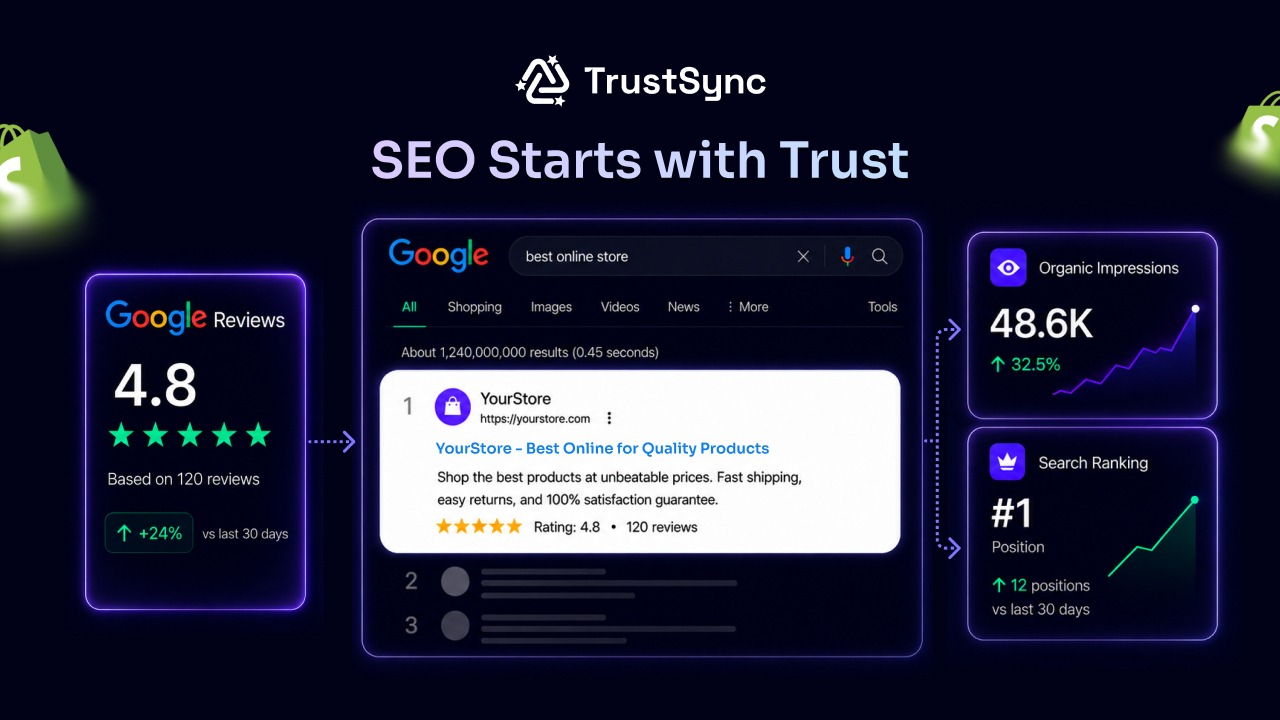
The clearest trend is the rise of trust as the primary persuasion strategy. As shoppers grow skeptical of urgency gimmicks, authentic social proof, transparent pricing, and real reviews are becoming the most reliable way to reduce perceived loss. Brands that lean into trust are also rewarded elsewhere, since reviews can strengthen Shopify SEO and visibility at the same time they lift conversions.
Turn Loss Aversion Into a Smarter, Trust-First Conversion Strategy
Loss aversion is not a trick. It is a fundamental part of how your customers think, and you can either fight it or work with it. The smartest Shopify stores remember three things: losses feel about twice as heavy as equal gains, honest framing outperforms manufactured pressure and the most powerful way to use loss aversion is to reduce the real fear of a bad purchase.
Start by removing perceived losses at checkout, frame genuine offers around what shoppers stand to lose and most of all, build the social proof that makes buying feel safe. That is exactly where TrustSync helps.
Is this blog helpful? Subscribe to our YouTube channel to stay tuned with the latest tutorials, product reviews and Shopify solutions. Visit our website for the newest updates.