Picture two Shopify stores that sell the same product at the same price. One has a steady stream of recent reviews and a small reward for returning shoppers. The other has a handful of old reviews and no reason for buyers to come back. Which store do you think keeps more customers?
Most merchants pour their budget into finding new buyers. Very few build a system that turns a first order into a second, third, and fourth. That gap is exactly where incentivized reviews and loyalty meet. Done the right way, a review request becomes a friendly touchpoint that reminds a customer why they bought from you, invites honest customer feedback, and nudges them toward the next purchase.
This guide breaks down how to use incentivized reviews as part of a real customer retention plan. You will learn what the rules actually say, how to stay compliant, and how to connect reviews to a loyalty program that keeps buyers coming back.
🔁 Why Retention Matters More Than New Sales
Before we talk about reviews, let us talk about the money. Retention is not a soft metric. It is one of the most profitable levers a Shopify store can pull.
Classic research from Bain & Company, published through Harvard Business Review, found that raising customer retention by just 5% can lift profits by anywhere from 25% to 95%. That is a huge swing from a small behavior change.
The reasons are simple:
- Winning a new customer can cost five to 25 times more than keeping an existing one.
- The chance of selling to an existing customer sits around 60% to 70%, while the chance of selling to a fresh prospect is closer to five to 20%.
- Repeat customers tend to spend more per order than first time buyers, with some studies putting the gap around 67%.
Here is the uncomfortable part. According to Shopify data, the average online store keeps only about three in ten buyers after the first purchase. That means most stores lose the majority of their customers right after the sale.
The goal is not just to make a sale. The goal is to earn the next one.
Reviews play a quiet but powerful role in this cycle. When a happy buyer leaves feedback, they are not only creating social proof for future shoppers. They are also raising their own hand as someone who is engaged with your brand. That engagement is the seed of loyalty.
🎁 What Are Incentivized Reviews?
An incentivized review is a review left by a real customer who receives something small in return for taking the time to share their experience. The reward could be a discount code, loyalty points, entry into a giveaway, or early access to a new drop.
The key word is experience. A compliant incentivized review rewards the customer for the act of writing feedback. It never rewards them for writing a positive review or a specific star rating.
Merchants use review incentives because getting reviews is hard. People are busy. Even satisfied customers forget to come back and post. A gentle reward can be the small push that turns a good intention into an actual review.
There is a catch, though. Incentivized reviews sit inside a web of rules that have changed a lot in recent years. Getting them wrong can cost you your reviews, your rankings, and in some cases real money. So let us cover the rules before we cover the tactics.
⚖️ The Rules You Cannot Ignore
This is the section most blog posts skip. Do not skip it. Understanding the rules is what separates a smart reputation management strategy from a risky one.
i. What the FTC Says
In the United States, the Federal Trade Commission finalized a rule on consumer reviews and testimonials, known as 16 CFR Part 465, which took effect in October 2024. The rule bans fake reviews and sets clear limits on review incentives.
The FTC is clear on two points. First, you may offer an incentive for a review. Second, you may not tie that incentive to the sentiment of the review. In plain terms, you can say “leave a review and get a reward,” but you cannot say “leave a five star review and get a reward.”
You also have to disclose the incentive. If a reward was offered, the review needs to make that clear. Hiding it in vague terms and conditions is not enough. The FTC can seek civil penalties for knowing violations, and those penalties run into tens of thousands of dollars per violation, so this is not a rule to treat lightly.
ii. Where Google Draws the Line
Google is stricter than the FTC. Google Business Profile policy treats offering any incentive in exchange for a review as fake engagement, and it prohibits the practice outright. That ban applies whether or not you disclose the reward.
So the honest answer is this. You cannot pay, discount, or reward customers for Google reviews. If you try, Google can remove the reviews, add a warning to your profile, or suspend the listing entirely. Merchants who ran discount-for-review campaigns have watched hundreds of reviews vanish in a single sweep.
Where incentives can work is on your own product pages and on platforms that permit disclosed incentives. That is why knowing your platform matters so much.
iii. The Golden Rule: Reward the Act, Not the Rating
Here is a simple table to keep the rules straight.
| Where the review lives | Can you offer an incentive? | Conditions |
| Google Business Profile | No | All incentives are banned, disclosed or not |
| Your own product pages | Yes | Disclose the incentive and never tie it to a rating |
| Third party platforms that allow it | Sometimes | Follow that platform’s rules, disclose, no sentiment conditions |
If you remember only one line from this guide, make it this one: reward the act of leaving a review, never the rating. That single habit keeps you on the right side of both the FTC and most platform policies.
Want a deeper look at building genuine trust? Read our guide on why verified reviews build more trust than star ratings alone.
💛 How Incentivized Reviews Build Loyalty
Now for the fun part. When you use incentivized reviews correctly, they do more than fill your product pages. They strengthen the relationship with the customer.
Think about what happens during a well timed review request. A few days after delivery, the customer opens an email from a brand they just bought from. The message thanks them, asks how things went, and offers a small token of appreciation for sharing their thoughts. That is not a sales pitch. That is a brand showing that it cares.
This is why reviews and customer loyalty are so closely linked:
- A review request restarts the conversation. It gives you a reason to reach out that feels helpful rather than pushy.
- The reward feels like a thank you. A discount for leaving feedback reads as gratitude, not a bribe, when it is offered for the act and not the rating.
- Writing a review deepens commitment. People who publicly share a positive experience feel more attached to the brand they praised.
- The discount pulls them back. A reward code gives the customer a concrete reason to place a second order.
In other words, a single incentivized review can create three wins at once. You collect social proof for new shoppers, you gather honest customer feedback, and you hand a repeat customer a reason to return. That is retention in motion.
Curious how reviews turn first time buyers into fans? Our post on Shopify customer reviews and trust digs into the trust side of the story.
🛠️ How to Build a Compliant Incentivized Review Program
You do not need a big team or a big budget to run this well. You need a clear, repeatable process. Here is a step-by-step approach.
- Choose where your reviews will live. Decide which platforms fit your store. Use incentives only where they are allowed, such as your own product pages. Keep Google reviews incentive free.
- Pick a neutral reward. Offer something modest and fair, like a ten percent discount, loyalty points, or giveaway entry. Make it available to anyone who leaves a review, regardless of what they say.
- Time the request well. Send your review request a few days after delivery, when the product is in hand and the experience is fresh. Too early feels rushed. Too late feels random.
- Write a warm, honest ask. Thank the customer, explain that their feedback helps other shoppers, and clearly state the reward. Invite an honest review, not a glowing one.
- Disclose the incentive. Make sure the reward is mentioned plainly so the review reads as disclosed. This keeps you aligned with FTC expectations.
- Handle low ratings with care. Route unhappy feedback to your inbox first so you can fix the issue privately before it goes public. This protects your online reputation without hiding honest opinions.
- Track and refine. Watch open rates, click rates, and how many reviews you collect. Adjust your timing, reward, and copy based on what the numbers tell you.
Following these seven steps keeps your program compliant, kind, and effective. It also sets you up to layer a loyalty offer on top, which is where the real retention gains happen.
🤝 Pairing Reviews With a Loyalty Program
An incentivized review program and a loyalty program are natural partners. One collects feedback and social proof. The other rewards the behavior you want to see again. Together they build a loop that keeps customers engaged.
Here are a few ways to connect the two:
- Award loyalty points for reviews. Give points for leaving feedback, then let customers redeem those points on future orders. The reward is for the act, and the points pull them back.
- Unlock perks for engaged customers. Offer early access, free shipping, or member-only deals to customers who stay active, including those who leave reviews.
- Create a feedback loop. Ask reviewers what they would like to see next, then follow up with a relevant offer. This makes customers feel heard.
- Celebrate your regulars. A short thank you note to a repeat reviewer, maybe with a small surprise, can turn a fan into an advocate.
The goal is to make every customer feel like part of a community rather than a one time transaction. Reviews are how they speak. Loyalty rewards are how you answer.
🚀 How TrustSync Supports Your Retention Strategy
Running all of this by hand gets exhausting fast. Sending timed emails, tracking who reviewed, filtering low ratings, and staying compliant across platforms is a lot for a busy store owner. This is where a review automation tool earns its keep.
TrustSync is a Shopify app built to automate customer feedback collection and protect your online reputation. It handles the heavy lifting so you can focus on running your store. Here is how it fits into a loyalty and retention plan.
1. Automate Timed Review Requests
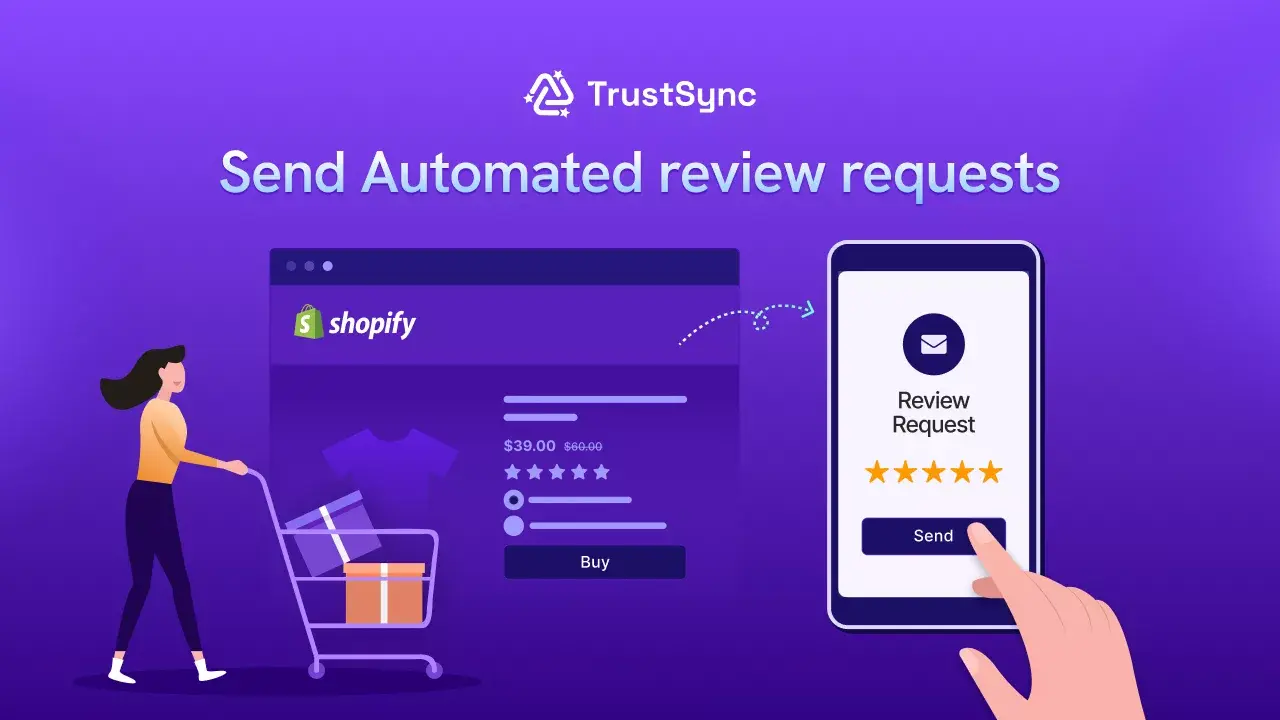
Inside the TrustSync dashboard, you can set review requests to send automatically after an order is fulfilled, for example, five days after delivery. You can also send follow up reminders to lift your response rate. Learn more in our guide on how to send automated review requests in Shopify.
2. Collect Reviews Across the Platforms That Matter
TrustSync connects with more than 25 review platforms, including Google, Trustpilot, Facebook, Yelp, Etsy & more. You choose where to focus so your reviews show up where shoppers are already looking. Keep your incentive offers off Google to stay compliant, and use them where they are allowed.
3. Filter and Manage Negative Feedback

Not every review will glow, and that is fine. TrustSync can route low star feedback to you privately so you can resolve the issue before it goes public. This protects your reputation while keeping honest reviews honest. Our post on reputation repair covers this in more depth.
4. Send Branded Emails From Your Own Domain
You can send review request emails from your custom domain, complete with your logo and brand voice. A branded, personal email feels like a real thank you, which supports the loyalty side of your strategy.
5. Track Performance With Analytics
TrustSync gives you insight into emails sent, open rates, clicks, and reviews collected. These numbers help you refine your timing and rewards, so your program keeps improving. See how the pieces fit together in our complete Shopify review strategy guide.
📋 Best Practices for Incentivized Reviews & Loyalty
Keep these habits in mind as you build your program:
- Reward the act, not the rating. Say it, live it, and train your team on it.
- Always disclose incentives. Transparency protects you and builds trust.
- Keep Google reviews incentive free. Focus on great service to earn those naturally.
- Personalize your requests. A warm, on brand email beats a generic one every time.
- Time it right. Ask a few days after delivery, not the moment the order ships.
- Make reviewing easy. Fewer clicks and no forced logins mean more completed reviews.
- Respond to feedback. Replying to reviews, good and bad, shows you are listening.
- Use reviews as insight. Spot patterns in feedback and act on them.
For more on earning trust the honest way, see our ultimate guide to building customer trust on Shopify.
⚠️ Common Mistakes to Avoid
Even well-meaning merchants slip up. Watch out for these traps:
- Paying for positive reviews. This breaks FTC rules and platform policies. Never tie a reward to a rating.
- Incentivizing Google reviews. Google bans this outright. It can cost you every review on your profile.
- Hiding the incentive. A reward that is not disclosed can be treated as deceptive.
- Gating reviews by sentiment. Steering happy customers to public sites and unhappy ones away is a form of review suppression and is not allowed.
- Ignoring negative feedback. Silence looks worse than a thoughtful reply. Address concerns openly.
- Sending one-and-done requests. A single email misses many customers. A gentle follow-up recovers a lot of reviews.
Avoiding these mistakes keeps your program both effective and safe.
🎯 Turn Reviews Into Repeat Customers
Chasing new customers is expensive and endless. Keeping the ones you already have is cheaper, more profitable, and far more sustainable. Incentivized reviews, used the right way, sit right at the heart of that shift.
When you reward the act of leaving honest customer feedback, disclose it clearly, and respect each platform’s rules, a review request becomes more than a formality. It becomes a loyalty touchpoint that builds social proof, strengthens relationships, and brings repeat customers back to your store.
You do not have to manage all of it alone. A review automation tool like TrustSync can send timed requests, collect reviews across platforms, filter negative feedback, and track your results, so your retention engine runs quietly in the background.
Automate review requests and grow your reputation with TrustSync. Get started today and turn feedback into lasting loyalty.
Ready to see how it fits your store? Explore TrustSync pricing or browse the documentation to set up your first automated campaign.